If you’ve ever wandered the aisles of a craft brewery, artisanal water brand, or specialty sauce maker, you’ve probably picked up a bottle, turned it over, and studied its label. Some labels are crisp, full-color, and tailored to a small batch run; others are hand-stamped, messy, and unique to a one-off order. For brand owners, the question isn’t just about how a label looks—it’s about how it gets there, especially if you’re working with non-standard bottle shapes, limited runs, or the need for custom designs that don’t require a huge print run. As someone who’s worked in the bottle printer industry for 12 years, I get asked this question every single week: Can a bottle printer really print labels directly on bottles, or is it just a fancy alternative to pre-made stickers? Bottle Printer
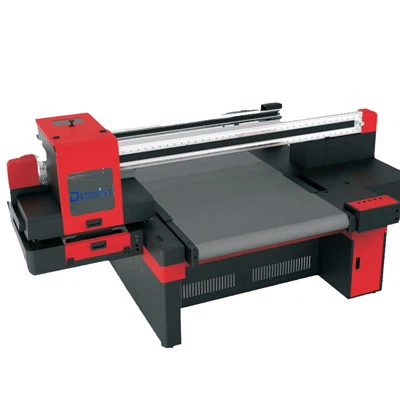
Let me break this down straight, no industry jargon, no sales fluff. For too long, people assume “bottle printer” means a machine that only applies pre-printed adhesive labels. But the truth is, modern bottle printers are industrial-grade, purpose-built devices that print directly onto the surface of bottles—no stickers, no adhesives, no middleman. And yes, they work for almost every bottle type you can imagine: glass, plastic, stainless steel, aluminum, even matte or glossy coated surfaces. The key here is understanding how these printers work, and how they stack up against the alternative you’re probably used to.
First, let’s clear up a common misconception: not every machine marketed as a “bottle printer” is the same. A lot of small, desktop-sized printers sold online are designed for hobbyists—they’ll work for a few dozen small plastic bottles, but they’re not built for daily production, and they can’t handle irregular bottle shapes. The bottle printers I supply to small to mid-sized brand owners? Those are engineered with two critical features that make direct printing on bottles not just possible, but reliable for commercial use.
The first is a rotary feeding system. Think of it as a conveyor belt that spins each bottle slowly and consistently as it moves through the printer. No more jams, no more tilted labels, no more wasting 10-15 bottles every time you switch to a new shape. For example, if a craft distiller needs to print custom batch numbers on 5,000 glass whiskey bottles, the rotary feeder adjusts seamlessly from a 750ml cylindrical bottle to a 100ml shot bottle mid-run, no tool changes required. That’s a game-changer for brands that do small, frequent runs instead of 100,000-unit bulk orders.
The second is UV-curable ink technology. This isn’t the smudge-prone ink from your old desktop printer. UV ink cures (dries instantly) when hit with a low-intensity UV light built into the printer, so it doesn’t rub off after a week of handling, doesn’t bleed if a bottle gets condensation in a cooler, and is even food-safe—something that’s non-negotiable for beverage, sauce, or cosmetic brands. I’ve had clients test this: they take a printed stainless steel water bottle, scrub it with a stainless steel scrubber, leave it in a freezer for 24 hours, run it through a dishwasher cycle, and the label is still crisp, no fading, no peeling. Pre-made adhesive labels, on the other hand? They bubble, peel, and scratch off within a few washes.
Now, let’s talk about when direct printing on bottles makes more sense than pre-made labels, because that’s where the real value is. A lot of brand owners stick with adhesive labels because they’re familiar, but for many, direct printing cuts costs and speeds up time-to-market in ways you might not expect. Let’s do a quick cost comparison for a small brand: pre-made labels usually require a minimum order of 5,000 units. If you only need 1,000 bottles for a limited holiday run, you’re still paying for 5,000 labels, wasting 4,000, plus design fees, shipping, and a middleman to print them. With a bottle printer, you print exactly how many bottles you have, right when you need them, no minimums, no wasted inventory. That means a small brewery can test a new flavor with 1,000 bottles, print labels in-house overnight, and launch in a week instead of waiting 2 weeks for custom labels to arrive.
There’s also the design flexibility factor. Adhesive labels have limits: they’re flat, so curved bottle surfaces require tricky die-cutting, and you can’t print around the entire bottle in one pass without expensive custom tools. A bottle printer prints directly on the curved surface, so you can wrap a full, seamless label around a wine bottle, or print a custom logo on the side of a hand sanitizer bottle, no extra work. For brands that want to stand out—like a specialty coffee roaster that prints a different origin story on every batch, or a winery that adds a vintage year and a unique vineyard map—direct printing lets you customize every single bottle without raising costs.
But wait, is there a case where direct printing isn’t the best option? Absolutely. If you’re printing 100,000 identical soda bottles for a major distributor, pre-made labels are still the more efficient, low-cost choice. But for the 90% of brand owners I work with—small batch producers, startups, local food and beverage makers, cosmetic lines—direct bottle printing solves problems that adhesive labels can’t. I had a client last year, a small craft hot sauce maker in Austin, who told me they used to spend $2,000 every quarter on minimum-order label runs that they’d half throw away. After buying one of our mid-sized bottle printers, they cut that cost by 70%, and now they can print a new custom label for every limited run they do—like a “Texas Chili Lime” batch with a photo of a local chili farm on every bottle, no extra charge.
I also want to address a question I get all the time: Does printing directly on bottles damage them? No, not at all. The UV ink we use is formulated to bond to glass, plastic, and metal surfaces without etching, scratching, or altering the bottle. It’s the same technology used for decades in the packaging industry, just adapted for in-house use. The only surface prep needed is a quick wipe with rubbing alcohol to remove dust or oil, which takes 10 seconds per bottle. It’s way simpler than the process of applying adhesive labels, which requires cleaning the bottle, peeling the label, aligning it perfectly, and pressing out air bubbles—steps that often lead to misaligned or bubbled labels.
Another point: sustainability. Adhesive labels are made of paper or plastic, and they’re often not recyclable on their own, especially if they have a glossy coating or adhesive that doesn’t break down in recycling facilities. Direct-printed bottles? The ink is cured into the bottle surface, so you don’t have to separate labels from the bottle when recycling—you can just toss the whole thing into your bin. For brands focused on eco-friendly packaging, that’s a huge selling point. A organic juice brand I work with in Portland switched to direct printing last year, and their recycling rate for bottles went up 25% because customers no longer had to peel off the label to recycle.
Now, let’s talk about what makes a reliable bottle printer, not just a cheap one. There are a lot of budget options out there, especially small desktop printers that cost a few hundred dollars, but they’re not built for commercial use. For example, a desktop printer might be fine for 50 small plastic bottles, but if you’re printing 500 a day, it will overheat, jam constantly, and the ink will smudge. The bottle printers I supply are built with industrial components—stainless steel frames, sealed rotary feeders, high-capacity ink cartridges—so they run 8 hours a day, 5 days a week, with minimal maintenance. They also have user-friendly software, so you don’t need a degree in graphic design to use them. You can upload your label design, adjust it for the curve of your bottle in 2 minutes, and start printing. No need to hire a specialist or send files to a third-party print shop.
I’ve seen too many brand owners waste money on the wrong machine. A guy in Colorado bought a small desktop printer for his craft beer bottles, and after two months, he was frustrated because it only worked on small plastic bottles, couldn’t handle his 12oz glass beer bottles, and the ink faded after a month. That’s why I always ask new clients: what’s your bottle shape? How many do you print a week? What materials are you using? That’s how I match them to the right printer, not push a one-size-fits-all model.
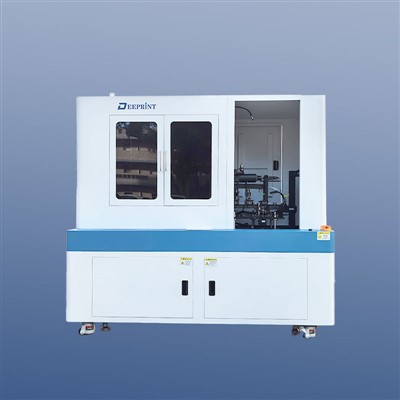
Let’s wrap this up. To answer the question: Yes, a bottle printer can absolutely print labels directly on bottles. It’s not a gimmick, it’s a practical solution for brand owners who want more control over their packaging, lower costs, faster time-to-market, and more design flexibility. It’s not for every brand—if you’re doing massive bulk runs, adhesive labels are still the way to go—but for small to mid-sized producers, it’s a game-changer that levels the playing field with big brands that have in-house packaging teams.
Tumbler Printer If you’re a brand owner tired of minimum order fees, wasted inventory, or bland labels that don’t stand out, I encourage you to reach out to discuss your needs. We don’t do generic sales pitches—we work with you to figure out the right printer for your bottles, your budget, and your production goals. Whether you’re just starting out with a prototype or scaling up to 10,000 bottles a week, we can help you make direct bottle printing work for your business.
References
- International Bottled Water Association. (2022). Direct Printing vs. Adhesive Labeling: Market Trends for Small to Mid-Size Producers.
- Food and Drug Administration. (2021). Safety of UV-Curable Inks for Food Contact Packaging.
- Packaging Digest. (2023). In-Line Printing Technologies for Curved Container Surfaces.
- Sustainable Packaging Coalition. (2022). Label-Free Packaging: Recycling and End-of-Life Benefits.
Shenzhen Deeprint Technology Co., Ltd.
As one of the most professional bottle printer manufacturers and suppliers in China, we’re featured by quality products and good service. Please rest assured to buy customized bottle printer made in China here from our factory. Contact us for free sample.
Address: 6-1, Huangwu Road, Tongle Community, Baolong Street, Longgang District, Shenzhen City 518100, China.
E-mail: ellen@uvdprint.com
WebSite: https://www.uvd-print.com/
