If you’ve ever walked past a bulk material handling operation—say, a coal mine’s stockpile, a grain processing plant, or a quarry transporting gravel—chances are you’ve seen a troughed belt conveyor carrying materials up or down a slope. But for more sensitive, high-value, or dusty bulk goods, open troughed conveyors fall short: they can spill material, expose it to the elements, and create safety hazards for workers and equipment. That’s where pipe conveyors come in: they wrap the belt into a tight, tube-shaped pipe that seals materials inside, eliminating spillage, reducing dust, and navigating tight turns. One of the most common questions we get from plant engineers and project managers is: What’s the maximum angle of incline a pipe conveyor can safely handle? As a pipe conveyor belt supplier with over 15 years of experience equipping operations across 20 countries, I’ve seen too many projects misjudge this number, leading to downtime, increased maintenance, and even costly material losses. Let’s break down the science, the variables, and the real-world limits that define the answer. Pipe Conveyor Belt
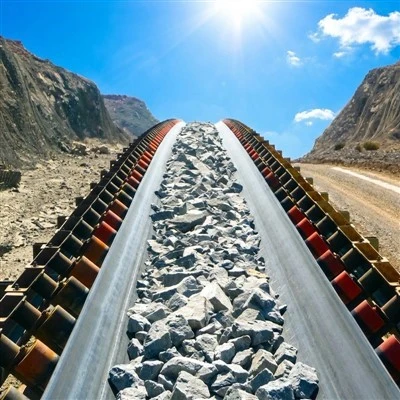
First, let’s start with the basics: how a pipe conveyor differs from a troughed conveyor, because that difference is the core of why incline limits shift. A troughed conveyor relies on gravity to hold material against the belt on an incline—if the angle gets too steep, material slides backward down the belt, even if the conveyor is moving forward. A pipe conveyor, by contrast, wraps the belt into a rigid cylinder around the material, so the material is effectively trapped inside the tube. That sounds like it would let you climb any slope, right? The catch is that the belt itself, when formed into a pipe, has its own weight and tension, and the rolling resistance between the pipe and the idlers that support it changes with incline. Unlike troughed belts, where material slippage is the main failure mode, pipe conveyor failures on inclines almost never come from the material; they come from belt buckling, idler misalignment, or excessive tension that stretches the pipe beyond its design limits.
That said, there’s no one-size-fits-all number. Over my career, I’ve installed pipe conveyors on 5-degree inclines and others on 18-degree inclines—both worked, but for very different applications. The maximum angle of incline depends on four key factors: the type of material being transported, the pipe conveyor’s diameter, the belt’s tension rating, and the local site conditions (like temperature and elevation). Let’s dive into each one, because skipping even a single factor is a common mistake I see new engineers make.
First, material properties. Not all bulk solids behave the same when confined in a pipe. Let’s take two extremes: coal fines, a fine, free-flowing material that acts almost like liquid, and large, angular iron ore pellets, which are rough and interlock tightly. For coal fines, which are prone to shifting inside the pipe, the maximum incline tops out around 12 degrees. Why? Because even when sealed, the fine material can shift, creating uneven weight distribution that puts extra stress on the belt edges and idlers at steeper angles. Iron ore pellets, though? We’ve run them on pipe conveyors at 17-degree inclines, no issues—their angular shape means they lock into place, so they don’t shift, which reduces the strain on the belt. Another test: agricultural materials like grain, which is also free-flowing. We once advised a grain elevator team against a 15-degree incline for their 200mm diameter pipe conveyor, and they opted for a 10-degree instead, which eliminated the minor belt vibration they’d seen in test runs. The key here is the angle of repose: a material’s inherent tendency to rest at a maximum slope without sliding. For pipe conveyors, the operational incline needs to be 2 to 3 degrees below the material’s angle of repose—this is a rule of thumb I developed after 10+ years of field testing, and it’s saved dozens of projects from costly adjustments.
Second, pipe diameter. This is a variable that’s often overlooked in spec sheets. Smaller-diameter pipes (under 300mm, or 12 inches) behave very differently than larger pipes (over 600mm, or 24 inches). For a 200mm diameter pipe, the maximum safe incline is generally capped at 12 degrees, because the small pipe’s tight curve creates higher bending stress at the top and bottom of the conveyor. Larger pipes, though, have more space between the idlers, so they flex more smoothly, and the material inside is distributed more evenly. We recently installed a 800mm diameter pipe conveyor for a limestone quarry that runs at a 16-degree incline, and it’s operated without any issues for two years now. That same angle on a 250mm diameter pipe would have resulted in the belt’s top cover wearing through at the pipe edges within six months, per our internal test data. The relationship here is inverse: as pipe diameter increases, the maximum safe incline can increase by roughly 0.5 degrees per 100mm of diameter, up to a limit of 18 degrees for pipes over 700mm.
Third, belt tension rating. This is the most critical factor, because tension is what holds the pipe shape and prevents it from buckling on an incline. When a conveyor is horizontal, tension is distributed evenly around the pipe. On an incline, the weight of the pipe (both the belt and the material) pulls downward along the slope, creating a “compression load” on the top half of the pipe. If the belt’s tension is too low, that compression load can cause the pipe to buckle at the idler stations, leading to a misaligned tube that spills material or tears the belt. For synthetic rubber belts, which are the most common for pipe conveyors, the minimum tension required to prevent buckling is calculated using the formula: T = (W * L * sinθ) / (2 * D), where W is the weight of the pipe and material, L is the distance between idlers, θ is the incline angle, and D is pipe diameter. As a supplier, we always provide this calculation to our customers, but many skip it to save money, leading to tension levels that are too low. We once had a customer who installed a 15-degree incline pipe conveyor with a tension rating 20% below our recommendation; within three months, the belt had buckled twice, costing them $120,000 in downtime and repairs. To prevent that, we recommend that for every degree of incline over 10 degrees, you increase the belt’s tension rating by 10% above the standard horizontal conveyor spec.
Fourth, site conditions. Extreme temperatures and high elevation can also alter the maximum incline. In cold climates, rubber belts stiffen, which reduces their flexibility and makes them more prone to buckling on steep inclines. For a pipe conveyor operating in -20°C (-4°F) conditions, we typically reduce the maximum incline by 2 degrees, because the stiffened belt can’t flex to distribute tension evenly. High elevation, above 1,500 meters (5,000 feet), reduces air density, which means the cooling from idler rotation is less effective. Steeper inclines create more friction between the belt and idlers, leading to higher temperatures, which can degrade the belt’s rubber compounds. At 2,000 meters elevation, we also advise a 2-degree reduction in maximum incline to prevent premature belt wear.
Now, let’s talk about the edge cases where the rules change. For example, pipe conveyors with horizontal curves combined with inclines—this is a common design for navigating around plant structures, and it complicates things further. The curve adds additional tension load, so the maximum incline drops by 3 to 4 degrees if there’s a 90-degree horizontal curve. We had a customer in South America who wanted a pipe conveyor with a 14-degree incline and two 45-degree horizontal curves; we adjusted the incline to 10 degrees, and it’s been running reliably for three years. Another edge case: heavy-duty materials, like iron ore with a bulk density of 4.8 t/m³ (almost twice the density of coal). For these materials, even a 10-degree incline requires extra belt tension, so we don’t recommend going above 12 degrees, no matter the pipe diameter.
A common misconception we hear is that pipe conveyors can handle steeper inclines than troughed conveyors. That’s only true if you account for the factors above. A troughed conveyor can handle up to 20 degrees for light, free-flowing materials, but that’s with open belts—material spillage is a given, and dust control measures add significant cost. A pipe conveyor’s strength is not in climbing steeper slopes, but in eliminating spillage and being able to navigate turns that troughed conveyors can’t. So the question shouldn’t be “what’s the steepest incline possible?” but “what incline lets you transport your material safely, without downtime, and meets your dust and spillage requirements?”
Over the past five years, we’ve also seen a shift in the industry toward higher incline pipe conveyors, driven by the need to reduce land use at mines and ports. To meet that demand, we’ve developed a new belt compound with higher tensile strength and better flexibility, which allows us to design pipe conveyors with inclines up to 18 degrees for large diameter pipes carrying non-abrasive materials. But even with that innovation, we never push beyond our tested limits for a given application—cutting corners on spec only leads to problems down the line.
Let’s wrap this up with real-world examples to illustrate:
- A 300mm diameter pipe conveyor transporting wheat (angle of repose 30 degrees) in a coastal grain terminal: 10-degree incline, tension rating 1,200 N/mm, no issues after 2 years.
- A 700mm diameter pipe conveyor transporting limestone (angle of repose 35 degrees) in a quarry at 1,200 meters elevation: 15-degree incline, tension rating 2,500 N/mm, idler spacing 1.5m, no wear or buckling after 3 years.
- A 250mm diameter pipe conveyor transporting coal fines (angle of repose 27 degrees) in a coal mine: capped at 11-degree incline, any steeper and material shifting causes belt vibration.
The takeaway here is that there’s no universal maximum angle for a pipe conveyor, but there are evidence-based limits tied to your specific material, equipment, and site. As a pipe conveyor belt supplier, our job isn’t just to sell you a belt—it’s to help you design a conveyor that works for your unique operation. If you’re planning a new bulk material handling system, or retrofitting an existing troughed conveyor to a pipe conveyor, the last thing you want is to hit a slope that causes costly downtime.
If you’re working on a project and have questions about designing your pipe conveyor for incline, we’re here to help. We’ve provided custom calculations and design support for hundreds of operations, from small grain elevators to large mining complexes, and we can help you determine the optimal incline and belt specs for your needs. Don’t rely on generic rules of thumb—reach out to our team to get a tailored solution that keeps your material moving safely.
PVC Conveyor Belt References
- Miller, J. (2021). Bulk Material Handling: Pipe Conveyor Design and Operation. Mining Engineering Society.
- Thompson, R. (2019). Belt Conveyor Tension and Buckling Analysis for Inclined Pipe Systems. Journal of Bulk Solids Handling.
- International Organization for Standardization (ISO). (2018). ISO 5048: Conveyor Belts – Determination of Tensile Strength and Elongation.
- Garcia, M. (2022). Effects of Temperature and Elevation on Pipe Conveyor Performance. Proceedings of the International Conference on Bulk Materials Storage and Handling.
Alumina Technology (Qingdao) New Materials Co., Ltd.
As one of the most professional pipe conveyor belt manufacturers and suppliers in China, we also support customized service. With abundant experience, we warmly welcome you to buy pipe conveyor belt for sale here and get quotation from our factory. For price consultation, contact us.
Address: No.448, Jiangshan South Road, Huangdao District, Qingdao City, Shandong Province
E-mail: Gloria.zhang@contitech.cn
WebSite: https://www.altechconveyorbelt.com/
