Hey there, if you’ve ever worked with fluid filtration in industrial processes—whether you’re in chemical manufacturing, oil & gas, pharmaceuticals, or even food and beverage—you’ve probably stumbled on sintered metal powder filters before. But if you’re like a lot of folks I chat with, you might’ve stopped at “they’re metal filters” and never dug into the big question that actually matters: What’s their filtration accuracy, anyway? Sintered Metal Powder Filter
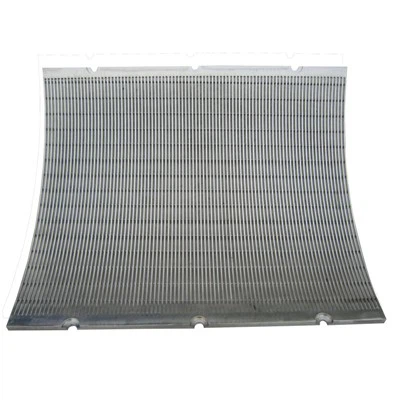
I’m Jake, and I’ve been selling sintered metal powder filters for over a decade now—spent way too many late nights troubleshooting filter issues with plant managers, and even more time explaining why sintered powder beats mesh filters or paper cartridges in almost every long-term scenario. Today, I’m breaking down filtration accuracy for these bad boys, no stuffy engineering jargon, no overly complex equations, just the real deal that I’ve learned from talking to actual people in actual plants.
First off, let’s get one thing straight: Filtration accuracy isn’t just some random number we pull out of thin air. It’s the measure of how reliably a filter catches solid particles of a specific size, right? But with sintered metal powder filters, it’s not as straightforward as “10 micron filter = catches all 10 micron particles.” Let’s start with how these filters are made, because that’s the foundation of their accuracy. Unlike woven metal mesh (which is just threads woven together) or paper filters (fibers pressed randomly), sintered powder filters are made by taking tiny metal powder particles—think 1 to 100 microns, so smaller than a grain of sand—pressing them into a desired shape, then heating them (but not melting them all the way) so the particles fuse together at their contact points. The result is a porous, solid metal structure with tiny, interconnected pores between the fused powder particles. That’s the key to their accuracy.
Now, here’s where most people get confused: There are two main ways we measure filtration accuracy for sintered metal filters, and they’re not the same. Let’s call them “nominal accuracy” and “absolute accuracy”—I’ll explain both like I’m chatting with a buddy, not writing a textbook. Nominal accuracy is the “close enough” number we use for general guidance. It means the filter will catch 80% to 90% of particles of that listed size. So a 20 micron nominal filter will catch most 20 micron particles, but a few might slip through. Absolute accuracy, on the other hand, is the strict number that means the filter will catch 100% of particles of that size. That’s the non-negotiable standard for critical processes, like pharmaceuticals or aerospace fuel systems, where even one tiny contaminant can cause a huge problem.
But wait—before you go thinking “just buy the highest absolute accuracy filter I can find,” let’s talk about what affects this accuracy, because it’s not just the powder size you start with. Let’s list the big ones, since I’ve seen every single one of these throw off a filter’s accuracy in the field. First, powder particle size distribution. If I use all uniform 10 micron powder, I’ll get a super consistent pore size, so accurate results are predictable. But if I mix in a bunch of smaller 2 micron particles to fill gaps between the 10 micron ones, that makes the pores smaller—so my accuracy jumps, but I also get lower flow, which is bad for production. Second, sintering temperature and time. If I heat the powder too hot or too long, the particles melt together more, making pores bigger, so accuracy drops. Too cool or too short, and the filter is fragile, might fall apart mid-process. Third, the filter’s thickness and shape. A thicker filter (like a 5mm thick disk vs. a 1mm thin sheet) will catch smaller particles because they have to travel farther through the porous structure—so a 5 micron filter in a thick element might be more accurate than a 5 micron thin one, even if they use the same powder. Fourth, operating conditions. This is the one that surprises most new customers. If you run a filter at a super high pressure drop, or have fluctuating flow rates, the porous structure can compress slightly, making pores bigger—so accuracy drops. Or if you’re filtering a really hot fluid (like 500°F for stainless steel filters) or a corrosive chemical, some powder might leach out over time, increasing pore size, and accuracy goes down. That’s why we always send sample filters for field testing—no guesswork.
Now, let’s get to the actual numbers, because that’s what everyone cares about. Sintered metal powder filters cover a huge range of accuracy levels, from as coarse as 100 microns (for pre-filtration, like catching rust chunks in water lines) down to as fine as 0.1 microns (for sterilizing pharmaceutical fluids, or filtering out tiny bacteria and sub-micron contaminants). Wait, 0.1 microns—for context, a human hair is about 50 to 100 microns thick, so that’s super tiny. Let’s give real-world examples so this isn’t just a list of numbers. If a food and beverage plant is filtering beer to remove yeast cells, they’ll usually use a 1 to 5 micron nominal filter—catches almost all yeast, keeps the beer clear, and has enough flow to keep production moving. If an oil & gas company is filtering hydraulic fluid for heavy machinery, they’ll use a 10 to 20 micron filter to catch metal shavings and dirt particles, extending the life of pumps by years. If a chemical plant is filtering corrosive acid, they might use a 5 micron PTFE-impregnated sintered filter, since regular metal can corrode, and accuracy is consistent even with harsh chemicals.
But here’s the part where a lot of my competitors mess up: they just give you a single accuracy number, no context. That’s garbage, because like I said earlier, accuracy depends on so many variables. For example, a customer once came to me saying their 10 micron sintered filter was letting 10 micron particles slip through. Turns out, their supplier used nominal accuracy instead of absolute, and they were running it at 3x the recommended pressure, which compressed the pores and made them bigger. We swapped them for absolute 10 micron filters, adjusted their operating pressure, and now they haven’t had a contaminant issue in 2 years. That’s the stuff I see every day—accuracy isn’t a static number, it’s a performance metric that changes based on how you use the filter.
Another big question I get: How does sintered metal powder filter accuracy compare to other types of filters? Let’s be real, paper filters have good nominal accuracy, but they’re disposable, and they break down after a few uses, so accuracy drops fast. Woven metal mesh has consistent accuracy for coarse particles, but not for fine ones, because the gaps in the mesh are inconsistent. Ceramic filters can get fine accuracy, but they’re super brittle, crack easily, and can’t handle high temperatures or pressure. Sintered metal powder filters? Their accuracy is consistent over hundreds or thousands of uses, they can handle high temp and pressure, and you just clean them (backwash, ultrasonic, or even bake them in a kiln) and reuse them. Yeah, the upfront cost is higher than paper, but over time, it’s way cheaper—no more buying new filters every week, no more downtime replacing them.
Wait, but let’s clear up a common myth: A lot of people think “higher accuracy = better filter.” No way. If you’re filtering bulk water for a cooling system, a 50 micron filter is perfect—using a 0.5 micron filter would just get clogged in an hour, stop flow, and cost you way more in downtime than it’s worth. Accuracy needs to match your process needs. That’s why I spend 15 to 20 minutes on the phone with every new customer, asking them exactly what they’re filtering, the fluid’s temp and pressure, how much flow they need, and what contaminants they’re trying to catch. I don’t just sell them the highest accuracy filter— I sell them the right accuracy filter for their job.
Let’s talk about testing too, because accuracy is only as good as the test used to measure it. Most reputable filter suppliers (that’d be us, obviously) use industry-standard tests, like the ISO 16889 standard for hydraulic fluid filtration, or ASME standards for industrial filters. These tests use standardized challenge particles—like latex beads or silica particles of a known size—pumped through the filter at a controlled flow rate and pressure, and they count how many particles make it through. If a supplier doesn’t have third-party test reports, their accuracy number is probably made up. That’s a red flag I warn customers about all the time.
Now, what about maintenance and how it affects accuracy? I mentioned earlier that sintered filters are reusable, but if you clean them wrong, you mess up their accuracy. For example, if you blast a sintered filter with too much pressure during backwashing, you can dislodge fused powder particles, making pores bigger. Or if you use a harsh chemical cleaner that eats away at the metal, that does the same thing. We always give customers a free maintenance guide when they buy filters—no extra charge—because keeping the filter working at its rated accuracy is just as important as buying it in the first place.
Let’s circle back to that original question: What is the filtration accuracy of a sintered metal powder filter? The short answer is: It depends, but we can tailor it to your exact needs. The long answer is: We can make filters with accuracy from 100 micron (coarse pre-filtration) all the way down to 0.1 micron (sterile filtration), with both nominal and absolute ratings, and we test every single one to make sure it meets that number. And unlike other suppliers, we don’t just ship you a filter and forget about you—we stay in touch, help you adjust if your process changes, and even do on-site testing if you’re not sure what you need.
Look, I get it—filtration sounds boring, and accuracy feels like one more number to keep track of. But if your process is failing because of contaminant issues, or you’re wasting thousands of dollars on disposable filters that need replacing every week, getting this right makes a huge difference. I’ve seen a metal stamping plant cut their filter costs by 70% when they switched from paper to sintered metal. I’ve seen a pharmaceutical company pass a regulatory audit for the first time in years after switching to our sterile-grade sintered filters. That’s the real impact of getting the accuracy right.
If you’re tired of filter issues, sick of replacing disposable filters every few days, or just want to stop guessing about whether your filter is actually catching the particles it’s supposed to, hit me up. We can chat about your process, send you a sample to test, no strings attached. I don’t do pushy sales—if a sintered metal powder filter isn’t right for you, I’ll tell you, and maybe point you to a better solution. But 9 times out of 10, sintered metal is the way to go, and getting the right accuracy is the first step.
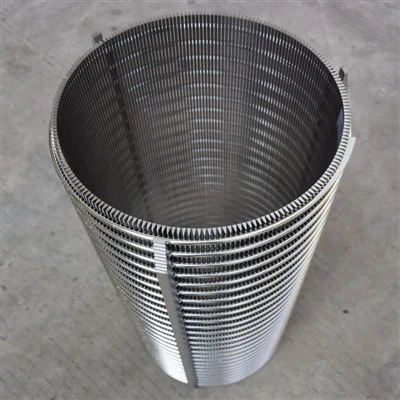
Don’t overcomplicate this. Filtration accuracy for sintered metal powder filters isn’t some secret code—it’s a performance metric that we control, test, and adjust to fit your needs. Now let’s stop messing around and get your process working better. Reach out anytime, and we’ll figure out the right filter for you.
Sintered Metal Powder Filter References
- ISO 16889: Hydraulic fluid power – Filters – Multi-pass method for evaluating filtration performance of a filter element
- ASME B40.7: Standard for Industrial Pressure Gauges and Pressure Measuring Instruments
- Tutiya, S. (2019). Sintered Metal Filters: Manufacturing, Properties, and Industrial Applications. Journal of Porous Materials, 26(3), 897-912.
- Food and Drug Administration (FDA) Guidance for Industry: Sterilizing Filter Validation and Control, 2021
Henan Easy Filter Equipment Co., Ltd.
As one of the leading sintered metal powder filter manufacturers and suppliers in China, we offer a wide range of products with superior quality. Please rest assured to buy advanced sintered metal powder filter from our factory. We also accept customized orders.
Address: Apartment No.1, Building No.2, Zhengshang Jinyushijia, Xinzhong Street, Xinxiang, Henan, China.
E-mail: vivian@easyfiltertech.com
WebSite: https://www.easyfilter-china.com/
