If you’re running machinery that relies on hydraulic pumps—think construction excavators, factory assembly lines, or even the snow blowers that clear your local parking lots—you know how frustrating it is when the pump speed is all wrong. Too slow, and your loader bucket won’t lift enough to load a full truck in time; too fast, and you’re wasting energy, overheating parts, or risking a costly breakdown. As a hydraulic pump supplier, I get this because I work with shops, operators, and maintenance teams every week who ask the same question: “How do I actually control my pump’s speed without guessing?” Hydraulic Pump
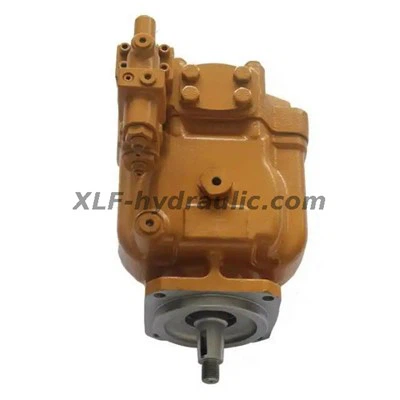
First, let’s get one thing straight: hydraulic pump speed isn’t the same as flow rate, but they’re tied at the hip. The pump’s speed (usually measured in RPM, or rotations per minute) directly dictates how much hydraulic fluid it pushes through your system—so if you nail the speed, you nail consistent flow, which means your machine does exactly what you want, when you want it. I’ve seen a guy on a job site run his pump too high for hours just because he didn’t know he could adjust it, and by the end of the day, his whole system was gurgling and overheating. That’s the kind of mistake we help folks avoid.
Let’s break down the real, actionable ways to control pump speed, no stuffy engineering jargon required. I’ll throw in things I’ve picked up from techs calling me at 7 a.m. panicking because their machine won’t start, so this is actual field stuff, not textbook theory.
1. Adjust the Engine or Motor Driving the Pump
Most hydraulic pumps are run by an internal combustion engine (think tractors, excavators) or an electric motor (factory machinery, lift trucks). The simplest way to tweak pump speed is to adjust the driver that spins it. This is the first trick I teach new operators because it’s the easiest—no extra parts needed, just a quick adjustment to the throttle or VFD.
For gas/diesel engines: Most have a manual throttle lever right by the operator’s seat. Push it up to boost RPM, pull it back to slow down. But wait—don’t just crank it to max because you want more power. I had a customer last quarter who did that to his wood chipper, and the pump’s seal blew out in three weeks because it was spinning 200 RPM over its rated max. Every pump has a sweet spot RPM range printed on its data plate (like 1200–1800 RPM for a gear pump), so stick within that. A little tip: When you’re doing precision work, like aligning pipe or lifting delicate parts, don’t run at full throttle. Drop it 200–300 RPM, and you’ll get smoother operation and less wear on the pump.
For electric motors: If your pump is electric, it’s hooked up to a variable frequency drive (VFD). This is a box that controls the motor’s frequency, which changes how fast it spins. Most industrial settings use VFDs because they let you dial in exact RPMs instead of guessing with a throttle. I recommend setting the VFD to your pump’s optimal speed (check the data plate!) and locking it so no one accidentally cranks it too high. Just last week, a metal stamping plant called me saying their parts were coming out misaligned—turns out the new temp operator had cranked the VFD to max to speed up production. Fixing that pump’s speed cut their defect rate by 15% in a week.
2. Use Flow Control Valves (The Unsung Hero)
Wait, flow control valves—aren’t those for regulating flow? Yeah, but they directly impact pump speed, too. Here’s how it works: A hydraulic system is a closed loop, right? If you restrict how much fluid flows to your cylinders or motors, the pump has to work less hard, which slows it down. It’s like putting a finger over the end of a garden hose—less water comes out, and the water pressure at the nozzle drops. Same idea here.
There are two main types: line-mounted flow control valves and pressure-compensated ones. Line-mounted are super simple—you just screw them into the hydraulic line leading to your machine and turn a screw to adjust how much fluid passes. Great for small, fixed-speed systems like a forklift. But pressure-compensated valves are for when you need variable loads. They automatically adjust to keep flow steady even if the pressure changes, so your pump speed stays consistent even when you’re lifting a 1,000 lb pallet vs. a 500 lb one. I always tell folks: if your machine has to handle different loads throughout the day, skip the basic valves and go for pressure-compensated. It saves you from having to tweak things mid-shift, which is a huge time-saver.
3. Invest in Variable Displacement Pumps
If you’re constantly switching between light and heavy loads, a fixed-displacement pump might not cut it. Those pump a set amount of fluid every revolution, so if you’re running it at a speed that’s too high for your current job, you’re wasting energy. Variable displacement pumps (VDPs) are the game-changer here—they adjust how much fluid they push per revolution, so you don’t have to change the pump’s RPM at all.
Let’s say you’re on a construction site: one minute you’re digging a trench (needs a lot of flow, so the pump displaces more fluid), the next you’re lowering a bucket (needs less, so it displaces less). With a VDP, it does all that on its own using a built-in control that reacts to pressure changes. I installed one for a paving company last year, and their fuel usage dropped by 22% in the first month. That’s real money they kept in their pocket, not just numbers on a spec sheet. The only catch? VDPs cost a bit more upfront, but the savings on fuel and repairs make up for it fast.
4. Add a Pressure Relief Valve to Prevent Over-Speed
Here’s a mistake I see all the time: operators crank up their load, the system pressure spikes, and the pump speed keeps climbing because it can’t handle the pressure. That’s where a pressure relief valve comes in. It’s like a safety valve that opens when pressure gets too high, diverting excess fluid back to the reservoir so the pump doesn’t overwork.
Don’t skimp on this part. I once got a call from a guy whose hydraulic pump seized up because he skipped the relief valve and tried to lift a load way over his system’s capacity. He ended up needing a whole new pump, which cost him way more than the $50 relief valve he should have installed. Set the relief valve to match your pump’s maximum rated pressure (again, check that data plate—no guessing) and test it quarterly. It’s a tiny part that saves you a ton of hassle.
5. Tune the System for Your Exact Application
At the end of the day, there’s no one-size-fits-all speed. A pump for a garbage truck is going to run way differently than one for a medical lift table. That’s why tuning your system to your specific job is non-negotiable.
Last month, a customer who makes custom bakery ovens called me complaining their hydraulic lift for oven doors was too slow to open and close. They’d been using a off-the-shelf pump at default speed, which worked fine for heavy equipment but was too sluggish for their delicate oven doors. We swapped out their fixed throttle for a small VFD, calibrated it to 1400 RPM (their pump’s sweet spot), and suddenly the door opened in 2 seconds flat—no more waiting around for 5 minutes between batches. That’s the kind of small, specific tweak that makes all the difference for small businesses.
Wait, a quick note: if you’re changing pump speed, always check your manufacturer’s specs first. Every pump is built to handle a narrow RPM range, and running it outside that will wear out parts faster, leak more fluid, or even fail early. I’ve seen pumps last 10 years vs. 18 months just because their operator stuck to the rated speed.
Now, let’s talk about common mistakes people make when controlling pump speed, because I don’t want you to make these. First, they think faster is better. Spinning the pump too high doesn’t give you more power—it wastes energy and heats up the fluid, which breaks down the seals and hoses faster. Second, they ignore maintenance. A clogged filter can make the pump work harder, which makes it spin faster than it should. Change your hydraulic fluid and filters every 500 hours, and check your pump’s speed monthly to make sure it’s still within range. Third, they skip testing. After adjusting anything—throttle, VFD, flow valve—run a test cycle with a light load first, then a full load, to make sure the speed is consistent. Don’t wait until you’re in the middle of a job to find out you messed up the adjustment.
Look, I’ve been in this industry for 12 years, and I’ve seen hydraulic systems run well and run terribly. The best ones aren’t the ones with the shiniest parts—they’re the ones where the pump speed is set just right for the work it’s doing. It’s not rocket science, but it does require paying attention to the basics: know your pump’s specs, use the right control parts, and tune it to your job.

If you’re struggling with your pump speed, or you need a new pump that’s built to be easy to control for your specific machine, hit us up. We don’t sell one-size-fits-all junk—we work with you to figure out exactly what speed range you need, whether it’s for a small farm tractor or a 50-ton excavator. No pushy sales calls, no confusing jargon, just honest advice from people who actually work with these pumps every day.
References
Sectional Control Valves Hydraulic Pump Speed and Flow: Theory and Practice, Industrial Hydraulics Manual, Fluid Power Society, 2021.
Variable Displacement Pump Efficiency in Mobile Hydraulics, Journal of Manufacturing Systems, Vol. 38, No. 2, 2019.
Hydraulic System Maintenance Best Practices, Mobile Equipment Technology Association, 2022.
Wuhan Xinlaifu Hydraulic Equipment Co., Ltd.
Wuhan Xinlaifu Hydraulic Equipment Co., Ltd. is one of the most professional hydraulic pump manufacturers and suppliers in China, featured by high quality OEM&ODM products. Please feel free to buy customized hydraulic pump from our factory.
Address: Liansu Industrial Park, No.1, Xincheng 11th Road, Dongxihu District, Wuhan, Hubei, China
E-mail: service@xlf-hydraulic.com
WebSite: https://www.xlf-hydraulic.com/
