When I first started as a supplier of self-cleaning solar street lights, I’ll admit I didn’t give much thought to safety standards beyond making sure our products turned on after dark. Early on, I’d get orders from local governments and small towns, and I was just focused on getting the lights shipped out—meeting basic brightness specs and keeping costs low. But a few years back, I had a conversation with a city engineer in Ohio that shifted everything for me. He asked, “Are your self-cleaning units safe enough to put on our streets?” That question stuck with me, because it made me realize self-cleaning technology isn’t just about convenience—it’s a critical part of whether the entire system complies with global safety rules. Self-cleaning Solar Street Light
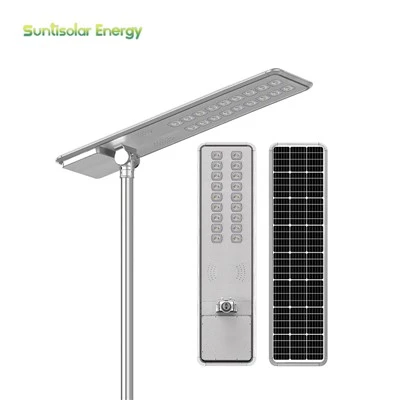
At the time, I’d spent most of my research on the cleaning mechanism: we use a combination of hydrophobic coatings and automated water misting, which cuts down on manual maintenance and keeps solar panels free of dust and grime. But I’d never dug deep into how that technology interacts with existing safety standards for street lighting, electrical systems, and solar infrastructure. That engineer’s question led me to dive into IEC, ISO, and regional standards like UL 1598 (for lighting fixtures) and IEC 62716 (for photovoltaic systems), and I quickly learned that self-cleaning features aren’t an afterthought—they have to be integrated into the design from day one.
Let’s start with the basics: what makes a solar street light “compliant”? For any outdoor lighting product, there are two main categories of safety standards: electrical safety (to prevent shock, fires, or short circuits) and mechanical safety (to protect against weather impact, vandalism, or structural failure). For self-cleaning models, there’s a third layer: the cleaning system itself, which has to meet its own set of standards without compromising the rest of the unit.
Take the electrical components, for example. Our self-cleaning system runs on a low-voltage DC circuit, but it’s connected to the same battery bank and solar panel array that powers the light. If the cleaning motor or water misting pump has a fault, it could draw too much current, overload the battery, or create a short circuit. That’s why compliance standards like IEC 60364 (for low-voltage electrical installations) require that all auxiliary systems—including self-cleaning mechanisms—have dedicated circuit protection. We had to upgrade our design to add a separate fuse for the cleaning unit, and we test every single unit to make sure a pump failure can’t cause the main light to shut down unexpectedly or overheat. Before that Ohio engineer’s question, we didn’t do those individual fuse tests. We now run 500-hour stress tests on the cleaning system to simulate extreme conditions—like freezing temperatures in Minnesota or high humidity in Florida—to make sure electrical connections don’t corrode, which would lead to safety hazards.
Then there’s the mechanical safety aspect of the self-cleaning coating. The hydrophobic solution we use is a key part of keeping panels clean, but we had to make sure it doesn’t emit toxic fumes, flake off into the environment, or damage the solar panel’s surface over time. UL 1097 (for photovoltaic module materials) sets strict limits on volatile organic compounds (VOCs) in coatings, and we worked with a third-party lab to confirm our coating meets those requirements. What surprised us most was that the cleaning process itself can’t create a hazard. For example, if our automated cleaning arm (which gently wipes the panel surface) malfunctions, it has to have a built-in fail-safe that stops it from swinging into nearby power lines or hitting pedestrians. We added motion sensors that trigger an immediate shutoff if the arm detects an obstruction, and that’s become a non-negotiable part of our design—something I never would have considered without learning the details of local safety codes.
Regional differences also play a big role in compliance, and that’s something we’ve had to adapt to as we expanded our market. In the European Union, the CE marking requires conformity with EN 60598 (lighting fixtures) and EN 62109 (solar inverter safety). We had to adjust our water misting system to use only potable water (as required by EU environmental standards) and add a lockable water reservoir to prevent tampering. In Australia, the Standards Australia AS/NZS 4509 series for solar power systems means our self-cleaning units have to be rated for UV resistance, since Australian sun is far harsher than in many other regions. We tested our coating and mechanical parts in a Xenon arc chamber to mimic 10 years of Australian sunlight, and passed with no degradation—something that would have been unnecessary if I’d only focused on domestic standards at first.
I’ve seen too many suppliers cut corners on self-cleaning technology to save money, and those are the companies that run into compliance issues. Last year, a small lighting manufacturer in Texas tried to sell a self-cleaning street light without proper electrical isolation between the cleaning system and the main power circuit. They failed a city inspection, had to recall 200 units, and lost their contract. For us, that’s a warning: cutting corners on compliance isn’t just a safety risk—it’s bad for business. Our compliance process now includes independent third-party audits every six months, where we send samples to labs to test for electrical safety, coating toxicity, and structural integrity. We keep all those audit reports on hand for every client, because local governments and commercial buyers don’t just want a “self-cleaning” light—they want a light that’s legal to install.
Another point that’s often overlooked is accessibility and emergency safety. Solar street lights are supposed to stay on during power outages, and self-cleaning units have to keep working even when the cleaning system is in use. Many safety standards require that street lights have a backup power reserve (ours is a 10-year lithium-ion battery that can run the light for 72 hours without recharging) and that the control system can prioritize light output over cleaning during a power outage. We had to reprogram our control software to switch off the cleaning mechanism automatically when the battery drops below 20% charge, so the light doesn’t fail when it’s needed most. That’s not something you’d guess is required until you read through OSHA’s outdoor lighting safety guidelines, which were updated in 2021 to emphasize reliable emergency illumination.
I’ll be honest: there’s no single global safety standard for self-cleaning solar street lights. It’s a combination of existing standards for lighting, solar power, and mechanical systems, plus the unique characteristics of the cleaning technology. That’s why it’s so important for suppliers to work closely with clients to understand local regulations. For example, a city in Arizona might be focused on dust buildup, so they prioritize the cleaning mechanism’s efficiency, but they still need to make sure the unit meets California’s strict fire safety standards for outdoor equipment. We’ve built a team that’s trained to guide clients through those requirements—we don’t just sell lights; we help them make sure their installation is compliant.
Over the past few years, we’ve seen a shift in the market: buyers are no longer asking “can this light clean itself?” They’re asking “is this light safe to install?” That’s a huge change, and it’s pushed us to invest more in compliance testing. We recently added a climate chamber that can simulate temperatures from -40°F to 140°F, so we can test how our self-cleaning system performs in extreme cold (to make sure water doesn’t freeze and crack the pump) and extreme heat (to make sure the coating doesn’t break down). We also test for vandalism—our cleaning arms and panels are rated to withstand a 10-pound impact, which meets IEC 60068-2-75 standards, because a broken panel is a safety hazard, and a broken cleaning system defeats the purpose of the design.
At the end of the day, self-cleaning solar street lights are supposed to solve two problems: reducing maintenance costs and keeping streets bright. But neither of those matters if the product isn’t safe. That Ohio city engineer was right when he asked that question—It’s the kind of question that makes you look at your entire product through a new lens. For us, compliance isn’t a box to check; it’s the foundation of every unit we build. If you’re a municipality, construction company, or business looking to install self-cleaning solar street lights, we can help you navigate the safety standards specific to your location, provide all required audit and compliance documentation, and design a system that works for your needs without compromising on safety.

If you’re ready to move beyond generic lights and invest in a self-cleaning solar street light that’s built to meet all applicable safety standards, get in touch with our team to discuss your project and requirements.
High Way All In One Solar Street Light References
UL 1598, Standard for Safety for Lighting Fixtures
IEC 62716, Photovoltaic (PV) Modules – Ammonia Resistance Test
AS/NZS 4509, Standalone Power Systems
EN 60598, Luminaires – Part 1: General Requirements and Tests
IEC 60364, Low-voltage Electrical Installations
Yantai Xutai New Energy Technology Co., Ltd.
Yantai Xutai New Energy Technology Co., Ltd. is one of the most professional self-cleaning solar street light manufacturers and suppliers in China. With a professional production team, we are able to meet the needs of the majority of our customers. Please rest assured to buy premium self-cleaning solar street light made in China here from our factory.
Address: No.229, Tongshinan Road, Zhifu District, Yantai City, Shandong Province, China
E-mail: Joe.chu@suntisolar.com
WebSite: https://www.suntisolar.com/
