What is the difference between an Angle Steel Tower and a lattice tower?
As a supplier of angle steel towers, I’ve often been asked about the differences between angle steel towers and lattice towers. It’s a crucial question, especially for those in the industries that rely on these structures, such as telecommunications, power transmission, and broadcasting. In this blog, I’ll delve into the key differences between the two types of towers, their respective advantages, and help you understand which might be the better fit for your specific needs. Angle Steel Tower
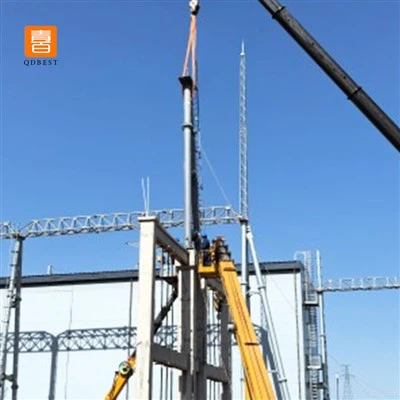
Structural Composition
One of the most fundamental differences between angle steel towers and lattice towers lies in their structural composition.
Angle steel towers, as the name suggests, are primarily constructed using angle steel components. Angle steel is a type of steel with an L – shaped cross – section. These angle steel pieces are bolted or welded together to form the framework of the tower. The use of angle steel provides a high degree of rigidity. The L – shape allows for efficient load – bearing in multiple directions. It is relatively straightforward to manufacture and assemble angle steel towers, which makes them a cost – effective option for many applications.
On the other hand, lattice towers are a broader category of towers. While they can also use angle steel in their construction, lattice towers can incorporate a variety of materials, including round steel bars, square tubes, and other structural shapes. The lattice structure is characterized by a network of interconnected members that form a three – dimensional lattice pattern. This design distributes the load evenly across the entire structure, enabling lattice towers to handle extremely heavy loads and high wind forces.
Design and Aesthetics
In terms of design, angle steel towers typically have a more straightforward and utilitarian appearance. Their design is focused on functionality and cost – efficiency. The use of angle steel results in a tower with distinct angular features. The modular nature of angle steel construction allows for easy customization of height, width, and other dimensions according to specific requirements. However, their appearance may not be as visually appealing in some settings, especially in urban or environmentally sensitive areas.
Lattice towers, in contrast, can have a more complex and elegant design. The intricate lattice pattern can give the tower a more refined and modern look. This makes them more suitable for applications where aesthetics are a concern, such as in some urban landscapes or tourist areas. Additionally, the design flexibility of lattice towers allows for the creation of unique shapes and configurations, which can be tailored to fit specific architectural or engineering constraints.
Strength and Load – Bearing Capacity
When it comes to strength and load – bearing capacity, both angle steel towers and lattice towers have their own advantages.
Angle steel towers are known for their good strength – to – weight ratio. The angle steel components are designed to withstand significant vertical and horizontal loads. They are commonly used in applications where the load requirements are moderate, such as small – scale power distribution lines and low – height telecommunications towers. However, as the height and load requirements increase, the size and quantity of the angle steel needed to maintain structural integrity can become quite large, which may increase costs and construction complexity.
Lattice towers, due to their complex lattice structure, have a superior load – bearing capacity. The interconnected members distribute the load evenly, allowing lattice towers to support much heavier loads, including large – scale power transmission cables and high – gain antennas. They are often used in high – voltage power transmission projects and large – scale telecommunications networks where the towers need to withstand extreme weather conditions and heavy equipment loads.
Cost Considerations
Cost is an important factor in any construction project. Angle steel towers generally have a lower initial cost compared to lattice towers. The raw material cost of angle steel is relatively low, and the manufacturing and assembly processes are less complex. This makes angle steel towers a popular choice for projects with budget constraints. Additionally, the transportation and installation costs of angle steel towers are often lower due to their simpler structure.
Lattice towers, on the other hand, can be more expensive. The use of a wider variety of materials and the more complex manufacturing process contribute to higher costs. However, in the long run, the superior load – bearing capacity and durability of lattice towers may offset the initial investment, especially in large – scale projects where the towers need to last for decades.
Installation and Maintenance
The installation process for angle steel towers is relatively straightforward. Since they are made up of pre – fabricated angle steel components, they can be easily assembled on – site. The modular design allows for quick installation, reducing the overall construction time. Maintenance of angle steel towers is also relatively simple. The exposed angle steel components are easy to inspect for signs of corrosion or damage, and repairs can be carried out quickly.
Lattice towers, due to their complex structure, require more skilled labor and specialized equipment for installation. The assembly process is more time – consuming and requires careful planning to ensure the proper alignment of all the lattice members. Maintenance of lattice towers can also be more challenging, as the intricate lattice pattern may make it difficult to access certain parts of the tower for inspection and repair.
Applications
Angle steel towers are commonly used in a variety of applications where the load requirements are relatively low and cost – efficiency is a priority. They are widely used in small – scale power distribution systems, rural telecommunications networks, and some low – height lighting towers. Their simplicity and ease of installation make them a practical choice for these types of projects.
Lattice towers, with their high load – bearing capacity and design flexibility, are used in more demanding applications. They are the go – to choice for high – voltage power transmission lines, large – scale telecommunications networks (such as cellular base stations serving a large area), and broadcasting towers. These applications require towers that can withstand heavy loads, harsh environmental conditions, and provide long – term reliability.
Conclusion
In summary, the main differences between angle steel towers and lattice towers lie in their structural composition, design, strength, cost, installation, maintenance, and applications. Angle steel towers offer a cost – effective and straightforward solution for projects with moderate load requirements, while lattice towers are more suitable for large – scale, high – load applications.
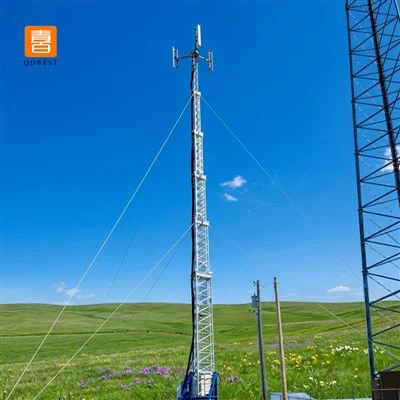
As a supplier of angle steel towers, I understand that each project has its own unique requirements. Whether you need a simple and cost – effective angle steel tower for a small – scale power project or a high – performance lattice tower for a large – scale telecommunications network, I can provide you with professional advice and high – quality products.
Telecommunication Tower If you are considering a tower project, I invite you to contact me to discuss your specific needs. We can work together to determine the most suitable tower type for your application, ensuring that you get the best value for your investment.
References
- Steel Construction Manual, American Institute of Steel Construction
- Structural Engineering Handbook, CRC Press
- Telecommunications Tower Design Guide, Federal Communications Commission.
Qingdao BEST Steel Structure Co., Ltd.
Qingdao BEST Steel Structure Co., Ltd. is one of the most professional angle steel tower manufacturers and suppliers in China. We warmly welcome you to buy customized angle steel tower made in China here from our factory. If you have any enquiry about OEM service, please feel free to email us.
Address: Jiaobei Industrial Park, Qingdao, China
E-mail: sales@qdbsstower.com
WebSite: https://www.qdbsstower.com/
