As a BNC RF connector supplier who’s worked with these components for over a decade, I’ve lost count of how many times customers have stopped me mid-conversation with one specific question: “What’s the maximum voltage I can run through a BNC connector without damaging it?” It’s a fair ask—too much voltage doesn’t just fry a connector; it can ruin the equipment it’s wired to, create safety hazards, and cost you time and money. But the answer isn’t a one-size-fits-all number. Let’s break this down, because skipping the details here is where a lot of people go wrong. BNC RF Connector
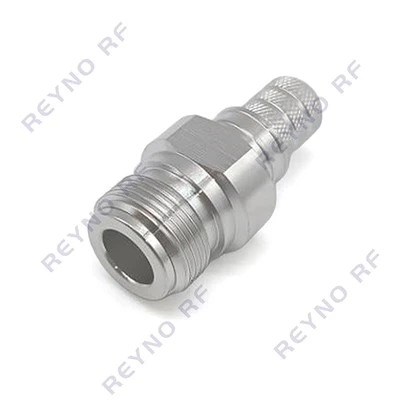
First, let’s clear up a common misconception: the “maximum voltage rating” printed on a BNC connector isn’t a random number pulled out of thin air. It’s based on two core factors that every RF professional should understand: the dielectric between the center pin and the outer shell, and the air (or other insulating material) around the connector itself. Most standard 50-ohm BNC connectors, the kind used for test equipment, broadcast gear, and industrial sensors, have a nominal voltage rating of 500 volts RMS when used in open air. But wait—if you’re using them in a tightly sealed, pressurized system? That number jumps. If you’re working in a vacuum? It drops. If you cram two BNCs into a crowded rack so close they’re touching other cables? That 500V number becomes a soft maximum, not a hard limit.
I learned this lesson the hard way early in my career. A customer called us in a panic, saying a batch of his BNC connectors were arcing mid-broadcast during a live sports game. He’d wired them to run 600V RMS to power a remote camera’s signal amplifier, straight through standard off-the-shelf BNCs. The problem wasn’t the connectors’ rating—they were fine for 500V, but when he mounted them in the cramped equipment bay, the air gap between the center pin and outer shell shrank by almost a third. The arcing happened because the dielectric breakdown voltage (the point where insulation stops working) dropped below 600V. We swapped in high-voltage BNCs designed for 1000V RMS, and he hasn’t had an issue since. That’s the kind of real-world scenario you don’t see in datasheets, which is why I always walk customers through context before locking in a number.
So let’s get into the details that matter. Dielectric breakdown voltage is the key here. For air, the standard breakdown is about 30,000 volts per inch—meaning a 0.01-inch gap (the typical space between a BNC center pin and its outer shell) would break down at around 300V. But BNC manufacturers engineer their connectors to widen that gap slightly, and use a hard plastic dielectric (usually Teflon or PEEK) that has a much higher breakdown rating than air. A 0.05-inch Teflon gap, for example, can handle over 15,000V RMS, which is why standard BNCs hit their 500V rating long before they hit the dielectric limit in open air. The 500V number is actually a safety factor—engineers build in enough buffer to account for dust, humidity, and small variations in manufacturing. That’s why you’ll see 500V listed as the standard, but it’s not the absolute physical limit of the connector.
Now, there are specialty BNC connectors that go way beyond that 500V mark. If you’re working with high-voltage RF systems, like particle accelerators, industrial plasma equipment, or high-power test amplifiers, you can get BNCs rated for 1500V, 2500V, even 5000V RMS. These aren’t just “thicker BNCs”—they’re redesigned. They have larger center pins to spread the voltage out, thicker, higher-grade dielectrics (like high-temperature Teflon or ceramic), and sealed outer shells to keep contaminants out that would reduce insulation. One of our top-selling specialty lines is a 1500V BNC used in medical X-ray equipment, where even a small arc can put a patient at risk. We worked with a hospital engineering team last year to adjust the cable lengths and connector spacing in their linear accelerator, and switching to the high-voltage BNCs cut their insulation failure rate by 90% in the first six months.
But here’s the catch: maximum voltage rating isn’t just about the connector. It’s about the entire cable assembly. Even if you have a 5000V BNC, if you pair it with a cheap coaxial cable that has a dielectric rating of only 300V, that’s your system’s limit. I see this all the time—customers buy premium connectors to save their high-power equipment, but skimp on cable, and end up with the same arcing issue. The rule of thumb we share is: match the connector’s voltage rating to the cable’s rating, then add a 20% safety buffer for environmental factors. Humidity, for example, lowers dielectric strength—high humidity can reduce a Teflon dielectric’s performance by up to 15%, so that 500V connector becomes effectively 425V in a 90% humidity environment. For outdoor installations, that buffer is non-negotiable.
Another factor people overlook is AC vs. DC voltage. The 500V RMS rating for standard BNCs is for alternating current, but DC voltage acts differently. DC voltage has a lower chance of arcing because it doesn’t create the same electrical stress as AC, which cycles from positive to negative thousands of times per second. That means you can often run a DC voltage that’s slightly higher than the RMS rating without issues. We’ve had customers run up to 600V DC through standard BNCs in low-stress environments (like indoor control systems) with no problems, but we always warn them that this is a case-by-case call. If there’s any chance the system could get jarred, or the connectors get dirty, bump that down to 450V DC to be safe.
What about the lower end? Wait, no—we’re talking maximum, but there’s a myth that using a voltage way below a connector’s rating is bad. That’s not true. Connectors are engineered to handle a range, not just a single number. But if you’re running very low voltage (like 5V for a sensor), you still need to ensure the connector is rated for that use case, especially if it’s exposed to high-voltage equipment nearby. A BNC rated for 500V won’t care about 5V, but if it’s sitting next to a 1000V line, you still need to confirm its insulation can handle any stray voltage.
Let’s talk about testing, because that’s how we validate these ratings. At our facility, every batch of BNC connectors goes through a dielectric withstand test before it leaves the warehouse. For standard 500V BNCs, we run 1500V RMS for one minute across the connector, and if there’s no arcing or breakdown, it passes. That’s a 3x safety factor, which is why the 500V rating is so reliable. For high-voltage connectors, we push that test up to 2x the listed rating—so a 1500V BNC gets 3000V for one minute. We’ve had customers ask us to skip that test for rush orders, but we never do. Cutting corners there is how you end up with a connector that fails mid-operation.
Now, let’s address the edge cases where voltage gets tricky. If you’re working in space, or a high-altitude environment, air pressure drops, which lowers the dielectric strength of air. At 10,000 feet, air pressure is about 70% of sea level, so the breakdown voltage drops to around 21,000 volts per inch. That means a standard BNC, which works fine at sea level, might arc at 400V at 10,000 feet. For aerospace applications, we recommend BNCs rated for twice the standard 500V, because of that altitude effect. If you’re working in a vacuum, air is gone entirely, so the only insulation is the connector’s dielectric. That means you can run much higher voltage—we’ve supplied BNCs rated for 10,000V for vacuum chamber experiments, because the dielectric is the limiting factor there, not air.
Another edge case: mating multiple connectors incorrectly. If you force a BNC onto a bad connector, or don’t seat it all the way, you create a tiny gap that’s too small for voltage to handle. A customer told us last year that his rack of test gear was experiencing random arcing, and he traced it back to a single BNC that was only half-seated, leaving a 0.005-inch gap instead of the standard 0.01-inch. He was running 500V, but the smaller gap made the dielectric breakdown at 250V, causing the arcing. It’s a silly mistake, but it’s super common—I always remind customers to twist BNCs until they click, which ensures the gap is consistent.
So putting this all together, what’s the “maximum” voltage for a BNC connector? The short answer is: it depends. If it’s a standard 50-ohm BNC in open air, low humidity, and properly seated, the safe maximum is 500V RMS AC, or around 600V DC. If it’s cramped, high humidity, high altitude, or DC with no stress, you can push that a bit, but never more than 10% above the listed rating. If you’re working with high-power systems, industrial or medical equipment, vacuum, or extreme environments, use a specialty high-voltage BNC rated for 1500V or higher, and confirm the entire cable assembly matches that rating.
I know this is more nuanced than the simple number you might have been hoping for, but that’s the reality of RF connectors. There’s no one-size-fits-all, and cutting corners on voltage ratings is a fast way to deal with downtime, safety issues, and wasted equipment. Over the years, we’ve seen customers get this wrong again and again, and we’ve built our business on being transparent about those nuances—no overpromising, no hiding caveats in datasheets.
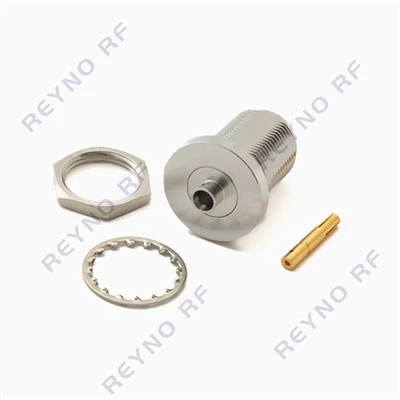
If you’re working on a project and aren’t sure what voltage rating your BNC connectors need, or you’ve had issues with arcing or insulation failure, don’t guess. Reach out to us to discuss your specific application, environment, and equipment. We can help you select the right connector, test your cable assemblies, and make sure you’re safe and compliant.
RF Connectors reference
- RF Connector Technology, Handbook of Electronic Components, 4th Edition, 2021
- TE Connectivity, BNC Connector Performance Specifications, Application Note, 2020
- National Instruments, Test Equipment Connector Best Practices, Technical Paper, 2019
- IEEE Standard for RF Connectors, IEEE Std 1590-2018
Zhenjiang Leiluo Electronic Co., Ltd.
Zhenjiang Leiluo Electronic Co., Ltd. is one of the most professional bnc rf connector manufacturers and suppliers in China. We have world-leading production equipment and strong manufacturing capabilities. Please feel free to buy advanced bnc rf connector for sale here and get quotation from our factory. Customized orders are welcome.
Address: No.21 Houxiang Industrial Road, Danbei Town, Danyang City, Jiangsu Province
E-mail: wenvy@rfleiluo.com
WebSite: https://www.rfreyno.com/
