Alright, let’s keep this real. Let’s talk about something I get asked literally every single day here at our shop: what even is a brushless motor driver? I’m Jake, by the way – I’ve been selling brushless motors (and their drivers) for 7 years, so I’ve fielded this question from everyone from a hobbyist building a drone to a guy outfitting a CNC mill in a garage. Most folks who come to us know they need a brushless motor, but the driver part? Total mystery. Let’s break it down like we’re chatting over a coffee, no boring jargon (okay, maybe a tiny bit – but I’ll explain it). Brushless Motor

First off, let’s set the scene: brushless motors are all the rage now, right? They’re in your fancy drone, that electric bike you ride to work, even the HVAC blower in your apartment. Way more efficient than the old brushed motors (those ones with the little carbon brushes that wear out – you know, the ones that spark when you turn on a vacuum). But here’s the thing: a brushless motor can’t just plug straight into a wall or a battery and work. It’s like a fancy sports car – it needs a driver who knows when to shift, not just someone who steps on the gas. That driver? That’s the brushless motor driver. We call them “motor controllers” too, but “driver” is way more what they actually do.
Wait, let’s get super basic for a sec to make sure we’re all on the same page. A brushless motor has these coils inside (stators) and permanent magnets on the rotor. To make it spin, you have to send power to each coil in a super specific order, and you have to adjust how much power you send (the voltage or current) to control speed and torque. If you get that order wrong? The motor just hums, or jitters, or maybe doesn’t spin at all. Brushed motors do that automatically with those carbon brushes – they physically swap which coil gets power as the rotor spins. But since brushless motors don’t have brushes, someone has to do that switching digitally. That “someone” is the driver. It’s the middleman between your power source (battery, wall outlet, whatever) and the motor itself.
Let me give you a real example because that’s how I learn best. Last month, a customer came in with a tiny drone that kept crashing. He thought the motor was broken, but when he popped the top open, I looked at the driver board – it was a cheap, off-brand one he got on Amazon that couldn’t handle the quick power changes the drone needed. The driver for a tiny hobby drone is way different from the driver for a 500W electric bike motor, or the one for a factory conveyor belt’s brushless motor. Size matters, power rating, how fast it switches, even if it has extra features like temperature sensors (important for high-load jobs). The driver’s job isn’t just to turn the motor on – it’s to make it do exactly what you want, safely.
Now, let’s dive into what makes a good driver vs. a junk one. I’ve seen so many folks cut corners here, and it always comes back to bite them. A good driver will have three main parts, basically: first, a power section that can handle the motor’s current without overheating. Second, a control circuit that “knows” where the rotor is at all times (how? It uses hall sensors – tiny little magnets that tell the driver the rotor’s position – or sensorless tech, which uses the motor’s own back-EMF to guess. Sensorless is cheaper, but less precise, so we only use that for low-load stuff like ceiling fans). Third, a communication interface so you can connect it to a remote, a PLC, a drone’s flight controller – whatever you’re using to tell the motor to speed up or slow down.
Wait, let’s bust a myth right now: some people think the motor’s kV rating (that number on the motor like 1000 kV or 2000 kV) is all you need. No way. The driver has to match that. A 2000 kV motor needs a driver that can switch power fast enough to keep up – if you use a slow driver, the motor won’t reach full speed, it’ll waste power, and it might burn out. We’ve had customers bring back motors because they ran them with a mismatched driver, and it’s never pretty. Also, the driver handles safety stuff too – like overcurrent protection (if the motor gets jammed, the driver cuts power so it doesn’t burn the coils) and overheat protection, which is huge for industrial uses. I can’t tell you how many factory workers I’ve talked to who’ve had entire production lines shut down because a bad driver overheated and fried.
Another thing: we get a lot of people asking if “ESC” is the same as a brushless motor driver. Oh, yeah – ESCs are Electronic Speed Controllers, which is the specific name for drivers used in brushless motors for things like drones, RC cars, bikes. But technically, an ESC is a type of brushless motor driver, just for high-speed, low-to-medium power apps. If you’re talking about a larger motor, like one for a robot arm or a conveyor, we just call them brushless motor drivers. Same core job, different packaging and specs.
Let me throw in a quick story that drives this home (pun totally intended). A local robotics team came to us last year, working on a competition robot that needed a pair of 1kW brushless motors. They had a big prototype built, but their original driver kept cutting out when the robot hit a small obstacle – the driver couldn’t handle the sudden spike in torque. Their old driver was rated for 1.2kW max, which they thought would be fine, but real-world use is way different than testing. We swapped them for our industrial-grade drivers with built-in torque limiting, and they won the regional competition a month later. That’s what this is all about – getting the right driver so your motor works when you need it, not just when you’re testing in your garage.
Now, what should you care about when picking a brushless motor driver? Let’s make this simple, no spreadsheet of specs to stare at for hours. First, power rating: match it to your motor’s continuous and peak current. Don’t just go by the motor’s nominal power – if your motor has a peak power of 1.5kW, get a driver that handles at least 1.8kW to be safe. Second, feedback type: do you need precise speed/position control? Go with hall-sensor drivers. If it’s a low-load, high-speed app (like a fan), sensorless works fine. Third, communication: are you connecting it to a microcontroller, PLC, or remote? Make sure the driver has the right ports – we have drivers that work with PWM, CAN bus, even Bluetooth for hobby stuff. Fourth, environment: is this going in a dusty factory, or a wet outdoor robot? We have sealed drivers for harsh conditions, don’t use a hobby drone driver in a food processing plant, I beg you.
Here’s a little insider tip from our team: a lot of suppliers will sell you a generic driver, but that’s a mistake. Brushless motor drivers are tuned specifically for the motor’s winding – a driver made for a 100W drone motor won’t work well with a 500W e-bike motor, even if the power rating is close. That’s why we don’t do one-size-fits-all here; we work with customers to match the driver exactly to their motor, their load, and their application. I’ve seen people save $5 on a cheap driver, only to have to replace the motor and driver a month later – that’s a waste of time and money, trust me.
Wait, let’s make sure we’re not getting too technical, but let’s touch on how the driver actually switches power, just so you get the “magic” part. Inside the driver, there are six little transistors (we call them MOSFETs) that turn on and off super fast (like thousands of times a second). They pair up to send power to each coil in the stator: pair 1 powers coil A, pair 2 powers coil B, pair 3 powers coil C, and the driver switches through this sequence in order. The hall sensors tell the driver when to switch – every time the rotor moves a little, the hall sensor sends a signal, and the driver flips to the next pair of transistors. That’s why the rotor spins smoothly, instead of jolting. If the switching is off by even a millisecond, you get vibration, noise, and wasted energy.
I get why this is confusing. A customer last week said, “Why can’t I just buy a motor that works out of the box?” Because it’s a system. The motor, driver, and control unit are all linked – like your phone, charger, and operating system. You can’t use an Android charger on an iPhone (okay, technically you can, but it might break it) – same with motors and drivers. The driver is the part that translates your control signal (“speed up 10%”) into actual power to the motor. Without it, the motor is just a hunk of metal and magnets that can’t do anything.
Now, let’s talk about common mistakes we see all the time. First, under-sizing the driver. We had a guy with a small CNC router, he used a driver rated for 10A for a motor that pulls 15A peak. The driver overheated every time he carved a thick piece of wood, and finally fried after a week. Second, ignoring feedback. A hobbyist building a 3D printer used a sensorless driver, and the z-axis kept skipping steps because the driver couldn’t tell where the rotor was – his prints were a mess for months until he switched to a hall-sensor driver. Third, not accounting for the environment. A customer put a driver in an outdoor gate opener, and it rusted out in six months because he used a non-sealed driver – we sold him a sealed industrial driver, and it’s been working fine for two years.
At the end of the day, what’s a brushless motor driver? It’s the brain that makes your brushless motor useful. It’s not just a box that sends power – it’s the part that controls speed, torque, safety, and reliability. It’s the difference between a drone that flies smoothly and one that crashes, a robot arm that picks up a cup of coffee and one that smashes it, an e-bike that gets you to work on time and one that dies halfway.
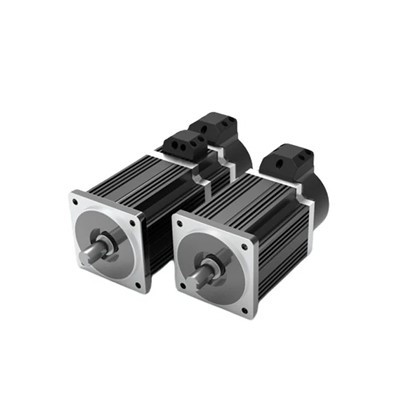
If you’re here because you need a driver for a brushless motor – whether you’re a hobbyist with a drone, a small business with a conveyor, or a big factory scaling up production – we can help. We’ve tested hundreds of drivers, we know how to match them to motors, and we don’t sell you something you don’t need. No pushy sales tactics, no jargon to confuse you, just straight talk and parts that work when you need them. If you’re tired of cutting corners and having your gear break, reach out to us to talk through your project. We’ll get you the right driver, no hassle.
DC Motor References:
- “Brushless DC Motor Fundamentals,” Texas Instruments Technical Literature, 2022.
- “Understanding Brushless Motor Controllers,” Robotics Today Magazine, Vol. 18, No. 3, 2021, pp. 45-52.
- “ESC vs. Brushless Motor Driver: A Practical Comparison,” RC Hobbyist Quarterly, Vol. 12, No. 4, 2020, pp. 18-21.
- “Industrial Brushless Motor Drive Safety and Performance Standards,” International Electrotechnical Commission (IEC) Standard 61800-5-1, 2019.
Zibo Auric Mechanical and Electrical Technology Co., Ltd.
As one of the leading brushless motor manufacturers and suppliers in China, we warmly welcome you to buy advanced brushless motor for sale here from our factory. All customized motors are with high quality and competitive price.
Address: B419, High-tech Entrepreneurship Park, High-tech Zone, Zibo City
E-mail: cui@auricmotor.com
WebSite: https://www.auricmotor.com/
