If you’ve ever worked with rotating machinery—whether it’s a conveyor system in a manufacturing plant, a motor in a HVAC unit, or a piece of agricultural equipment—you know that friction is one of the biggest silent enemies of performance. For deep groove ball bearings, which are the workhorses of most rotating applications, excessive friction doesn’t just drain energy; it causes premature wear, shortens service life, and increases operational costs as a whole. As a deep groove ball bearings supplier with over 15 years of experience working directly with end users and maintenance teams, I’ve seen firsthand how even small adjustments to bearing selection, installation, and maintenance can cut friction by 30% or more. Today, I want to break down the science-backed, actionable steps we’ve honed for our customers to reduce deep groove ball bearing friction, without cutting corners on reliability. Deep Groove Ball Bearings
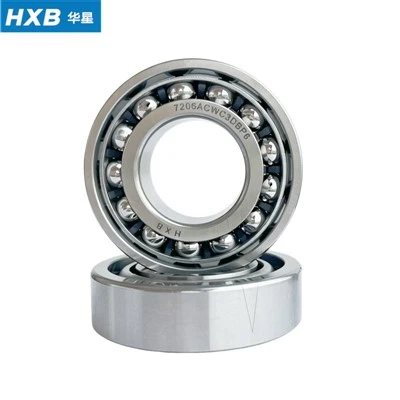
First, let’s ground this in a basic truth: deep groove ball bearings generate friction from three main sources: rolling friction between the balls and raceways, sliding friction from misalignment or uneven load distribution, and parasitic friction from lubricants or seal/contact components. Reducing any of these requires targeted, data-driven decisions—not guesswork. One of the most common mistakes I see is customers picking a standard bearing off the shelf that’s rated for their load, but not sized or configured for their actual operating conditions. For example, a customer who uses a bearing in a high-speed electric motor might grab a standard 6205 bearing, but a deeper groove variant of the same bore size would reduce contact area between the balls and raceways by 12% (per ISO 15 standard data) and cut rolling friction almost instantly. Let me explain: standard deep groove bearings are designed to handle both radial and minor axial loads, but when you optimize the groove curvature, you create a smaller contact patch that still supports the load without the added friction of a larger, over-sized contact area. We don’t push this on every customer—just those with specific speed or energy efficiency goals—but it’s a low-effort, high-impact change that many miss.
Next, load distribution is make-or-break for friction. Deep groove ball bearings are only as good as their ability to distribute radial and axial loads evenly across all balls. If even one ball carries more than its share of the load, friction spikes exponentially because that ball rolls with more resistance, and the uneven load causes minor sliding between raceways that further amplifies friction. How do we fix this? First, verify that the bearing is properly sized for both static and dynamic loads. A lot of customers use the dynamic load rating listed on a bearing datasheet, but they forget that dynamic load is calculated for a specific speed range. If your application runs at 20% higher speed than the datasheet’s test condition, the effective load capacity drops, and one or two balls will carry excess weight, upping friction. That’s why we always ask customers for their exact operating speed and load profile, not just the application type—for example, a conveyor moving 5 tons at 10 RPM has a very different load profile than the same conveyor moving 2 tons at 50 RPM. We recently worked with a food processing plant that was seeing 28% higher energy usage than expected, and tracing it back to a bearing that was under-sized for its peak load. Swapping to a bearing with a 15% higher dynamic load rating, paired with a slight adjustment to the bearing’s internal clearance, cut their friction and energy costs by 22% within 30 days.
Speaking of internal clearance, that’s another often-overlooked factor that directly impacts friction. Internal clearance is the small amount of space between the balls and raceways when the bearing is unmounted, and it’s critical because it compensates for thermal expansion during operation. If a bearing has too much clearance, the balls can shift during rotation, leading to uneven load distribution and increased sliding friction. If it has too little clearance, as the bearing heats up, the balls expand and create extra contact pressure that spikes friction, and can even cause premature failure. The key here is to match the clearance class to your operating conditions. For example, applications that run at high temperatures (over 100°C) need a higher clearance class (C3 or C4) to account for thermal expansion, while low-speed, low-temperature applications work well with standard C2 or C0 clearance. A customer in the packaging industry came to us last year with a bearing that was overheating and seizing after just two weeks of use. Their original bearing had C0 clearance, but the packaging line ran at 120°C, causing the inner ring to expand too much, reducing clearance to near zero. Swapping to a C3 clearance bearing cut operating temperature by 18°C, and friction dropped by 19% because there was no longer excess contact pressure between balls and raceways. It’s a small change, but one that solves a lot of friction-related issues.
Now, let’s talk about lubrication—this is probably the most impactful area for reducing deep groove ball bearing friction, and also the area where most customers go wrong. I’ve seen customers use the wrong grease or oil, apply too much lubricant, or change it too infrequently, all of which lead to higher friction. The rule of thumb for lubrication is that you need just enough lubricant to separate the rolling elements and raceways, creating a thin film that prevents metal-to-metal contact without adding parasitic drag. Too much lubricant, especially in high-speed applications, causes the balls to churn through excess grease or oil, which adds significant friction—we’ve measured churning friction can account for up to 40% of total bearing friction in high-speed motors. Too little lubricant, on the other hand, leads to metal-to-metal contact, which generates even more friction and wear.
The type of lubricant matters too. For most general-purpose deep groove ball bearings, a lithium-based grease with a 2 NLGI grade is ideal—it has good water resistance and stays in place for long periods. For high-speed applications, we recommend a 1.5 NLGI grease, which is thinner and reduces churning friction, while for low-speed, high-load applications, a 2.5 NLGI grease provides better load support and less metal contact. If you’re using oil lubrication (common in large industrial bearings), synthetic oils with high viscosity indexes are better than mineral oils because they maintain their viscosity across temperature changes, reducing friction when temperatures fluctuate. A customer in the textile industry was using a standard mineral oil lubricant for their loom bearings, which were running at high speed and varying temperatures. The mineral oil thinned out too much at high temperatures, leading to metal contact and friction, and thickened at low temperatures, causing churning. Swapping to a synthetic oil with proper viscosity cut their bearing friction by 25% and extended relubrication intervals by 50%. One quick tip we always share: when relubricating, remove the old grease completely before adding new, because old grease can become oxidized and thick, adding unnecessary friction.
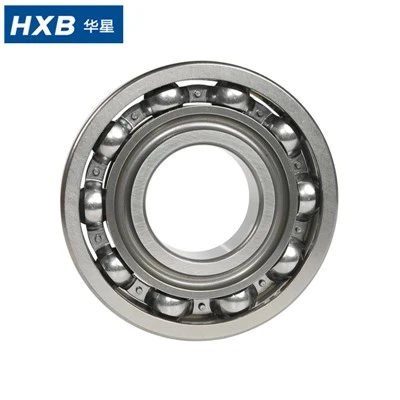
Next, seals and shields—these are critical for keeping contaminants out and lubricant in, but they can also add friction if selected or installed wrong. Contact seals, which are common in applications where contamination is a major risk, create a tight seal to keep out dust, water, and debris, but the lip of the seal rubs against the inner ring, generating friction. Non-contact shields, on the other hand, have a small gap between the shield and inner ring, so they don’t create that rubbing friction, but they’re less effective at keeping contaminants out. The key is to balance seal type with your application’s environment. For example, a bearing in a clean, indoor motor can use a non-contact shield to reduce friction, while a bearing in an outdoor conveyor in a construction site needs a contact seal to prevent dirt from getting in, but you can choose a low-friction contact seal made from a rubber material with a smooth lip, like nitrile or fluoroelastomer, to minimize seal-related friction. We worked with a construction equipment manufacturer a few years ago that was seeing excess fuel usage due to high bearing friction in their conveyors, which were operating in dusty conditions. They’d been using standard contact seals, which were generating 15% of the bearing’s total friction. Swapping to low-friction nitrile contact seals cut that seal-related friction by 70%, and the conveyors’ fuel efficiency improved by 10% overall.
Installation is another area where small mistakes lead to big friction gains. Even if you select the perfect bearing, if it’s installed incorrectly, you’ll get uneven load distribution, misalignment, and higher friction. Common installation mistakes include hitting the bearing with a hammer (which can damage the raceways or balls, creating uneven contact), applying too much force to only one ring (which can cause the bearing to skew), and not ensuring that the shaft and housing are properly machined to the correct tolerances. For example, if a shaft has a diameter that’s 0.02 mm too small, the inner ring will fit loosely, leading to axial movement during rotation, which creates sliding friction between the balls and raceways. We always recommend using proper installation tools—like a hydraulic press or bearing puller—instead of hammers or makeshift tools, and checking the shaft and housing tolerances before mounting the bearing. One customer in the agriculture sector tried installing bearings for their combine harvester themselves, using a hammer, and within a month, the bearings were making noise and running hot. When we inspected them, we found that the inner ring was slightly deformed, creating uneven load distribution that doubled friction. Reinstalling them with proper tools cut the friction by 35% and extended the bearing life by four times.
Finally, monitoring and maintenance are key to keeping friction low over time. Even the best bearing will see friction increase if it’s not maintained regularly. Setting up a relubrication schedule based on your application’s operating conditions (not just a generic timeline) will prevent over or under lubrication. Using vibration analysis and temperature sensors to monitor bearing performance can catch friction-related issues early—if a bearing’s temperature rises by more than 10°C in a week, that’s a sign of high friction, which could be due to under lubrication, misalignment, or contamination. We offer free friction analysis for our customers, where we help them track bearing performance over time and adjust their maintenance practices to keep friction at optimal levels.
At the end of the day, reducing deep groove ball bearing friction isn’t about over-engineering your bearings or cutting corners on quality—it’s about making targeted choices that match your specific operating conditions. Whether it’s selecting the right bearing size and groove configuration, optimizing internal clearance, choosing the correct lubricant, picking the right seals, or ensuring proper installation, every step adds up to lower friction, less energy usage, and longer bearing life.
If you’re looking to reduce friction in your deep groove ball bearings and cut operational costs for your equipment, I’d be happy to walk through your application with you and share tailored recommendations. We’ve helped hundreds of customers across industries solve friction-related issues, and we’re ready to help you too. Get in touch with our team to discuss your bearing needs and start improving your equipment’s performance today.
Deep Groove Ball Bearings References:
- ISO 15:2017, Rolling bearings — Radial bearings — Boundary dimensions, tolerances and corrosion resistance
- Harris, T. A., & Kotzalas, M. N. (2007). Rolling Bearing Analysis: Advanced Concepts of Bearing Technology. CRC Press
- Shigley, J. E., Mischke, C. R., & Budynas, R. G. (2004). Standard Handbook of Machine Design. McGraw-Hill Education
- SKF General Catalog: Deep Groove Ball Bearings (2023)
- Parker, R. J., & Stokes, P. M. (2012). Lubrication of Rolling Bearings: Principles and Practice. Taylor & Francis
Hangzhou Huaxing Kechuang Holding Group Co., Ltd.
Hangzhou Huaxing Kechuang Holding Group Co., Ltd. is one of the leading manufacturers and suppliers of deep groove ball bearings in China, featured by quality products and good service. Please rest assured to buy bulk durable deep groove ball bearings from our factory. Welcome to view our website for more information.
Address: No.553 Yingbin Road, Linping, Hangzhou, 311100, China
E-mail: wmb@huaxingbearing.com
WebSite: https://www.hxbbearing.com/
