Hey there, if you’ve ever dug into the world of titanium-based materials, you’ve probably stumbled on two terms that get tossed around way too loosely: titanium bases and titanium dust. I’ve been supplying titanium bases for the last 8 years, and let me tell you—this is the kind of mix-up that makes both new buyers and even some vets scratch their heads. I’ve had so many calls where someone goes, “Hey, I need 500 lbs of titanium dust for a project” and I’m like, “Wait, hold up—you might mean titanium bases, and here’s why that’s a huge difference.” Let’s break this down like I’d explain it to a new client over a coffee, no stuffy jargon, just real talk. Titanium Bases
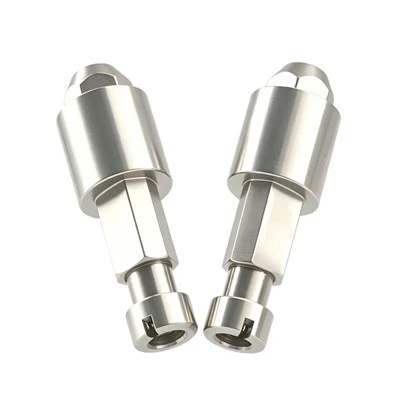
First off, let’s start with the basics of what each actually is, because that’s where all the confusion starts. Titanium bases—let’s make this simple—are basically solid, bulk forms of titanium that haven’t been processed into tiny bits. I’m talking about things like titanium billets (those big, solid rods or blocks we start with), ingots (the cast chunks from smelting raw titanium ore), and sometimes forged or rolled plates that still have that solid, uniform structure. We don’t make these to be powdery; we make them to be machined, formed, or fabricated into all kinds of stuff—think aerospace parts, medical implants, even sports gear like bike frames. The key here is that titanium bases are a raw material for manufacturing, not something you use directly for most end products. I often tell my team, “Titanium bases are the blueprint, not the building block.”
Now titanium dust—this is the fine-grained, powdery version of titanium, right? It’s made by grinding, milling, or atomizing bulk titanium into particles that can be as small as a few micrometers. The particle size varies, but it’s way smaller than the tiny chips you get when you machine titanium bases. The problem with titanium dust is that it’s not just a “fine powder”—it’s highly reactive, especially when it’s really small. Like, I remember a few years back, a small manufacturing shop tried to use titanium dust for a metal 3D printing project they were testing, and they didn’t realize how flammable it is when it’s suspended in air. It caused a small spark that set off a tiny explosion—nothing dangerous, but it showed just how different this stuff is from what we supply as titanium bases.
Next up, let’s talk about how we make each, because that’s a big part of why they end up so different. For titanium bases, the process starts with titanium ore (like ilmenite or rutile) that’s processed into titanium sponge—those porous, sponge-like chunks that are the first step in most titanium production. We then take that sponge and melt it in a vacuum arc furnace (super high heat, like 3,000 degrees Fahrenheit) to turn it into ingots. Then we either forge those ingots into billets, roll them into plates, or machine them into rough forms. The whole point here is to keep the material dense, uniform, and free of impurities as much as possible. We test every batch of titanium bases we send out to make sure the composition is spot-on—no extra oxygen or nitrogen that would make the metal brittle.
Titanium dust, on the other hand, is made by processing that same bulk titanium into tiny particles. Sometimes it’s done by milling solid titanium down, but the more common method is gas atomization: you melt titanium and then blast it with high-pressure gas to break it into tiny droplets that harden into powder. But the thing is, during that process, the tiny particles are way more exposed to oxygen and moisture, so you can end up with more impurities (like titanium oxide) that mess with the material’s properties. And since it’s a powder, it’s way harder to control the quality—different batches can have wildly different particle sizes or reactivity, which is a big deal if you’re using it for something critical.
Now let’s get into the actual properties, because that’s what matters most when you’re picking the right material. Titanium bases are known for their strength-to-weight ratio—they’re super strong but way lighter than steel, they’re corrosion-resistant, and they’re biocompatible (that’s why they’re used for hip replacements). Because they’re solid, their mechanical properties are consistent across the whole piece. If you machine a billet into a aircraft turbine blade, the blade will be strong and reliable because the original titanium base was uniform. We supply titanium bases that meet all industry standards—like ASTM standards for aerospace or medical applications—so buyers know exactly what they’re getting.
Titanium dust, though, has way different properties. Because it’s tiny particles, its surface area is huge, which makes it reactive. Like I said earlier, it’s flammable in air—if you have a cloud of titanium dust and a spark, it can ignite really fast. It’s also more prone to oxidation, so the powder can be weaker or more brittle than solid titanium. And since it’s a powder, it’s not as good for structural applications. You could try to compress titanium dust into a solid shape, but that process (called sintering) doesn’t give you the same strength as a solid titanium base. It’s more used for things like 3D printing, metal injection molding, or even some chemical processes, but it’s not a replacement for titanium bases for most manufacturing.
Wait, let’s talk about use cases, because that’s where I see the most mistakes. A lot of new engineers reach out asking for titanium dust when they need a raw material to make a part. Like, a few months ago, a guy working on a custom prosthetic arm reached out saying he needed titanium dust. I told him he didn’t need that—he needed a titanium billet, which we supply, because you machine the billet into the exact shape of the prosthetic, and it has the strength and biocompatibility he needed. If he’d used titanium dust, he’d have ended up with a weaker part that would have failed way sooner, and it might not have been safe for medical use.
Other common mix-ups: people in the additive manufacturing space (3D printing) might think they can use titanium bases, but no—3D printing usually uses titanium powder, which is similar to titanium dust, but it’s actually a more controlled type of powder. But even then, that’s not the same as titanium bases. And some people might confuse titanium dust with the small titanium chips you get when machining titanium bases—those chips are bigger, less reactive, and can often be recycled back into titanium bases later, whereas titanium dust is hard to recycle because of its reactivity and small particle size.
Another thing to consider is safety. Working with titanium bases is straightforward—you need standard safety gear like gloves and goggles, same as any metal. But titanium dust is a whole other level. It’s not toxic like lead or something, but it’s a fire and explosion hazard. OSHA has specific regulations for handling titanium dust, because if it builds up in a workspace, a single spark can cause a serious incident. When we supply titanium bases, we don’t have to worry about that kind of safety risk—you can store them on a shelf, machine them in a regular shop, no special ventilation or explosion-proof equipment needed. That’s a huge plus for small shops or manufacturers that don’t want to invest in extra safety gear.
Let’s also touch on quality control, because that’s a big reason why choosing the right one matters. When we supply titanium bases, every batch gets tested for chemical composition, mechanical properties (like tensile strength and hardness), and dimensional accuracy. We keep detailed records so our clients can trace the material all the way back to the smelter. For example, if a aerospace company needs a titanium billet for a jet engine part, they need to know exactly what’s in that material—no surprises. Titanium dust doesn’t have that same level of traceability, because it’s processed into tiny particles; it’s way harder to test every particle for consistency, so there’s more risk of defects.
I know it’s easy to mix these two up, especially if you’re new to working with titanium. The industry uses a lot of shorthand, so people might say “titanium material” and not specify if they mean bulk or powder. But trust me, picking the wrong one can cost you time, money, and even lead to failed parts. I’ve had clients come to me after ordering titanium dust from another supplier because they thought it was the same as titanium bases, and they ended up with a material that didn’t work for their project. One guy had to scrap a whole batch of parts because the titanium dust he used didn’t have the strength he needed, and it cost him $10,000 in lost materials and missed deadlines. That’s why I make it a point to explain the difference clearly to every new customer, no matter how small their order is.
So to wrap this up, let’s keep it simple: titanium bases are solid, bulk raw titanium materials (billets, ingots, plates) made for machining, forging, or fabricating into structural parts—consistent, safe, and suitable for high-stakes applications like aerospace, medical, and automotive. Titanium dust is a fine, reactive powder made for specialized uses like 3D printing or chemical processes, with different properties and safety risks.
If you’re working on a project and you’re not sure which one you need—whether it’s a custom part, a component for a machine, or something for a medical or aerospace application—hit me up for a chat. I’ve been in this game long enough to know exactly what kind of titanium material will work best for your needs, and I can supply high-quality titanium bases that meet all your requirements. No confusing jargon, no hidden fees, just straight talk and reliable material.
Scanbody References:
- ASM International. (2005). Titanium: Properties and Applications. ASM Handbook, Volume 2: Properties and Selection: Nonferrous Alloys and Special-Purpose Materials.
- Occupational Safety and Health Administration (OSHA). (2021). Hazard Alert: Combustible Dust Explosions. U.S. Department of Labor.
- Cockeram, B. V. (2018). Titanium Powder Metallurgy: A Review of Recent Developments. Journal of Materials Processing Technology, 255, 712-727.
Dongguan Denreal Devices Co., Ltd.
As one of the most professional titanium bases manufacturers and suppliers in China, we’re featured by quality products and low price. Please rest assured to buy bulk customized titanium bases made in China here from our factory. For free sample, contact us now.
Address: NO.622, Baoshi Road, Qishi town, Dongguan, Guangdong, China
E-mail: Chason.Yeh@Gmail.com
WebSite: https://www.denreal.com/
