If you’re scouting for steel shelters, you’ve probably stared at a pile of catalogs or chatted up builders who swear by “one size fits all” — only to realize that line is total B.S. I’ve been selling steel shelters for 7 years now, and let me tell you, every client’s needs are totally different. A guy storing a farm tractor doesn’t need the same footprint as a construction crew housing 20 workers for 3 months, right? That’s why sizes aren’t just random numbers — they’re tied straight to what you’re using the shelter for, and I’ve broken down the most common (and some underrated) sizes you’ll actually come across, no fancy engineering jargon, just real-world stuff. Steel Shelters
First, let’s start with the tiny ones — the “utility-sized” shelters, the ones most folks overlook until they need ‘em. These are usually small enough to park a single ATV, a side-by-side, or even a compact car. Think 10 feet wide by 20 feet long — that’s a staple. Wait, no, some are even narrower, like 10×12, perfect for tucking a jet ski or a snowmobile in a tight spot. The cool thing about these? They’re light enough that you can move ‘em if you rearrange your property, no big lifting crew required. A lot of our customers buy these as “extra storage” for yard tools or a spare lawnmower, and I’ve had more than one say they use ‘em to cover their boat during hurricane season, too — easy to haul behind a truck when it’s not set up. Don’t sleep on these: they’re cheap, quick to put up, and solve so many small storage headaches.
Next up, the middle ground — the “mid-sized” shelters, which are the workhorses of our inventory. This is where most people land if they’re storing farm equipment, a semi-truck, or a small group of work vehicles. The go-to sizes here are 30 feet wide by 50 feet long, 40×60, and 50×80. Let’s be real: 30×50 is just right for a big tractor, a utility trailer, and a side workshop nook for fixing tools. We had a local farmer last year who turned a 40×60 into a half-storage, half-workshop — he added a workbench and even a little sink, used it way more than he expected. For construction guys, 50×80 is perfect: it fits two excavators, a dump truck, and still has room to stack lumber or store concrete forms. A lot of people ask if mid-sized shelters can be customized — yes, you can add extra bays or a side wall for a door if you need it, no need to stick strictly to the numbers. Just keep in mind, the bigger the mid-sized shelter, the more ground you’re covering, so make sure you check your property lines first — no one wants to drop $5k on a shelter only to find it’s half on their neighbor’s land.
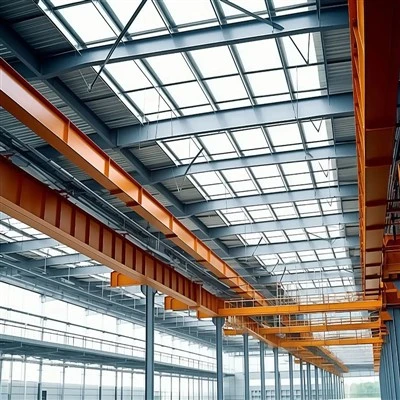
Now, the big boys — the “heavy-duty large shelters” for when you need serious space. These aren’t just for storing equipment; we sell these to disaster relief teams, event organizers, and even small manufacturing outfits that need a temporary warehouse. The standard sizes here start at 60×100, 80×120, and go up to 100×200 — some folks even ask for 120×300 if they’re housing a whole fleet of semi-trucks or a temporary school for disaster victims. The key here is the steel frame: these are built to withstand heavy snow loads (up to 40 pounds per square foot, if you’re wondering) and even light wind, so size doesn’t mean flimsy. Last year, a hurricane hit Florida, and a relief group used one of our 80×120 shelters to store food, water, and emergency supplies — they said it was the perfect size, no wasted space, and easy to set up in 2 days. We also get a lot of wedding planners who rent these large shelters for outdoor venues — they can fit 200 guests, a dance floor, and a food truck, no problem. The only downside with these is they’re not super easy to move, so if you’re planning to relocate it, you’ll need a big truck and a crew, but most of our large shelter customers plan to leave ‘em up for 5+ years, so that’s not usually a dealbreaker.
Wait, hold on — I can’t forget the “custom sizes,” because 9 times out of 10, someone doesn’t fit into the standard boxes. We’ve made shelters as small as 8×10 for a guy who just needed to cover his golf cart, and as big as 150×400 for a mining company that needed to store equipment at a remote site. Custom sizes usually start at a 10-foot increment for width and length, so you can’t really get 31×52, but 30×50 or 40×50 is totally doable. A lot of people worry that custom means it’ll cost an arm and a leg, but we price custom shelters based on the materials, not just the size, so it’s usually only 10-15% more than a standard size. I once had a customer who wanted a shelter to fit his two vintage cars, one classic truck, and a workbench — we built a 30×40 for him, and he said it was exactly the space he needed, no extra square footage he’d never use.
Let me also talk about the “hidden” size factors that most people miss, because it’s not just length and width — the height matters, too. If you’re storing a semi-truck, you need at least 14 feet of clearance; if you’re storing a bus or a crane, you need 20 feet or more. A lot of clients pick the wrong height and end up having to take the roof off partway to get their vehicle in, which is a total hassle. For mid-sized shelters, standard height is 12-16 feet, and for large ones, it’s 18-24 feet — but we can adjust that, too. Last month, a customer called panicking because he bought a shelter with 12-foot height and his tractor’s top was 13.5 feet — we swapped it for a 16-foot frame, no extra charges for the adjustment, which is why I always tell people to measure the tallest thing they’ll store before they order.
Now, let’s get real about what actually works for different use cases, so you don’t guess wrong. If you’re a homeowner storing a small car, ATV, or garden tools: go 10×20, easy. If you’re a small farmer storing a tractor, hay bales, and a trailer: 30×50 or 40×60. If you’re a construction crew storing two excavators and supplies: 50×80. If you’re a disaster relief group or event planner needing temporary housing: 60×100 or 80×120. And if none of those fit? Hit us up for a custom quote — we’ve handled every weird request under the sun, from a shelter for a hot air balloon to one that fits a whole fleet of golf carts.
I’ve been in this game long enough to know that no two projects are the same, and that’s why we don’t push “one size fits all” garbage. Every steel shelter we build is tailored to what you need, not what’s easiest for our catalog. If you’re stuck on sizes, or you want to bounce ideas off someone who actually installs these things (not just reads specs), send us a message — we’ll walk through measurements, height, even local building codes so you don’t run into surprises. Whether you need a tiny spot for your tools or a huge warehouse for your business, we’ve got the size that works for you. Don’t waste money on a shelter that’s too small or too big — let’s find the right fit together.
Steel Workshop References:
- American Society of Agricultural and Biological Engineers. (2022). Standard for Agricultural Steel Shelters: Size Recommendations and Load Requirements.
- Steel Building Manufacturers Association. (2023). Guide to Sizing Temporary and Permanent Steel Shelters for Commercial and Residential Use.
- FEMA. (2021). Temporary Emergency Shelters: Space and Size Guidelines for Disaster Relief Operations.
Suzhou Wanyu Steel Structure Construction and Installation Engineering Co., Ltd.
With abundant experience, we are one of the most professional steel shelters manufacturers and suppliers in China. We warmly welcome you to buy customized steel shelters at competitive price from our factory. If you have any enquiry about pricelist, please feel free to email us.
Address: No. 78, Putian Road, Suzhou Industrial Park, Suzhou, Jiangsu Province
E-mail: Zhu@szwanyu.com
WebSite: https://www.wy-metalstructure.com/
