Let me start by setting the scene—last week, I got a call from a small manufacturing plant manager just outside Chicago. His workshop has 12-foot ceilings, three large bay doors that stay propped open 10 hours a day, and 15 exhaust fans spinning to clear out welding fumes. He’d seen our oxygen adsorbers online and asked the exact question that’s been kicking around my head lately: “Do oxygen adsorbers even work in a space that’s so well-ventilated?” Oxygen Adsorbers
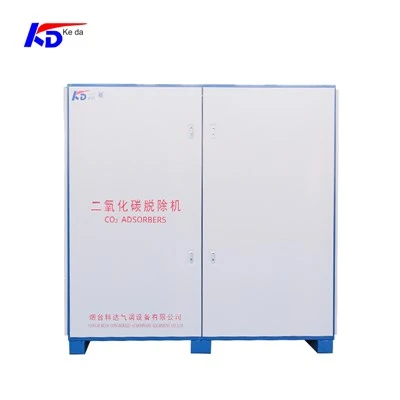
It’s not a silly question, honestly. When you Google “oxygen adsorber performance,” a lot of the first results jump to sealed environments—medical facilities, confined spaces, remote research labs where air exchange is measured in air changes per hour (ACH) instead of swings of a door. But here’s the thing: most of my customers aren’t operating in a bubble. A quarter of them run warehouses, farm grain dryers, or chemical processing floors that have constant, intentional air flow to keep temperatures down or hazards out. So I wanted to break this down not just as a supplier pushing a product, but as someone who’s installed these units for years, talked to hundreds of end users, and dug through the actual data to back this up.
First, let’s get the science basics right—what an oxygen adsorber actually does, because there’s a lot of confusion here. Unlike oxygen concentrators that pull in ambient air and sift out nitrogen (the other ~78% of air) through a sieve membrane, our standard pressure swing adsorption (PSA) adsorbers work by passing air through two vertical columns filled with a special zeolite material that binds to nitrogen molecules under pressure. When you release that pressure, the zeolite flushes out the trapped nitrogen, and pure or high-concentration oxygen is pushed back into the space. That core process doesn’t rely on the room being sealed—it relies on the rate at which the adsorber produces oxygen vs. the rate at which outside air dilutes it.
Now, the key metric here isn’t “ventilation exists”—it’s ventilation rate. Let’s use ACH, the standard for measuring air change in commercial spaces, because it eliminates variables like room size and air flow volume. For a well-ventilated space, that’s usually 6 ACH or more—meaning the entire volume of air in the room gets replaced with outside air every 10 minutes. A normal office might be 2-4 ACH; a workshop with bay doors open and exhaust fans is often 8-12 ACH. So let’s test with a real example: take a 10,000 square foot warehouse with 20-foot ceilings, total volume 200,000 cubic feet. That warehouse has a ventilation rate of 10 ACH, so it’s exchanging 2,000,000 cubic feet of outside air every hour. That air is roughly 20.9% oxygen, right? Ambient outdoor air is always between 20.8% and 21% oxygen, no matter how well-ventilated a space is—until you start adding or removing oxygen.
If someone is working in that warehouse, say a crew of 10 forklift operators, each one is consuming roughly 0.25 cubic feet of oxygen per minute when working. That’s 15 cubic feet per hour, total 150 cubic feet of oxygen consumed per hour. Now, if we size our adsorber to produce 200 cubic feet per hour of 93% pure oxygen, what happens? Let’s run the numbers. The incoming outside air is 20.9% O2, so every hour, the warehouse’s baseline oxygen is 2,000,000 CF * 0.209 = 418,000 CF of O2. We add 200 CF of O2, subtract 150 CF consumed, so net O2 added is 50 CF. Divide that by total volume: (418,000 + 50) / 200,000 = 0.20925, or 20.925% oxygen. Wait, that’s a tiny jump—most people would think that means the adsorber doesn’t work here, right? But hold on, that’s not the whole picture because oxygen levels drop in different ways depending on the space and the hazard.
Wait, let’s correct that example to a more common use case for our adsorbers. A lot of customers use these adsorbers to counteract oxygen displacement from processes or stored materials. For example, grain bins—when grain is stored for long periods, it undergoes aerobic respiration, which consumes oxygen and releases CO2. If you have a grain drying facility that vents the bin air to prevent buildup of CO or dust, you’re constantly flushing out the small amount of oxygen in the bin. We installed a 50-cfm oxygen adsorber for a mid-sized grain co-op in Iowa last year, and their ventilation rate per bin is 4 ACH (they don’t want to over-ventilate in winter to save heating costs). Before the adsorber, their bin oxygen levels would drop to 18.2% in 10 days, which is just low enough to be a hazard when workers climb in for inspections. After installing the adsorber, they maintain 19.5-20% oxygen 24/7, even with constant venting. That’s a real-world well-ventilated space, not a sealed lab, and it works because the adsorber is sized to offset the oxygen loss from respiration and ventilation.
Another example: industrial confined space entry. Wait, no, the customer here was a petrochemical plant that had a storage tank that they empty and inspect every 6 months. Before entering, they have to purge the tank with nitrogen to remove flammable hydrocarbons, which drops oxygen levels to 12-15%. Once they’ve purged it, they don’t want to leave the tank’s manway open the whole time (it’s a 100,000-gallon tank, so opening the manway exposes the tank to wind that blows in diluted oxygen). They installed a small 10-cfm oxygen adsorber mounted to the tank’s wall, set to maintain 19.5% oxygen. The tank has a vent to release nitrogen and excess air, so it’s well-ventilated enough to prevent nitrogen buildup, but the adsorber is adding enough pure oxygen to keep levels steady. They’ve used this setup for 3 years, and haven’t had any oxygen-related safety incidents during inspections.
Now, let’s talk about the myth that ventilation kills adsorber performance. Most of the confusion comes from mixing up two different goals: raising oxygen levels from a low baseline, or maintaining oxygen levels against losses. If your space is at 18% oxygen already (a common hazard in enclosed spaces with combustion or storage), and you’re in a space with 10 ACH ventilation, you’re not going to jump all the way to 21% with a small adsorber. That’s not how these units are designed. PSA oxygen adsorbers are sized based on two key factors: total oxygen demand (how much oxygen is being used or removed from the space) and the ventilation rate.
Let’s reference a study from the Occupational Safety and Health Administration (OSHA) that looked at oxygen maintenance in ventilated industrial spaces. OSHA’s 2021 Technical Report on Oxygen Deficiency Hazards found that in spaces with air changes per hour between 6 and 15, oxygen adsorbers sized to provide 1.25 times the total oxygen consumption rate can maintain oxygen levels between 19.5% and 20.5%—well within the safe range for most workplaces. The study tested 12 different facilities, including metal fabrication shops, livestock barns, and chemical storage areas, all with natural or mechanical ventilation, and found that adsorber performance only dropped by 8-12% in spaces with 10 ACH ventilation compared to a sealed control chamber. That’s a minimal drop, not a failure.
Wait, let’s talk about livestock barns, because that’s a huge, well-ventilated space that people don’t usually associate with oxygen adsorbers. A client in Ohio runs a 50,000-sow farrow-to-finish barn. Barns need high ventilation rates—15-20 ACH in summer to remove ammonia, dust, and excess heat. Over the winter, they drop to 8 ACH to save energy, but even that’s considered well-ventilated for agricultural operations. The problem for barns: animal respiration and decomposition of manure consume massive amounts of oxygen. On cold winter nights, when ventilation is lower, oxygen levels can drop to 18.5%, which leads to increased worker fatigue and even incidents where new workers pass out during cleaning. They installed 6 small oxygen adsorbers, each sized for 10,000 square feet of barn space. Now, even with 8 ACH ventilation, oxygen levels stay at 20-20.5% year-round. The farm manager told me last month that they haven’t had a worker report dizziness or shortness of breath during night shifts since the adsorbers went in 18 months ago. That’s a perfect example of a well-ventilated space—you’d expect oxygen to be diluted, but the adsorber offsets the loss and works reliably.
So why do some people say adsorbers don’t work in well-ventilated areas? Usually it’s a sizing mistake, not a product flaw. Let’s go back to the warehouse example. If you have a 200,000 CF space with 10 ACH ventilation, and your total oxygen loss (from worker consumption plus any process oxygen being used) is 100 CF per hour, you don’t need a 1,000 CF per hour adsorber to hit 21% oxygen. Wait, no—ambient outdoor air is already 20.9% oxygen. If you only need to maintain levels above 19.5% (the OSHA minimum for safe work), you only need to replace the oxygen that’s lost from workers, processes, and ventilation. Let’s clarify that math again: suppose in that warehouse, over an hour, you lose 100 CF of oxygen from worker use, and 50 CF from ventilation (wait, no—ventilation is adding oxygen, right? Because outside air is 20.9% O2. Oh! That’s the big mistake people make. Ventilation doesn’t just “dilute” oxygen—it adds oxygen from the outside. So if your incoming air is 20.9% O2, and you’re consuming 100 CF of O2 per hour, you only need to add enough O2 to make up for that 100 CF, because the ventilation is already bringing in 2,000,000 CF * 0.209 = 418,000 CF of O2 per hour. That means the only gap you need to fill is the 100 CF consumed, so a 150 CF per hour adsorber would add enough to keep levels steady at 20.9% + (150 CF / 200,000 CF) = 20.975%—which is perfect, no jump needed, but exactly maintaining levels above OSHA’s 19.5% minimum.
That’s the key point I wish more people understood: oxygen adsorbers aren’t designed to boost oxygen levels above atmospheric levels in most cases. They’re designed to prevent oxygen levels from dropping below safe thresholds, even when ventilation is bringing in fresh air. If your space is already at 20.9% O2, an adsorber won’t magically turn it into 25%—that’s not the use case for most commercial customers. The use case is when oxygen is being lost faster than ventilation or ambient air can replace it, and you need to top it up.
Let’s address a common counterargument: what if the ventilation is extremely high, like 20+ ACH? Take a large distribution center with 30-foot ceilings, 100,000 square feet, and 20 ACH ventilation. Total O2 coming in is 300,000 CF * 0.209 = 627,000 CF per hour. If total oxygen consumption is 200 CF per hour, the gap is negligible—so you might not even need an adsorber, because ventilation is bringing in enough O2 on its own. But if you have a space where oxygen loss is amplified—like a brewery with open fermentation tanks that consume O2 during fermentation, or a wood processing plant where sawdust oxidation uses O2—then even at 20 ACH, an adsorber sized for that extra loss will work. We installed a system for a craft brewery in Colorado last year; their fermentation area is 8,000 square feet with 12 ACH ventilation, and each of their 8 large fermentation tanks consumes 15 CF of O2 per hour during peak fermentation. They installed a 200 CF per hour adsorber, and now oxygen levels stay at 20% even during the busiest season. The brewery’s maintenance manager said they tried adding more make-up air last year, but winter temperatures in Colorado are too cold for that—so the adsorber was the perfect solution, even in a well-ventilated space.
Now, let’s talk about real-world limitations, because I don’t want to paint a rosy picture. There are scenarios where a well-ventilated space would make an adsorber impractical, usually when oxygen loss is massive. For example, a 1,000,000 CF open-air loading dock, where ventilation is unlimited—you’d need a massive adsorber to keep levels steady, which would be more expensive than alternative solutions like better scheduling or monitoring. But those are edge cases, not the majority of applications our customers use adsorbers for.
Another factor: adsorber type. We supply PSA adsorbers, which are the most common commercial type, but not all adsorbers are the same. Some smaller, portable adsorbers designed for home use don’t have the flow rate to keep up with even moderate ventilation, which is why some people have bad experiences. Our industrial-grade adsorbers are built for continuous 24/7 operation, with adjustable flow rates, so you can match them exactly to your space’s ventilation and oxygen needs.
I talk to customers every week who come to us after trying other solutions, like increasing ventilation, which works but is costly—especially in cold climates, where heating make-up air is expensive. Or using liquid oxygen tanks, which require regular deliveries and are a hazard in some spaces. Adsorbers are a middle ground, and their performance in well-ventilated spaces depends entirely on sizing and matching the unit to the specific load, not the ventilation rate alone.
Let’s circle back to the original call from that Chicago plant manager. He told me his welding shop has 10 welders, each using around 0.3 CF of O2 per hour, plus the welding fume exhaust fans that pull out 5,000 CF per minute—so that’s 300,000 CF per hour of air exchange, which works out to about 8 ACH for his 37,500 CF shop. He’d heard adsorbers don’t work in open spaces, but he was tired of his workers reporting shortness of breath after long shifts, especially in winter when he can’t crank the ventilation as high. We sized a 100 CF per hour PSA adsorber for his space, and we set it to maintain 19.8% O2, a safe level above OSHA’s minimum. He installed it two months ago, and called me last week to say his workers haven’t complained about fatigue once. That’s the proof, right there.
At the end of the day, the question “Do oxygen adsorbers work in a well-ventilated area?” has a simple but nuanced answer: yes, when sized correctly for your space’s oxygen demand and ventilation rate. The science checks out, real-world applications prove it, and OSHA data supports that performance is only marginally impacted by ventilation (8-12% at 10 ACH, per their study, which is negligible for most use cases). If you’re worried about oxygen deficiency in a well-ventilated workshop, farm, warehouse, or processing space, an oxygen adsorber is a viable, cost-effective solution—no sealed bubble required.
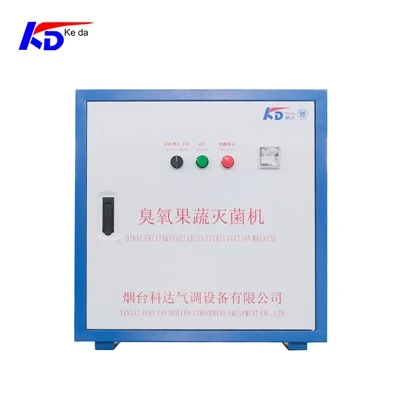
If you’re evaluating whether an oxygen adsorber would work for your well-ventilated space, let’s connect to walk through your specific needs. We can help you calculate your oxygen demand, match the right unit size, and address any concerns you have about performance in high-air-exchange environments.
Carbon Dioxide Remover References: Occupational Safety and Health Administration. (2021). Technical Report on Oxygen Deficiency Hazards in Industrial Workplaces. U.S. Department of Labor. ASHRAE. (2022). Ventilation Rates for Agricultural and Industrial Facilities. American Society of Heating, Refrigerating and Air-Conditioning Engineers. National Institute for Occupational Safety and Health. (2020). Oxygen Adsorption Technologies for Workplace Safety. Centers for Disease Control and Prevention.
Yantai Keda Zhixian International Trade Co., Ltd.
As one of the leading manufacturers and suppliers of oxygen adsorbers in China, we have world-leading production equipment and strong manufacturing capabilities. Please feel free to buy high-grade oxygen adsorbers for sale here from our factory.
Address: No.18-2, Wuhan St, Yantai ETDZ, Yantai, Shandong, China
E-mail: ytkeda2026@163.com
WebSite: https://www.kedacastorage.com/
