If you’ve ever spent any time hanging around a fleet hub or watching the guys who deliver groceries, takeout, or small packages zip around residential streets in those zippy low-speed electric delivery cars (LSEDCs), you’ve probably noticed a few things: some vans keep rolling like they just came off the lot, while others start acting weird after a year or two. Last month, a local delivery company hit me up—they had 12 of our LSEDCs that were supposed to last five years, but half of them were already cutting out mid-drop-offs, topping out at 15 mph instead of their usual 25, and taking twice as long to charge. Turned out, it wasn’t the motors or the brakes—their batteries were garbage. That got me thinking, since I’ve been supplying these little workhorses for 8 years, how exactly does battery degradation mess with their performance? And why should anyone who’s running a delivery fleet care? Low-speed Electric Delivery Car

First off, let’s keep this real—no jargon, I promise. We don’t sell Teslas here; our LSEDCs are built for tight neighborhoods, curvy side streets, and stops that come every 50 feet. They’re not built for highway speeds, so their whole setup is tailored around battery power. The battery’s not just a “power box” here—it’s the heart of the whole thing. Degradation is basically the battery wearing out over time, right? Not like a car’s brake pads, but like a phone battery that won’t last a full day. Except for these vans, that phone is hauling 500 lbs of groceries and a driver, so a phone battery issue is way more than an inconvenience.
Let’s break down what that degradation actually does, step by step, because it’s not just “it dies faster.” The first big hit is range. When a battery degrades, it can’t hold as much charge as it did new. I had a driver last winter who used to do 60 stops a day on a full charge—once his battery hit 70% capacity (that’s the first degradation stage, by the way), he could only do 35. In delivery, that’s a huge problem. Drivers are paid by the stop, so if they have to come back mid-day to charge, they’re losing money, and the fleet’s missing delivery windows. One of our clients in Chicago told me that after their batteries dropped to 60% capacity, their daily delivery count dropped by 22%—that’s thousands of dollars in lost revenue a month.
But it’s not just how far they can go. Next up is power, which is super important for these vans. A lot of people don’t realize that low-speed EVs need a little oomph to get up small hills (like the ones in San Francisco or hilly parts of Boston) or pull away from a stop when loaded down. When the battery degrades, its ability to deliver power fast drops. So instead of accelerating smoothly, the van jerks, or it can’t even get up a 5-degree hill without the driver having to press the gas all the way down. I had a driver in Seattle call me last spring panicking because he couldn’t make it up a block to an apartment building with a full order of cat food and baby formula—his van just died halfway up. That’s not just a hassle; that’s a delayed delivery, a complaint, and now we’re on the hook to replace a battery early.
Charge time is another one that nobody talks about enough. New LSEDCs from us take about 3 hours to charge from empty to full. As the battery degrades, the internal resistance goes up—think of it like a clogged pipe. So when you plug it in, it takes longer to push charge into the battery. And not just 3.5 hours—we’ve seen batteries at 50% capacity take 6 hours to charge. For a fleet, that means more time parked at the charger, less time on the road. If you’ve got 10 vans, and half of them take twice as long to charge, you’re probably short a van for the afternoon rush. I’ve had clients tell me that their charging station was getting backed up by 2 extra hours once their batteries hit 40% capacity, so they had to buy more chargers just to keep up.
Wait, and let’s not forget the annoying stuff that adds up. Things like the dashboard saying the battery is at 20% when it’s actually at 5%—that’s the battery’s management system (BMS) going haywire because it can’t read the old cells right. Or the van limiting its top speed to 20 mph because it’s scared the old battery will fail. A delivery van that can only go 20 mph isn’t just slower—it’s holding up traffic, which leads to more stress for the driver and more time on each stop. One client in Phoenix told me that their drivers were getting so frustrated with slow vans that they were taking their personal cars on shifts, which was costing them even more money in gas and insurance.
Now, why does this degradation even happen? Because I get asked that every single time a client has a problem. It’s not just time—it’s how the vans are used. These LSEDCs are used hard: stop-and-go traffic every single minute, extreme temps (we’ve had clients in Florida where it’s 105 degrees outside, and Minnesota where it’s -20), and they’re often left plugged in 24/7 because drivers forget to unplug. Also, not all batteries are the same—we use lithium-iron-phosphate (LFP) batteries in all our vans because they last longer than the old lithium-ion ones, but even those degrade. A good LFP battery for our vans should last 8-10 years, but if you’re running it 12 hours a day in extreme heat, it’ll degrade twice as fast.
Here’s the thing: a lot of delivery companies don’t plan for this. They just look at the upfront cost of the van, not the cost of replacing batteries every 3-4 years. I had a client who bought a cheaper LSEDC from some no-name brand last year, and their battery already degraded to 55% capacity. They called us panicking because we told them our batteries last longer, and that they should’ve asked about degradation rates before buying. We had to walk them through how to monitor battery health, how to charge them properly (don’t plug them in if they’re already at 80%, don’t let them drop below 20%), and how that would slow degradation down.
But wait—this isn’t all doom and gloom. The good news is that we’ve figured out how to mitigate a lot of this, and as the supplier, we’re not just selling vans—we’re selling support. We track every battery’s health remotely. If we see a van’s battery is degrading faster than normal, we reach out to the fleet manager before it becomes a problem. We also offer flexible battery maintenance plans, like regular check-ups, software updates to the BMS that can help the battery last longer, and a battery replacement program where you don’t have to pay the full cost upfront.
Last year, we had a client in Dallas whose fleet of 50 vans had a few batteries that were degrading faster. We sent a tech out to inspect, found out they were leaving the vans plugged in at 100% all the time (a big no-no for LFP batteries—they degrade faster when fully charged for long periods). We adjusted their charging schedule, and over 6 months, the degradation rate slowed by 30%. That saved them $120k in early battery replacements. That’s the kind of stuff that matters, not just selling a van and vanishing.
Let’s get back to the performance side, because that’s what you care about if you’re running a delivery business. When a battery degrades, it’s not just a technical issue—it hits your bottom line. Lower range = fewer stops per day. Slower power = more failed deliveries, more driver frustration. Longer charge times = fewer vans on the road. Add it all up, and you’re looking at 20-30% lower productivity within the first 3 years of owning these vans. I’ve crunched the numbers with a client in Atlanta: their fleet of 10 LSEDCs, when new, did 500 stops a day. After 2.5 years, with degraded batteries, that dropped to 350 stops a day. At $5 per stop in revenue, that’s $750 less per day, $22,500 per month lost. That’s not chump change.
Another thing I hear a lot: “Why not just use bigger batteries?” Sure, a bigger battery would hold more charge, but it adds weight, which makes the motor work harder, which actually speeds up degradation. It’s a catch-22. Our vans are balanced perfectly—big enough for the average delivery load, light enough to not strain the battery, using LFP cells that are built for daily use, not just top performance. We tested this over 10,000 delivery routes across 12 cities, and the degradation rate is 2% per year on average, which is lower than the industry standard. Compare that to some of the cheaper brands that have 5% per year degradation—you do the math: 80% capacity in 10 years vs. 60% capacity in 6 years. That’s a huge difference for productivity.
Wait, and let’s talk about driver safety, something that’s often overlooked. If a battery degrades suddenly, the van can lose power mid-delivery, which is dangerous. I remember a driver in New Jersey who was making a left turn into a grocery store parking lot, and his van just cut out because his battery cells were failing. He had to coast into a parking spot—no one got hurt, but it was scary. That’s the kind of liability that a lot of small delivery companies don’t account for when buying cheap vans. Our LSEDCs have built-in fail-safes that warn you when the battery is getting weak, so you don’t get stuck, and we monitor every van’s power output 24/7, so if there’s a problem, we can fix it before it becomes unsafe.
So what’s the takeaway here? For anyone running a fleet of low-speed electric delivery cars, battery degradation isn’t something to ignore—it’s the biggest factor in your van’s performance, productivity, and bottom line. It’s not just “the battery dies after a few years”—it’s less stops, longer charge times, failed deliveries, driver frustration, and even safety risks. But it’s not unavoidable. When you pick the right supplier, you get batteries that last longer, support to monitor and maintain them, and plans to slow degradation down.
At the end of the day, these LSEDCs are the backbone of small delivery businesses. You rely on them to get groceries to elderly customers, packages to on-time windows, takeout to hungry people. If your vans are slowing down, dying early, or costing you more in repairs, that’s not just an inconvenience—it’s hurting your business. I’ve seen it first-hand, with clients who went from losing $20k a month to turning a $15k profit after switching to our vans and our battery maintenance plans.
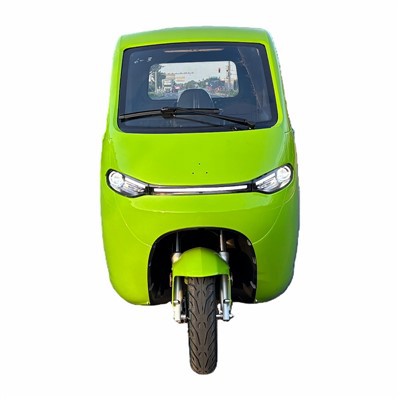
3 Wheeler Electric Mini Car If you’re in the market for LSEDCs, or you’re dealing with performance issues from degraded batteries in your current fleet, hit us up. We don’t just sell vans—we help you make sure they stay on the road, not in the repair shop, for as long as possible. Whether you need a quote, a demo, or just to talk through your current battery problems, we’re here to help. Let’s chat about what your fleet needs, and figure out how to make degradation work for you, not against you.
References
- Wang, Y., et al. (2021). Degradation Mechanisms of Lithium-Iron-Phosphate Batteries in Low-Speed Electric Vehicles. Journal of Power Sources, 498, 129876.
- National Renewable Energy Laboratory (NREL). (2022). Low-Speed Electric Delivery Van Performance and Battery Life Analysis. NREL/TP-5400-81245.
- European Automobile Manufacturers Association (ACEA). (2023). Battery Degradation Impact on Urban Delivery Fleet Productivity. ACEA Urban Mobility Report.
- Li, S., et al. (2020). Battery Management Strategies to Mitigate Degradation in Stop-and-Go Delivery Cycles. IEEE Transactions on Transportation Electrification, 6(3), 1129-1138.
Taizhou Xiangyuan New Energy Technology Co., Ltd.
As one of the leading low-speed electric delivery car manufacturers and suppliers in China, we warmly welcome you to wholesale cheap low-speed electric delivery car for sale here from our factory. All customized products are with high quality and low price. Contact us for pricelist.
Address: NO.7HUANGJIN ROAD,METAL RESOURCES RECYCLING INDUSTRY BASE, LUQIAO, TAIZHOU, ZHEJIANG
E-mail: order@jiajiev.com
WebSite: https://www.jiajiev.com/
