If you’ve ever worked with wall cladding, you know that one of the most persistent headaches is fitting materials to walls that aren’t perfectly straight. Whether it’s a heritage home with gently arched hallways, a commercial space that uses curved walls to define seating zones, or a residential addition that flows around a custom fireplace, straight panels often end up looking like an afterthought—cut awkwardly at odd angles, with gaps that refuse to seal. As an SPC wall panels supplier, I get asked this question at least once a week: Can SPC wall panels be installed on curved walls? For a long time, I’d have hesitated to give a straight answer (pun intended), but today, I’m going to break down what’s possible, what works, and what you need to know to pull off a flawless curved install with SPC. SPC Wall Panels
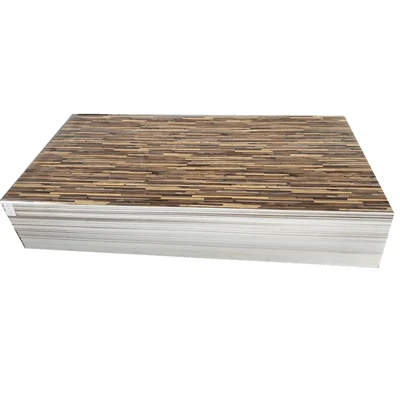
First, let’s refresh what SPC wall panels are, because their core chemistry is exactly why they’re great for curves. SPC stands for Stone Plastic Composite, a material made from a mix of natural limestone powder and rigid PVC resin, bound together with stabilizers to make a core that’s denser and stiffer than vinyl or WPC (Wood Plastic Composite) panels. This rigidity is what makes SPC scratch-resistant, water-proof, and durable enough for bathrooms, basements, and commercial kitchens, but it’s also what made people assume it can’t bend. But rigidity isn’t a flaw—it’s a variable, and that’s what makes curved SPC installs work.
The biggest factor here is panel thickness, specifically the flexibility of the core. Standard SPC wall panels for straight installs are usually 5.5mm or 6.5mm thick, with a solid core that’s very stiff. Those can’t curve at all without cracking, which is why you never see them on arches or rounded walls. But we also manufacture thinner SPC panels—3mm, 4mm, and 4.5mm thick—with a slightly modified core formula that adds a small amount of elastomeric resin, making them flexible enough to bend on curves, while still keeping the SPC core’s signature water and scratch resistance. This isn’t a cut-rate knockoff; the only difference is the core’s blend, designed specifically for curved applications. The decorative top layer—usually a vinyl film that mimics wood, stone, or tile—remains the same, so you don’t have to sacrifice aesthetics for flexibility.
Next, you need to figure out what kind of curve you’re working with, because not all curves are the same. There’s a difference between a gentle radius (like a hallway that curves 30 degrees over 10 feet) and a tight, sharp radius (like a 2-foot round column or a 90-degree arched doorway). For gentle curves, even the slightly thicker 4.5mm SPC panels will work, as long as the radius of the curve is at least 20 inches. If your curve is tighter—say, a 12-inch radius—you’ll want to go with our thinnest 3mm SPC panels, which can bend to a 10-inch radius without cracking or warping. This is a key point that a lot of installers miss: if you try to force a thick panel around a tight curve, two things happen. First, the core will crack along the curve, creating a weak point that will eventually fail. Second, the decorative top layer will crease, ruining the look. We’ve had customers send us photos of installs where they tried to use straight 6.5mm panels on a curve, and the results are messy gaps and cracked panels—so matching panel thickness to curve radius is non-negotiable.
Now, the installation process itself is where a lot of people get confused. Installing SPC on a straight wall is straightforward: you use adhesive, click the panels together, and trim the edges. For curves, you have to adjust two key steps: scoring and bending, and how you secure the panels. Let’s walk through this step by step, because it’s not that different from a straight install, just with a few tweaks.
First, measure your curve carefully. Use a flexible tape measure or a piece of string to get the exact length of the curved wall section, because straight panels are sold in fixed lengths (usually 8 feet or 10 feet) that you’ll need to cut to fit. Once you have your length, mark the panel at the exact point where you need to score it. Wait—score it, not cut it all the way through. This is the trick with flexible SPC panels. If you try to snap a thin panel along a straight line, it works, but if you try to bend it to a curve without scoring the back, it will crack. So you make a shallow score (about 1mm deep) along the back of the panel, on the side that will face the curve’s concave side. Then, gently bend the panel along that score line. The thin core will bend easily, and the score relieves the tension that would cause cracking. For curves that require multiple panels, you don’t have to score every panel—just the ones that need to follow the curve. The interlocking edges of SPC panels are designed to flex a little, so adjacent panels will follow the curve naturally once you bend the scored ones.
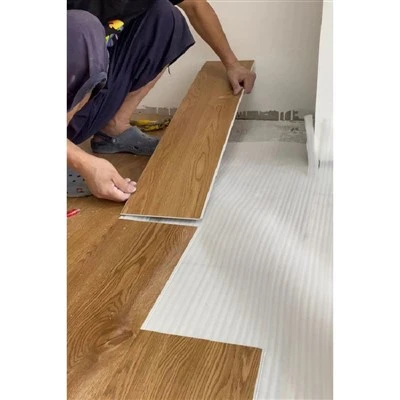
Once the panels are scored and bent to fit the curve, how do you secure them? We recommend using a construction adhesive that works well on both SPC and the wall surface (drywall, concrete, plaster, or wood). For curved walls, we recommend applying adhesive to the back of the panel in a wavy pattern, not a full coat. This allows the panel to sit flush against the curve without air bubbles or excess adhesive squeezing out along the edges, which can leave messy residue. For very tight curves, some installers use temporary clamps or masking tape to hold the panels in place while the adhesive cures—this takes about 24 hours, but it’s well worth it to prevent gaps or shifting.
I should also mention a common myth that SPC wall panels can only be installed on internal curves, not external ones. That’s not true. External curves (like the outside edge of a rounded island in a kitchen) work the same way—you just score the back of the panel on the side that will face the convex side, which is the opposite of internal curves, but the process is identical. We’ve had dozens of commercial customers use SPC on external curves for restaurant booths, retail store displays, and office break rooms, and the feedback has been consistent: it looks just as good as tile or wood, and it’s way easier to maintain.
Now, you might be wondering: what about durability on curved walls? This is a fair question, because curved walls in high-traffic areas are more prone to scuffs and impacts, especially if they’re in a hallway or a playroom. The good news is that SPC panels’ scratch-resistant layer is the same whether the panel is straight or curved. The flexible core doesn’t compromise the top layer’s durability—we’ve tested 3mm SPC panels bent to a 10-inch radius and run a steel wool pad over them 20 times, and there was no visible scratch. They’re also still 100% water-proof, which makes them perfect for curved shower walls, curved bathroom vanities, or even curved walls around indoor pools. We had a customer a few months back who used our 4mm SPC panels to line a curved shower wall in a master bathroom, and he told us it was way easier to clean than tile—no grout lines to scrub, and the curved shape actually helps with water runoff, so there’s less standing water.
Of course, there are a few limitations to keep in mind. SPC panels aren’t the best choice for very tight, circular columns with a radius smaller than 10 inches, because even our thinnest 3mm panels will crack when bent that sharply. For those, we recommend using flexible PVC panels or custom-curved SPC panels, which we also make to order for special projects. We can cut panels to custom lengths and scores, so you don’t have to do the on-site cutting, which is a big help for large commercial projects where time is money. Another limitation is if you’re working with a wall that has a very irregular curve—like a wall that curves unevenly, not in a smooth radius. For those, we usually recommend that customers use flexible underlayment first, to create a smooth base for the SPC panels, because SPC panels need a flat surface to sit on. If the curve is bumpy, the panels won’t sit flush, and you’ll end up with gaps.
Let me share a real example of a curved SPC install we did for a client last year, to put this all in perspective. A homeowner in Chicago was renovating a 1920s bungalow that had a curved hallway leading to a sunroom. The original wall was plaster that was cracking and had water damage from a leaky roof. The homeowner wanted a cladding that was water-proof, easy to maintain, and matched the natural wood finish of the sunroom. He initially thought he’d have to use vinyl wallpaper, but a friend recommended SPC panels. We suggested 4mm curved SPC panels in the oak wood grain finish, which has a subtle texture that hides small gaps. Our team pre-cut the panels to match the curve’s 22-inch radius, scored them on-site, and installed them using the adhesive method we recommend. The final result looked seamless—you couldn’t tell the wall was curved, and it was fully installed in half a day, which is way faster than tiling or even installing solid wood panels. The homeowner said it was the most complimented part of his renovation, and six months later, he sent us a photo with no scuffs or damage.
As an SPC wall panels supplier, my goal isn’t just to sell panels—it’s to give customers honest, accurate information that helps them pull off their project the right way. For a long time, SPC was seen as a material only for straight, flat walls, but that’s changing as we refine our formulas and installers get more comfortable with the scoring and bending process. The key takeaways are: match panel thickness to your curve’s radius, score the back of the panel to avoid cracking, use the right adhesive, and make sure your wall surface is smooth and even.
If you’re working on a project with curved walls—whether it’s a residential renovation, a commercial build, or a custom furniture piece—and you’re considering SPC panels, we can help. We offer a range of SPC panels in different thicknesses, finishes, and sizes, plus custom cut and curved panels for special applications. We also provide free install guides and support, so even if you’re a first-time installer, you can pull off a flawless curved install. To learn more about how SPC wall panels work for curved walls, or to get a quote for your project, reach out to our team today. We’re here to answer your questions and help you choose the right SPC panels for your needs.
PVC Embossed Wall Panels References:
- ASTM International. (2021). Standard Test Method for Flexural Properties of Polymer Matrix Composite Materials. ASTM D790-21.
- National Association of Home Builders. (2022). "Material Selection for Curved Wall Cladding in Residential Renovations." NAHB Research Center Report.
- Stone Plastic Composite Panel Manufacturers Association. (2023). "SPC Panel Performance Standards for Flexible Curved Installations." SPCMA Technical Bulletin 04-23.
Linyi Wilson New Material Co., Ltd
With abundant experience, we are one of the most professional spc wall panels manufacturers and suppliers in China. We warmly welcome you to wholesale premium spc wall panels at competitive price from our factory. If you have any enquiry about cooperation, please feel free to email us.
Address: Room 913, 9th Floor, International Trade Service Center, No. 100 Lingong Road, Comprehensive Bonded Zone, Chaoyang Street, Yihe New District, Linyi City, Shandong PR, China
E-mail: postmaster@wilsonwallfloor.com
WebSite: https://www.dowellspcfloor.com/
