If you’ve ever run a quick online search for “stretchy jeans” or “wrinkle-resistant work pants,” chances are you’ve stumbled on polyester denim—also called poly denim, a blended fabric that’s long been a staple in my factory’s production lines. As a polyester denim supplier of 12 years, I’ve seen firsthand how this fabric divides opinions: some small boutique brands swear by it for its consistency, while legacy denim lovers still reach for 100% cotton, convinced synthetic fibers cheapen the fabric. Last year, I worked with a local construction brand that switched all their uniform trousers to 65/35 poly denim; within six months, their employee feedback cited less fading and faster drying, while a vintage clothing client only uses 100% cotton for their limited-edition lines, arguing poly denim loses that broken-in “softness” over time. To break it down honestly, I’ve laid out the pros and cons I’ve observed from both factory floor and client feedback, no marketing fluff—just real, on-the-ground insights. Polyester Denim
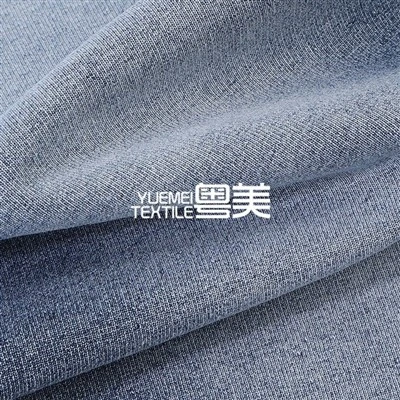
Let’s start with the pros, the parts of poly denim that make it such a workhorse for so many industries. First, its durability is unmatched by 100% cotton. Cotton denim breaks down over time: the constant tension of bending, sitting, and washing frays its fibers, leading to holes in high-stress areas like knees or pockets within a year for heavy use. Polyester, a synthetic polymer, is far more resistant to abrasion. At my factory, we test every batch of poly denim by rubbing a swatch with a wire brush for 100 cycles; we rarely see fraying, while a cotton swatch usually shows visible fuzzing after 20 cycles. For workwear—construction, manufacturing, or even retail staff who spend 8 hours on their feet—that durability isn’t a nice-to-have, it’s a cost-saver. A pair of poly denim work pants might cost $2 more upfront than cotton, but they last twice as long, cutting replacement costs by 50% for businesses. I remember one client in the hospitality industry who switched to poly denim aprons five years ago; they went from replacing 20 aprons a quarter to just 5, a change that saved them nearly $1,200 annually.
Next, poly denim performs better in harsh conditions. Cotton absorbs water quickly—if you’re caught in a rainstorm or spill a drink on your jeans, they stay damp for hours, leading to discomfort and even mold growth if they don’t dry properly. Polyester is hydrophobic, meaning it repels water and dries 3x faster than cotton. That’s a huge plus for outdoor workers, farm staff, or anyone who travels regularly. I had a client who supplies hiking gear; they use 70/30 poly denim for their trail pants, and customer reviews repeatedly highlight how they dry overnight after a day of rain. It also resists wrinkles, which is a game-changer for uniforms or travel clothing. Cotton denim can become crumpled after being stuffed in a suitcase or worn for a full day, requiring ironing to look neat. Poly denim holds its shape, so a pair folded for a trip comes out almost wrinkle-free—no extra step for busy professionals or event staff who need to look polished on the go.
Another underrated pro is its color retention. Cotton denim fades unevenly after a few washes, especially if you wash it with hot water. The indigo dye seeps into the cotton fibers, and repeated washing can strip it, leading to pale, splotchy areas around pockets or seams. Polyester bonds with dye molecules more tightly, so poly denim fades gradually and evenly, maintaining its deep color for 20+ washes. We test colorfastness by washing swatches in hot water 50 times; our poly denim retains 92% of its original color, while cotton retains just 68%. For brands that want consistent, long-lasting branding—like workwear with their logo printed directly on the denim—or retail lines that want their jeans to hold their new look for months, that’s a big selling point. A clothing brand I work with sells a “forever black” poly denim jacket; they’ve had customers reach out after two years saying it still looks as dark as the day they bought it, a claim few cotton brands can make.
Now, the cons, and these are the parts I always warn clients about, because they’re not myth—they’re real issues that come with synthetic fibers. First, poly denim is less breathable than cotton. Cotton has a natural, porous structure that allows air to circulate, making it cool in warm weather and absorbent if you sweat. Polyester’s structure is tighter, so air doesn’t pass through as easily. On a 90°F (32°C) day, a pair of poly denim jeans can feel suffocating, trapping sweat against the skin and leading to discomfort or even rashes for people with sensitive skin. I had a customer last summer return a batch of poly denim shorts, saying they caused a rash after just an hour of wear; we worked with them to adjust the blend to 50/50 cotton-poly, which solved the issue by adding breathable natural fibers. That said, newer blends can mitigate this, but pure poly denim still lags behind cotton for breathability.
Second, poly denim has a less desirable broken-in feel. Many people love the way cotton denim softens and molds to their body over time—what’s often called the “personal fit.” Polyester fibers don’t stretch and bend the same way as cotton; they’re stiffer when new, and while they soften over time, they never develop that custom, lived-in feel that cotton does. A lot of vintage denim enthusiasts I work with refuse poly denim because it doesn’t create those unique fade patterns, like whiskering on the thighs or honeycombs behind the knees, that come from years of movement with cotton. It’s not that poly denim is uncomfortable forever, but it doesn’t have that same intimate connection to the wearer’s body, which is a big part of its appeal for casual, everyday wear.
Another con is its environmental impact, though this is often misunderstood. Polyester is a petroleum-based synthetic fiber, so it’s not biodegradable—if a poly denim item ends up in a landfill, it can take 200+ years to break down, releasing microplastics as it does. Cotton, on the other hand, is natural and biodegradable, though conventional cotton uses a lot of water and pesticides. That said, poly denim doesn’t have to be entirely eco-unfriendly; we’ve started offering recycled poly denim, made from plastic water bottles, which reduces its carbon footprint by 30% compared to virgin polyester. But even recycled poly denim still sheds microplastics when washed, and for brands focused on fully circular products, it’s not a perfect solution. I’ve had several sustainable fashion clients ask us to develop a poly denim blend that includes hemp, which adds breathability while retaining poly’s durability, but that’s still in the testing phase.
Lastly, poly denim is more prone to static cling in dry environments. If you live in a cold, dry climate or use a clothes dryer regularly, poly denim can build up static electricity, sticking to legs or attracting lint and dust. Cotton is much less prone to this, because it’s more absorbent and doesn’t hold static charges as easily. I remember one workwear client in a northern state had complaints about static in their poly denim trousers during winter, so we adjusted the finish to add a anti-static coating, which solved the issue—but that’s an extra step that adds to the production cost, a detail I always make sure clients know upfront.

At the end of the day, whether poly denim is the right choice comes down to what you’re using it for. If you’re outfitting a work team that needs tough, long-lasting uniforms that can withstand daily wear and tear, poly denim is almost always the cheaper, more practical pick. If you’re making casual jeans that customers will want to live in and break in over years, 100% cotton or a cotton-heavy blend might be the better call. For our part, as a supplier, we work with clients to match the right fabric to their needs—whether that’s a 65/35 poly blend for a construction crew or a 50/50 cotton-poly for a boutique’s everyday line. If you’re a brand or a small business owner looking to test poly denim for your next line, feel free to reach out to discuss your specific needs.
Viscose Denim References
Textile Institute. (2022). Durability of Denim Fabrics: A Comparative Analysis of Cotton and Polyester Blends. Journal of Textile Science and Fashion Technology.
U.S. Environmental Protection Agency. (2021). Microplastic Shedding from Synthetic Textiles: Washing and Fabric Composition Impacts. EPA Sustainable Materials Management Report.
American Apparel and Footwear Association. (2023). Color Retention in Denim: Fiber Type Dye Bonding and Wash Cycle Effects. AAFA Technical Bulletin.
Guangzhou Yuemei Textile Co., Ltd.
Guangzhou Yuemei Textile Co., Ltd. is one of the most experienced polyester denim manufacturers and suppliers in China. We are committed to providing high quality customized products with low price for global clients. If you’re going to wholesale bulk durable polyester denim made in China, welcome to get quotation and free sample from our factory.
Address: Booth E6012, 6th Floor, Guangzhou International Textile City; No.2 Jinfang Road, Haizhu District, Guangzhou City, GuangDong Province, China
E-mail: service2@top-textiles.com
WebSite: https://www.top-textiles.com/
