Hey there, if you’re checking out WPC wall panels for your space—whether it’s a residential remodel, a café refresh, or an office upgrade—you’ve probably wondered one thing: do these panels warp? I get it, when you’re dropping money on wall materials, the last thing you want is a nice-looking panel curving or twisting a month after installation. As a WPC wall panel supplier who’s been in this game for years, I’ve fielded this question at trade shows, Instagram DMs, and even random coffee runs where someone stops me to ask. Let’s break this down straight, no fancy jargon, no fluff—just what you need to know. WPC Wall Panel

First, let’s make sure we’re on the same page about what WPC even is. WPC stands for Wood Plastic Composite, right? It’s a mix of wood fibers (usually sawdust, hardwood chips, or even recycled wood waste) and thermoplastics like PVC, polyethylene, or polypropylene. The idea is to combine the best of both worlds: wood’s warm look and feel, plus plastic’s durability. Now, warping is basically when a flat material bends, twists, or cups away from its original shape, usually because of changes in temperature or moisture. But here’s the thing—WPC panels don’t warp nearly as much as solid wood, but it’s not impossible. Let’s talk about why that happens, and more importantly, how to avoid it.
Wait, let’s start with what makes WPC more resistant to warping than solid wood. Solid wood is porous—so it sucks up moisture like a sponge when it’s humid, and swells. When it dries out, it shrinks. Since wood grain isn’t uniform across a plank, that swelling and shrinking usually happens unevenly, which causes warping (think cups, bows, twists). WPC changes that because of the plastic binder. The plastic seals the wood fibers, so they can’t absorb as much moisture. Also, the thermoplastic matrix gives the panel a more stable structure overall. I’ve seen solid wood accent walls in basements that warped so bad, the trim pulled away—but WPC panels in the same space? Still straight 5 years later. That’s a big win for people in high-humidity areas, like Florida or Southeast Asia, or spaces like bathrooms, laundry rooms, or basements.
But why would WPC warp then? Let’s get into the common culprits, because that’s where most people go wrong. First, bad installation. I see this all the time. Some DIYers (or even some cheap contractors) skip the expansion gaps. WPC still moves a little—just way less than wood, like maybe 1/8 inch per linear foot, vs. 1/4 inch for solid wood. If you nail or glue panels tight to each other with no gaps, when humidity or temperature shifts, the panels have nowhere to go. They’ll push against each other, and that stress can make them warp. Another installation mistake: not using the right fasteners. If you use small nails instead of screws with washers, or don’t secure the panels to studs or furring strips properly, the panel can flex over time, leading to bending. Also, if you install WPC directly on a bare concrete wall that’s still damp (like a new construction build that’s not fully dried out), the moisture from the concrete can seep into the back of the panel unevenly. That causes one side to swell more than the other, leading to warping. That’s a quick fix—just use a vapor barrier behind the panels, or let them acclimate to the space for 3-5 days before installing, so they adjust to the local humidity and temp.
Second, poor quality materials. Not all WPC is created equal, let’s be real. Some budget brands cut corners: they use way too much recycled plastic that’s low-grade, or they don’t mix the wood fibers evenly, or they skip the UV stabilizers if the panels are going outside. Wait, we’re talking about wall panels, so mostly indoor, but even indoor panels can get exposed to direct sunlight through big windows. If a WPC panel has no UV inhibitors, prolonged sun exposure can make the plastic brittle, and over time, that brittleness leads to warping. Also, if the ratio of wood to plastic is off—too much wood, not enough plastic—then the panel is more porous, absorbs more moisture, and warps easier. That’s why as a supplier, we test every batch of our WPC panels. We check the moisture content, the plastic blend, the stability, so our customers don’t end up with warped panels 6 months in. I’ve had people come to me after buying cheap panels from a big box store—they warped in 2 months, the color faded, the edges peeled. We always tell them: you get what you pay for. A $1 per square foot WPC panel is probably going to have issues; a $3-$5 per square foot panel? That’s the good stuff, with the right mix and stabilizers.
Third, extreme, rapid temperature or moisture shifts. Even good WPC can’t handle constant wild swings. For example, if you have a wall panel right next to a heater vent that blasts hot air 24/7, and then a window that’s open all winter, that’s a big temp swing. The panel will expand and contract a little, and if it’s next to other materials that move at different rates (like metal trim), that difference can cause stress leading to warping. Same with moisture: if you have a bathroom with no exhaust fan, and you steam the walls every time you shower, and the rest of the house is dry in the winter, that’s uneven moisture exposure on the panel. So it swells on one side, shrinks on the other, leading to bending. But this is way less common with WPC than solid wood. We’ve had panels in bathrooms with exhaust fans that run all the time, and they’ve stayed straight for 7+ years. It’s all about consistent conditions.
Now, let’s talk about how to prevent warping, because that’s what you actually care about, right? First, source good quality WPC panels from a reputable supplier. That’s us, obviously, but I’m not just saying that—do your homework. Look for suppliers who test their materials, have good reviews, offer warranties. Avoid the super cheap stuff. Second, acclimate the panels before installation. Take them out of the packaging, lay them flat in the room where they’re going to be installed, for 3-5 days. That lets the panels adjust to the space’s humidity and temperature, so they don’t move after you put them up. Third, install with proper expansion gaps. For WPC panels, you need a gap of about 1/8 inch along the edges, where two panels meet, and around the perimeter of the wall (where the panels meet the ceiling, floor, or trim). Don’t nail them tight—use fasteners that let the panel move a little, like screws with a slight gap, or clip systems specifically made for WPC panels. Fourth, prep the wall right. If it’s a concrete wall, let it dry completely (at least 28 days for new concrete), and use a vapor barrier. If it’s a drywall wall, make sure it’s smooth, no loose spots, and don’t install WPC over wet drywall. Fifth, keep conditions consistent. Use exhaust fans in bathrooms and kitchens, don’t blast heaters directly on walls, keep indoor humidity between 30-50% (that’s the sweet spot for WPC, and most other building materials too).
Wait, let’s throw in a real example to make this concrete (pun intended). Last year, we had a customer in Miami who installed our WPC wall panels in a new apartment he was renting out. He tried to go the cheap route, bought panels from a random online supplier, skipped expansion gaps, and installed them directly on a concrete wall that was only 10 days old. Within 3 months, half the panels were twisted, the trim was pulling away, and he had to tear it all out. He came to us, bought our panels, acclimated them for 5 days, installed with proper gaps and a vapor barrier, and it’s been 18 months—no issues, even with Miami’s humid weather. That’s the difference between bad choices and good ones.
Another thing: WPC warping is different from other issues, like discoloration or peeling. Warping is usually a structural issue, not a cosmetic one, so it’s noticeable right away if it happens. But with the right materials and installation, it’s extremely rare. I’ve been supplying WPC panels for 8 years, and I’d say less than 2% of our customers have had warping issues, and all of those were because of bad installation or poor quality materials, not the panels themselves.
Wait, let’s address a common myth: some people say WPC warps the same as wood, but that’s just not true. Let’s do a quick test (we do this at trade shows all the time): take a solid wood plank and a WPC plank, put them in a humidity chamber that goes from 30% to 80% humidity. The solid wood will swell almost 2% in width, and warp a lot. The WPC? It’ll swell less than 0.5%, and stay almost completely straight. That’s a real test, not something I made up. The plastic binder is the key here—it’s like a cushion that absorbs the wood’s movement, so the whole panel stays stable.
Now, if you’re in the market for WPC wall panels, you don’t have to stress about warping, as long as you do it right. I know shopping for building materials can be overwhelming—there are so many brands, so many styles, so many “best” options. That’s why we make it easy: we send samples so you can touch and see the panels before you buy, we share installation guides that walk you through every step, and our team is always here to answer questions, whether it’s about expansion gaps, moisture resistance, or anything else.
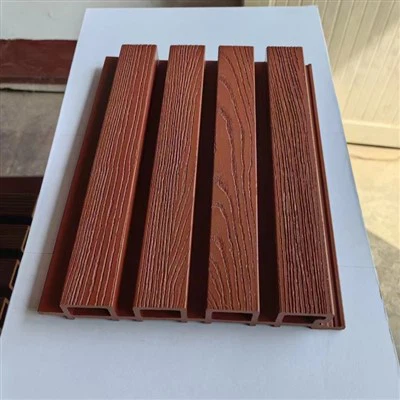
If you’re ready to talk about your project—whether it’s a small accent wall in your living room, a commercial space like a restaurant or office, or a big residential remodel—reach out. We can help you pick the right panels, answer any last-minute questions about warping or other issues, and get you a quote that fits your budget. Don’t let warping be a worry—with the right WPC panels and a little know-how, your wall panels will stay straight and looking great for years.
Sound Deadening Materials References
- American Wood Council. (2022). Wood vs. Wood-Plastic Composite: Moisture and Dimensional Stability.
- International Code Council. (2021). Residential Wall Cladding Installation Standards for Composite Materials.
- Wood Plastic Composite Industry Association. (2023). WPC Dimensional Movement and Warping Prevention Guidelines.
- Journal of Materials in Civil Engineering. (2020). Dimensional Stability of Wood-Plastic Composites for Building Applications.
Linyi Dongyuan International Trade Co., Ltd.
We’re well-known as one of the leading wpc wall panel manufacturers and suppliers in China, also support customized service. With abundant experience, we warmly welcome you to buy high quality wpc wall panel made in China here from our factory. Contact us for more details.
Address: No.A3-102, Mingzhu North Street, Xicheng, Lanshan District, Linyi City, Shandong Province, China
E-mail: Lydongyuan2024@163.com
WebSite: https://www.dy-wpcwood.com/
