Hey everyone, it’s Jake here, and I’m stoked you’re checking in today—this is stuff I get asked literally every single week from café owners, industrial plant managers, car wash operators, even local brewery owners: “What’s the real cost of keeping a commercial RO system running?” Not just the sticker price when you first buy it from me, but the hidden stuff that hits your bank account a month later? Let’s cut through the vague “it depends” garbage and break this down like we’re chatting over a coffee at my desk. I’ve been selling commercial RO units for 12 years, and I’ve seen it all—folks who skip maintenance and end up with $2k in repairs, and folks who lock in a simple routine that cuts their annual costs by 30%. This is the no-BS breakdown you won’t find on a generic vendor page. Commercial RO System

First off, let’s make sure we’re on the same page: a commercial RO system isn’t a plug-and-play coffee maker you can forget about for 5 years. It’s a network of tiny, super sensitive membranes, filters, pumps, and valves that work 24/7 to strip contaminants from water. The cost to keep it running isn’t one number—it’s split into three big buckets: consumables (the stuff you have to swap regularly), energy (the utility bill surprise no one sees coming), and repairs or replacements when you cut corners. Plus, there’s the weird, easy-to-miss stuff like wastewater disposal or extra labor if you handle it yourself. Let’s go through each one, with real numbers I’ve tracked for customers, not estimates pulled out of thin air.
First up, consumables—this is the biggest ongoing cost, no question, and it’s the area where people either budget properly or panic when a filter needs swapping. Let’s start with the pre-filters, because most folks don’t realize these are the first line of defense for the expensive RO membranes. A standard commercial RO has two pre-filters: a 5-micron sediment filter, and a carbon block filter to catch chlorine, which would eat through RO membranes in 6 months flat. For a unit that makes 500 gallons per day (that’s the sweet spot for a small café or boutique brewery), these two filters cost about $120 total. How often do you swap ‘em? Usually every 3–6 months, depending on your incoming water quality. If you have really hard water or a lot of sediment, that’s every 3 months—so $480 a year. If you have relatively clean municipal water, that’s every 6 months, so $240 a year. Simple, right?
Then there’s the RO membrane itself. This is the heart of the system, and it’s the priciest part to replace. For that same 500 GPD unit, a good quality thin-film composite (TFC) RO membrane costs roughly $350. How long does it last? Again, depends on your water. If you do your maintenance right, it’ll go 3–5 years. If you skip pre-filter swaps? Maybe 18 months, max. Let’s do the math on that: if it’s 4 years, that’s ~$87.50 a year. If it’s 2 years, that’s $175 a year. That’s a big swing, and it’s all tied to how you take care of the pre-filters—cutting corners here costs you twice as much on the membrane. Then there’s the post-filter, a small carbon filter after the membrane to make sure the water tastes good. That’s ~$50, swapped every 6 months, so $100 a year. Wait, but hold on—some systems have a scale inhibitor feed too, especially if you have hard water. That’s a liquid chemical you pour into the system to prevent mineral buildup that clogs the membranes. For a 500 GPD unit, that’s ~$25 a month, or $300 a year. A lot of cheap vendors skip mentioning this, but if you have hard water (which 60% of the US does, per EPA), you can’t skip this. That’s a non-negotiable consumable for thousands of customers. Let’s add that all up for a 500 GPD unit, which is the most common size I sell: $240 (swapped pre-filters every 6 months) + $87.50 (membrane, 4 year life) + $100 (post-filter) + $300 (scale inhibitor) = ~$727.50 a year. That’s a solid baseline for consumables, and that’s assuming you’re doing maintenance right—if you’re cheap on pre-filters or skip scale inhibitor, that number jumps, or you blow a membrane early.
Next up, energy costs. This is the hidden gem that almost no one plans for. Commercial RO systems run on high-pressure pumps, right? They need way more pressure than your home RO, and that means electricity. For that same 500 GPD unit, the pump pulls about 1.5 kW. If it’s running 24/7, that’s 36 kWh a day. At a national average of $0.15 per kWh (and it’s higher in a lot of states—California is $0.28, for example), that’s $5.40 a day, or ~$1,971 a year. Wait, but hold on—some newer systems have energy recovery devices (ERDs) that capture the pressure from the wastewater to power the pump, cutting that energy use by 40–50%. So with an ERD, that drops to ~20 kWh a day, ~$3 a day, or ~$1,095 a year. That’s a huge difference. I always tell customers: if you’re buying a commercial RO, get one with an ERD up front, because that energy cost adds up fast. I had a customer last year, a car wash in Arizona, who had an older unit without an ERD—he was paying $3,200 a year in energy, and switching to a new unit with an ERD cut that to $1,700. That’s a $1,500 a year difference, which paid for the unit upgrade in less than 2 years. No one tells you about energy like that, but it’s a huge ongoing cost.
Then there’s repairs and unplanned downtime costs, which are the worst part. Let’s be real—stuff breaks, especially if you don’t do regular checks. What kind of repairs? Clogged valves, faulty pressure gauges, leaks, pump failures. I’ve seen customers skip pre-filter swaps so much that the sediment clogs the entire system, and they have to replace not just the membrane, but the pump and a bunch of piping. That can cost $1,500–$2,500 out of nowhere. Worse than the repair cost? Downtime. If you’re a café, your espresso machine needs RO water—if your system is down, you’re losing customers. I had a coffee shop in Portland a couple years ago who skipped maintenance, their membrane died at 18 months instead of 4, and they were closed for 2 days waiting for a replacement. That cost them more than $1,200 in lost sales, not just the $350 membrane. That’s the hidden cost no one budgets for. How much should you set aside for repairs? If you’re doing your routine checks, that’s $200–$500 a year. If you’re cutting corners, that could be $1,000 or more. Another thing: wastewater. RO systems produce 3–4 gallons of wastewater for every 1 gallon of clean water, right? That’s called the recovery rate. A good commercial RO has a 25–30% recovery rate, so for every 500 gallons of clean water, you’re making 1,500 gallons of wastewater. That water has to go down the drain, which means you’re paying sewer and water fees for that wastewater. Wait, most people think they only pay for the clean water they use, but no—you pay for all the water that comes into your system, including the wastewater. Let’s calculate that: if your local water and sewer rate is $5 per 1,000 gallons, that’s (2,000 gallons incoming a day) * $5 / 1,000 = $10 a day, ~$3,650 a year. But if you have a high recovery rate, like 40%, that cuts that to ~$2,800 a year. That’s another cost people never think about until their water bill shows up. I had a customer who ran a small beverage plant in Chicago, they were using a 15% recovery rate, and their wastewater bill was $4,200 a year. They upgraded to a high-recovery system, and that dropped to $2,100 a year. Again, that’s a big number that’s easy to miss.
Wait, but hold on—there’s a way to lower these costs a lot, right? The best way to keep maintenance costs low is to do regular, simple checks. I tell all my customers to do a quick check every month: look at the pressure gauges, check for leaks, note the wastewater flow. And swap pre-filters on schedule, no exceptions. If you do that, your membrane will last the full 4–5 years, you’ll avoid big repairs, and you’ll keep energy costs low. Also, buying a service plan from me isn’t a scam—it’s $50–$100 a month, and that includes all consumables, monthly checks, and a 24/7 repair line if something breaks. A customer of mine in Denver has that plan, and his total annual maintenance cost is ~$1,200, which is way lower than some of my other customers who do it on their own and have to replace membranes every 2 years. It’s a good deal if you don’t want to deal with the hassle of tracking swaps and repairs.
Let’s also talk about bigger systems, like industrial commercial RO units that make 10,000 gallons a day or more, because that’s another common size I sell. Those have different costs, obviously. Consumables for those: 4 pre-filters, 2 RO membranes, scale inhibitor, post-filters, that’s going to be ~$5,000–$7,000 a year. Energy cost? A unit that size has a bigger pump, but also a bigger ERD, so energy use is ~100–150 kWh a day, that’s ~$5,000–$8,000 a year, depending on your rates. Wastewater cost? For 10,000 gallons a day clean water, that’s 30,000 gallons incoming, so ~$150 a day, ~$54,000 a year, again depending on rates. So total annual maintenance for a big industrial RO is around $60,000–$70,000 a year. That’s a big number, but when you’re using that water for manufacturing, the cost of not having clean water (like ruining a batch of product) is way higher. So it’s worth it to plan for that.
Wait, let’s make sure we’re not leaving out the mistakes people make. A lot of new customers buy a cheap RO system from a big box site, not from a specialist like me, and those systems have lower quality membranes and no ERD. So their energy costs are way higher, their membranes die way faster, and they end up spending more over time. I had a customer who bought a $1,500 RO on Amazon for his bakery, and within 2 years he’d spent $1,800 on new membranes, filters, and repairs, plus $3,500 in extra energy costs. He ended up selling the cheap unit to me for scrap and buying a good commercial grade one, and his annual maintenance cost dropped by $2,000 a year. That’s the thing: cheap upfront is expensive long term.
Another mistake: people forget that if your incoming water quality changes, your maintenance costs change too. If you add a new well or your municipal water starts having higher chlorine levels, you might have to swap your carbon filter more often, or add a different pre-treatment. That’s why I always do a free water test for every customer before we even pick a system—so I can tell them exactly what their maintenance costs will be, not a generic number. No surprises, no hidden fees.
So let’s wrap this up with real numbers, to make it concrete. For a standard 500 GPD commercial RO (café, small brewery, car wash, local clinic), the annual maintenance cost if you do it right, with a good system, is roughly: $700–$800 in consumables, $1,000–$1,500 in energy, $2,500–$3,000 in water/sewer fees, plus $200–$500 in repairs, for a total of ~$4,400–$5,800 a year. If you skip maintenance and get cheap parts, that number jumps to $7,000–$10,000 a year, plus downtime costs that could be thousands more. For a 10,000 GPD industrial system, that’s $60,000–$75,000 a year, as I said earlier.
The key takeaway here is: the cost of maintaining a commercial RO system isn’t a one-size-fits-all number. It depends on the size of the unit, your incoming water quality, whether you get a system with energy-saving features, and how consistent you are with routine maintenance. But if you work with a specialist (like me) to pick the right system for your needs, stick to a simple maintenance schedule, and avoid cutting corners on consumables, you’ll keep those costs predictable and low.
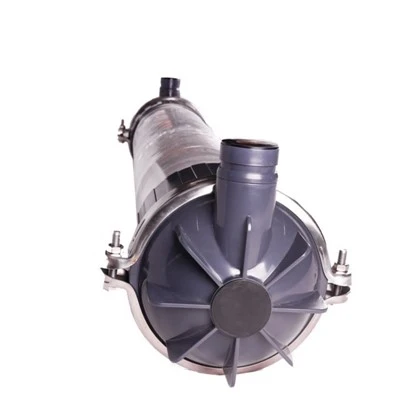
If you’re trying to figure out what the real number would be for your specific operation, just reach out. I do free, no-obligation consultations, water tests, and will break down exactly what your annual maintenance costs would be, no fine print, no pushy sales talk. I’ve helped dozens of businesses cut their RO maintenance costs by 20–30% just by adjusting their routine or upgrading to a higher-recovery system, and I can help you too. Don’t waste time guessing at numbers—let’s chat and get you a clear plan.
Nanofiltration Membrane References:
- U.S. Environmental Protection Agency. (2024). Water Hardness in the United States: National Occurrence and Impacts. EPA Office of Water, Washington, D.C.
- Water Quality Association. (2023). Commercial Reverse Osmosis System Maintenance Best Practices. WQA Technical Publication, Lisle, IL.
- Department of Energy. (2022). Energy Efficiency in Commercial Water Treatment Systems. DOE Office of Energy Efficiency & Renewable Energy, Washington, D.C.
- National Water Association. (2024). Commercial RO System Wastewater Recovery Rates and Cost Analysis. NWA Technical Report, Arlington, VA.
Huamo Group
Fujian Huamo Technology Co., Ltd. is one of the most professional commercial ro system manufacturers and suppliers in China, featured by quality products and good service. Please rest assured to wholesale the best commercial ro system made in China here and get price list from our factory. Contact us for custom service and OEM service.
Address: No.6 Hengtong Rd, Shanmei Village, Xiamei Town, Nanan City, Fujian Province, China
E-mail: info@huaromembrane.com
WebSite: https://www.hmromembrane.com/
