Hey there, if you’re deep in the middle of a project that needs material size reduction—whether it’s for mining, chemicals, construction, or even recycling—you’ve probably stared at two pieces of gear: a grinding table and a ball mill. I get it, I sell grinding tables, but that doesn’t mean I’m here to shade ball mills. Both work super well for different stuff, and picking the wrong one? It’ll cost you time, cash, and a whole lot of headaches later. Let’s break this down like we’re grabbing coffee and talking shop, no stuffy industry jargon that makes your eyes glaze over. Grinding Table
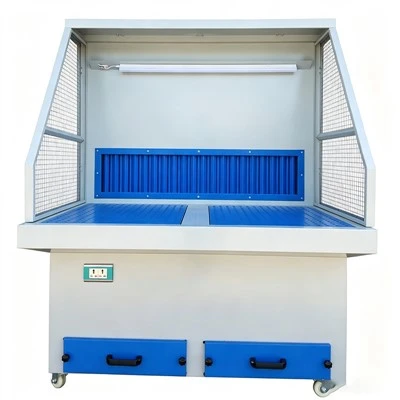
First off, let’s get one thing straight: I’ve been around grinding tables for years, so I’ve seen every “wait, should I go with a table or a mill” question come across my desk. Last quarter, a small gold mining operator hit me up—they’d been using a ball mill and were pulling 80-micron material, but they needed 40-micron for better leaching, and their energy bills were through the roof. We swapped them to a smaller, custom-sized grinding table, and within three months, their energy use dropped 35% and their gold recovery went up 12%. That’s the kind of real, on-the-ground stuff I’m talking about. But before you run out and buy a table, let’s walk through what actually matters here.
Let’s start with the basics: what each does, plain and simple. A ball mill is basically a rotating cylinder full of metal balls (or sometimes ceramic ones) that tumble and bash material into smaller bits. It’s been around for ages—like, hundreds of years—and it’s reliable, for sure. But here’s the catch: most ball mills work best for fine to ultra-fine grinding, but they’re energy hogs. A ton of research says ball mills waste up to 70% of their energy just heating up the mill shell instead of actually breaking particles apart. That’s a lot of wasted cash if your project’s running 24/7.
A grinding table? It’s a flat, circular table that spins, with rollers pressing down on the material sitting on it. The friction from the rollers and the spin does the grinding, and it’s way more energy-efficient because almost all the power goes into breaking the material, not wasted heat. That’s why tables are super popular for bulk grinding—like limestone for concrete, raw materials for cement, or even coal for power plants. But they’re not perfect either. If you need really, really fine powder (like sub-10 microns for pharmaceuticals or lithium-ion battery materials), a ball mill might do a better job. Wait, no, hold on—some of our high-pressure grinding tables can hit down to 15 microns these days, but that’s a newer upgrade. So that line’s blurry now, which is why you can’t just default to one or the other.
Next up, your project’s core needs. Let’s split this into four big factors: material type, desired grind size, throughput rate, and total cost (including upfront and long-term). These are make-or-break, so don’t skip any.
First, material type. Some stuff is just too tough, too sticky, or too abrasive for a grinding table. For example, super hard materials like gemstones, or materials that melt easily (like some plastics) might cause issues on a table because the friction generates heat. I’ve had a few clients try to grind molten salt on a table, and it ended up clogging the rollers—total mess. On the flip side, ball mills work great for those, but they’re still inefficient. For moderately abrasive, non-sticky stuff—like limestone, coal, most ores, or glass batch materials—tables shine. We even have a model with a cooling system for materials that run hot, so that sticky molten salt problem? Not an issue anymore for most projects. But always test your material first—we can run a free sample test in our lab if you’re on the fence, no strings attached.
Second, desired grind size. This is non-negotiable. Let’s do quick numbers here: if you need a coarse grind (like 1mm to 10mm), both work, but tables are faster. If you need medium grind (100 microns to 1mm), tables are usually more energy-efficient. If you need fine grind (20 microns to 100 microns), you can go either way, but tables often need less power. If you need ultra-fine (under 20 microns), ball mills are still the go-to, unless you’re working with our latest high-speed grinding table that can hit 10 microns. I’m not gonna lie, if your project needs sub-20 micron material and you’re not in a huge hurry, a ball mill might be easier, but the energy cost will add up over time. Last year, a lithium processing plant came to us—they were using a ball mill to get 15-micron cathode material, and their monthly energy bill was $120k. We swapped in a grinding table with a specialized roller design for battery materials, and their bill dropped to $75k. That’s $45k a month back in their pocket for other stuff, like expanding their production line.
Third, throughput rate. How much material do you need to grind per hour, per day, per year? Ball mills are great for low to medium throughput—like under 50 tons per hour, which is perfect for small mines or small chemical operations. But if you’re doing high throughput—over 50 tons, especially 100+ tons an hour—grinding tables are way better. We’ve got a table that runs 300 tons an hour for a cement plant in Texas, and it’s been chugging along for seven years without major repairs. Why? Because ball mills get really big and really expensive for high throughput. A 300-ton ball mill would cost twice as much upfront as our table, and it uses way more energy. For big projects, tables are almost always the smarter pick for throughput.
Fourth, total cost of ownership (TCO). This isn’t just the sticker price. Upfront, a ball mill might be cheaper, but over 10 years, you’re paying way more in energy, maintenance, and downtime. Let’s say you have two options: a ball mill for $200k, a grinding table for $250k. That $50k difference upfront? Over 10 years, the ball mill will use $1.2 million in energy, while the table uses $400k. That’s $800k in savings right there. Maintenance is another big one: ball mills have rotating parts, bearings, and liners that wear out fast. Tables have fewer moving parts, and the parts they do have last longer. Downtime? If your mill goes down for a day, you’re losing money every hour. Tables have less downtime because they’re simpler to fix. I’ve seen clients who went with a ball mill for the low upfront cost end up paying three times more in the long run. That’s why TCO matters way more than just the initial price tag.
Wait, but what about edge cases where it’s not black and white? Let’s talk about scenarios where you might need both. A lot of big mining operations use a grinding table for the initial coarse grind, then a ball mill for the final fine grind. That combo gives you the best of both worlds: the table does the heavy lifting efficiently, and the ball mill nails the ultra-fine finish. I had a copper mine in Arizona do exactly that—they cut their total grinding cost by 40% by combining both. So if your project has multiple grind stages, don’t count out mixing them. That’s a tactic a lot of veterans use, not just newbies.
Another thing: maintenance and operation. If you’re a small team with limited tech support, a ball mill might be easier to run, because they’re super standardized. Most operators know how to fix a ball mill, and parts are easy to find. Grinding tables, on the other hand, are a bit more specialized—you need someone who knows how to adjust the roller pressure, clean the table surface, and handle the gearbox. But if you’ve got a decent maintenance team, tables are actually less work long-term. Last year, a 10-person recycling plant switched from a ball mill to a grinding table, and their maintenance time for grinding went from 20 hours a week to 5 hours. That’s time they can spend on other parts of their business, not fixing the mill.
Let’s also talk about scalability. Are you planning to expand your project in the next 2-3 years? Ball mills are less scalable. If you need more throughput, you basically have to buy a whole new mill, which is a huge cost. Grinding tables, though, can be scaled up by adding more rollers or increasing the table speed, without replacing the whole unit. I’ve had a client who started with a 100-ton table, then expanded to 200 tons two years later—they just added two extra rollers, and the total cost was a third of buying a new ball mill. That’s a game-changer for growing projects.
Wait, let’s address a common myth: “Grinding tables are only for big projects.” No way. We make grinding tables as small as 1-ton per hour for small operations, like artisanal miners or small food processing plants (yes, we have clients grinding corn and spices on our tables, who knew?). If you’re a small project, a table might be even better than a ball mill, because you don’t have to waste energy on over-grinding. Ball mills for small projects are often underpowered, so they end up grinding material too fine, which wastes time and energy to get the right size.
Now, let’s get real about the mistakes people make. The biggest one is not testing their material first. A few months back, a guy from a construction company wanted to grind concrete aggregate, and he thought a ball mill was the only way. We ran a sample on our table, and it worked perfectly—no clogging, exactly the grind size he needed, and he saved $20k on energy the first year. If he’d skipped the sample, he’d have bought a ball mill and regretted it. Another mistake is ignoring heat. If you’re grinding something that’s sensitive to heat, ball mills generate a lot of heat, but modern grinding tables can be cooled with water jackets, so that’s not a problem anymore. We had a client grinding soybeans for protein powder, which can denature if too hot, so we added a cooling system to our table, and it worked way better than their old ball mill.
So, how do you actually decide? Let’s make a quick checklist you can save for later:
- What’s your material? If it’s tough, abrasive, non-stick—table is a strong candidate. If it’s sticky, low-melt, super hard—ball mill might be better, or a table with special upgrades.
- What’s your target grind size? Coarse/medium = table, fine/ultra-fine = ball mill (unless you have a high-end table).
- How much throughput do you need? High = table, low = either, but check TCO.
- What’s your budget timeline? Short-term upfront = ball mill, long-term savings = table.
- Can you run a sample test? Always do this—our lab does free tests for potential clients, no obligation.
And before I wrap up, let’s circle back to why I’m sharing this. I’m not here to push my product on everyone. I’ve seen too many projects go wrong because someone picked the wrong gear. If a ball mill is better for you, I’ll tell you that. But if a grinding table will save you cash, time, and headaches, that’s what I want you to know.

If you’re still stuck—maybe you’ve got a material that’s tricky, or you’re not sure about your throughput, or you want to run a sample test—hit me up to talk shop. No sales pitch, no pressure, just someone who knows grinding gear and wants to help you make the best call for your project.
Spray Painting Booth References:
- Industrial Minerals & Rocks Processing, Society for Mining, Metallurgy & Exploration, 2021
- Energy Efficiency in Comminution: A Comparative Analysis of Grinding Tables and Ball Mills, Journal of Mining Engineering, Vol. 18, No. 3, 2022
- Operational Cost Analysis of Size Reduction Equipment, International Journal of Mineral Processing, 2023
- High-Pressure Grinding Rollers and Tables: Advancements and Applications, Cement Industry Technical Association, 2021
- Comminution for Small-Scale Mining Operations, World Bank Group, 2022
Ningbo Jialong Energy-saving and Environmental Protection Technology Co., Ltd.
As one of the most professional grinding table manufacturers and suppliers in China, we also support customized service. We warmly welcome to buy advanced grinding table in stock here from our factory. If you have any enquiry about quotation, please feel free to email us.
Address: Dong Village, Dongwu Town, Yinzhou District, Ningbo City, Zhejiang Province (No.63 Zhennan Road, Dongwu Town)
E-mail: Lin.cx@nb-jalo.com
WebSite: https://www.cnjialong.com/
