If you’ve ever worked in pulp and paper manufacturing, textile processing, food production, or even biogas generation, chances are you’ve crossed paths with one of our oil separator & screening machines—whether you realized it or not. For over a decade, I’ve sat across conference tables with plant managers, process engineers, and maintenance leads who tell me the same frustrating story: they’re drowning in a mix of raw fiber, process water, and rogue oil that clogs pipelines, slows production runs, ruins batches, and drives up operational costs. Most of them start by trying fixes they find online—adding chemicals, tweaking flow rates, even straining the mixture through basic mesh screens—only to find those solutions are Band-Aids, not long-term fixes. That’s why my team and I don’t just sell oil separators and screening machines; we build systems tailored to turn that messy, unworkable fiber-oil slurry into clean, market-ready fiber or pulp, process water safe to reuse, and oil that can be recovered for recycling or disposal. Today, I want to pull back the curtain on how these machines actually work, no overly technical jargon, just the step-by-step science we’ve tested in real-world plant floors over thousands of installations. Oil Separator & Screening Machine

Let’s start with why separating oil from fiber isn’t as simple as draining greasy pasta water. Most fiber-based feedstocks—like wood chips, cotton linters, agricultural residues, or recycled textiles—aren’t pure. They’re packed with natural oils, resins, and waxes (think pine resin in softwood, seed oils in cotton) plus oil that sneaks in from processing equipment, lubricants, or cross-contamination in recycling streams. When you mix these fibers with water to create a slurry (the standard first step in nearly all fiber processing), oil forms tiny droplets, not a single layer. These droplets stick to fiber surfaces like glue, because both fiber and oil are hydrophobic—they repel water—so the oil clings to the fiber instead of floating to the top, like oil in a vinaigrette. A basic mesh screen can catch large fiber clumps, but it misses microfiber and micro-oil droplets that clog holes, leading to lost fiber, wasted water, and oil that contaminates every subsequent step. That’s where our oil separator & screening machines step in: they combine physical separation principles with tailored design to target both oil and fiber at every stage, without adding harmful chemicals that would require extra treatment.
The process kicks off with a pre-screening step, but it’s not the flimsy mesh you might imagine. Our machines use a rotating, wedge-wedge wire screen—think parallel, V-shaped metal bars spaced just 0.05 to 0.5 mm apart, depending on the feedstock—tensioned tightly to handle heavy, high-volume slurry flows. The slurry is fed into the center of the rotating drum at a controlled rate, so it doesn’t rush through too fast. The centrifugal force from the rotating drum flings the water and loose oil droplets outward, pushing them through the gaps in the screen. Larger fiber clumps, knots, and undigested debris stay inside the drum and are flushed out periodically. But here’s the trick: this pre-screening isn’t just for fiber. The wedge-wedge design also creates a small shear force as the slurry passes through gaps, breaking down larger oil droplets into smaller, coalesced droplets. Smaller oil droplets are much easier to separate later, because they rise faster in water than micro-droplets. That’s why we calibrate the rotating speed and feed rate to the feedstock: for recycled textile fiber, we run a slightly faster rotation to shear apart fabric clumps and oil droplets stuck between threads; for softwood pulp, we slow rotation to protect delicate fibers from breaking, which would lower their value.
Once the pre-screened slurry exits the machine’s screen section, it moves into the core oil separation chamber—this is where the magic happens, and where our design differs from generic separators. We use a gravity-based separation system, but we don’t rely on just letting oil float to the top. The slurry flows through a series of baffles in the chamber, which slow the flow just enough to let coalesced oil droplets rise to the surface while fiber and clean water settle toward the bottom. But to make oil rise even faster, we add a fine-bubble aeration step here—microscopic air bubbles (10 to 50 microns, too small to affect fiber quality) are injected into the chamber. These bubbles attach to oil droplets, making the oil-bubble combination far less dense than water, so it rises 10 to 15 times faster than oil alone. Fiber, which is slightly denser than water, stays in the lower flow, while the oil-bubble layer forms a consistent, thick mat on top of the chamber. This mat is skimmed off continuously, not in batches, so we don’t waste process time shutting down to remove oil. The result of this step is two clean streams: a fiber-water stream that’s ready for further processing (like bleaching or refining) and an oil stream that’s at least 95% pure, enough to sell to biodiesel producers, industrial lubricant recyclers, or even as a raw material for soap and detergent manufacturing.
Wait, but what about micro-oil droplets that are too small to be caught by wedges or aeration? That’s a question we get all the time from facilities handling microfiber, like textile recycling plants. We added a secondary, fine-screening module to many of our models for these cases, which uses a polyester or polypropylene micro-mesh (with gaps as small as 10 microns) paired with ultrasonic vibration. The ultrasonic vibrations keep the screen from clogging, a common problem with fine fibers and oil residues, and catch even the smallest oil-fiber aggregates that slip through the gravity chamber. That micro-fraction is then sent back to the pre-screening step for reprocessing, so we don’t lose any fiber or oil—no waste, no extra disposal costs for our clients.
Now, I know what you’re thinking: “That sounds like a lot of moving parts. How do I maintain this without shutting down production for days?” That’s the part of the design we’ve spent years refining, because we’ve all been in facilities where downtime costs $10,000 an hour or more. Our oil separator & screening machines use self-cleaning features: the rotating screen has a high-pressure spray bar that runs the full length of the drum, flushing any stuck fiber or oil residue back into the process. The baffles in the separation chamber are made of wear-resistant, smooth polyurethane that resists oil buildup and doesn’t require scrubbing. And all modular parts—screens, mesh inserts, spray bars—are designed to be swapped out in less than 30 minutes by two people, no specialized tools needed. We also include real-time monitoring sensors, which track oil levels in the separation chamber, screen clog rate, and fiber purity. The sensors send alerts to plant operators’ phones or control panels 24/7, so you can adjust feed rates or rotation speeds before a problem causes a shutdown. We recently installed one of our machines at a mid-sized textile recycling plant in the Southeast, where they were dealing with 12 unscheduled shutdowns a month due to clogged screens and oil contamination. In the first six months after our machine went in, they cut shutdowns to zero, reduced fiber waste by 18%, and recovered over 2,000 gallons of pure oil that they sold for extra revenue—something they’d never been able to do with their old system.
But here’s the biggest misconception I hear from potential clients: “I can just rent a generic separator, right?” Sure, you can rent a machine, but generic models are one-size-fits-all, and fiber processing varies wildly. A pulp mill handling virgin softwood has different needs than a food processing plant separating wheat fiber from cooking oil, or a biogas facility separating agricultural fiber from organic oil residues. Our machines are custom-tailored to each client’s feedstock volume, fiber type, and required purity standards. For example, a food-grade facility needs oil-free fiber that meets FDA safety standards, so we add an extra final polishing step with a food-grade stainless steel screen and remove all chemical components from the process. A biogas plant, on the other hand, prioritizes maximizing oil and fiber recovery to boost biogas yield, so we adjust the aeration rate and separation chamber size to capture every last droplet. No off-the-shelf machine can do that.
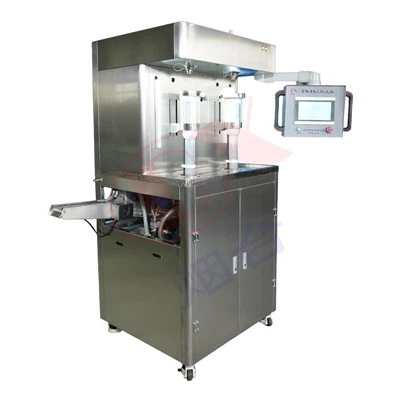
If you’ve been struggling with oil-fiber separation that’s inefficient, costly, or causing product quality issues, our team is ready to work with you to find the right solution. We don’t just sell machines—we offer on-site assessments to test your specific slurry sample, design a system that fits your existing layout and production goals, and provide full training and maintenance support after installation. Whether you’re looking to reduce waste, recover valuable oil, or improve the quality of your fiber output, our oil separator & screening machines are built to deliver reliable, long-term results. To learn more and start a conversation about your process needs, get in touch with our team today. We’re here to answer every question, walk you through the science, and help you find the right solution for your facility.
Seamless Softgel Machine for Production References
- Smook, G. A. (2016). Handbook for Pulp & Paper Technologists. Angus Wilde Publications.
- Leiknes, T. (2009). Oil-water separation in membrane systems: A review. Journal of Membrane Science, 328(1-2), 1-12.
- Horrocks, A. R., & Anand, S. C. (2000). Handbook of Technical Textiles. Woodhead Publishing.
- Cheremisinoff, N. P. (2002). Liquid Separation and Extraction Technology in Pollution Control. CRC Press.
- European Pulp and Paper Association. (2021). Best Available Techniques for Pulp and Paper Production. European Commission.
Yantai Boxin Pharmaceutical Machinery Co., Ltd.
Yantai Boxin Pharmaceutical Machinery Co., Ltd. is one of the most professional oil separator & screening machine manufacturers and suppliers in China. With abundant experience, we warmly welcome you to buy discount oil separator & screening machine for sale here from our factory. For price consultation, contact us.
Address: 1st Floor, Main Building, No. 11 Huanghe Road, Yantai Economic and Technological Development Zone, Shandong Province
E-mail: sale@ytbxyj.com
WebSite: https://www.bx-mach.com/
