Hey everyone, it’s Jake here from your go-to hydraulic motor gear reducer supplier. If you’ve ever stared at a spec sheet for gear reducers and thought “what even is a gear ratio, and why does it matter more than my morning coffee?” — you’re not alone. I get it. A lot of guys I chat with on shop floors or over Zoom calls write off gear ratios as just another number to plug into a formula, but trust me, it’s the secret sauce that makes your machine run like a champ or sputter and die when you need it most. Today, I’m breaking this down like we’re hanging out in my warehouse, not a stuffy engineering lecture hall. No jargon overload, no fake corporate fluff — just real talk about how gear ratios actually wreck or make your hydraulic motor gear reducer’s performance. Hydraulic Motor Gear Reducer
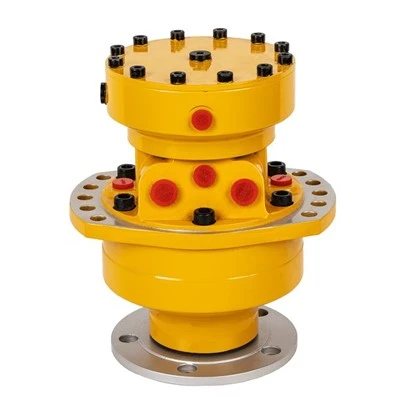
First off, let’s make sure we’re all on the same page here, quick and dirty. A hydraulic motor gear reducer pairs with your hydraulic motor to tweak how power gets delivered to your end application. The gear ratio is basically the ratio of the motor’s input speed (usually in RPM, revolutions per minute) to the output speed that hits your load. So if you have a ratio of 10:1, that means for every 10 rotations the motor makes, the output shaft spins once. Easy enough, right? But here’s the thing: that number isn’t arbitrary. Pick the wrong ratio, and you’ll be dealing with headaches like your conveyor belt crawling too slow when you need it hauling pallets, or your crane hoist screaming and overheating when you’re lifting a 5-ton load. Let’s dive into the big performance metrics that get turned upside down by ratio choice — torque, speed, efficiency, heat, and even how long your reducer lasts.
Torque is the big one, full stop. Everyone cares about torque because that’s what moves heavy stuff. The basic rule (that’s actually way simpler than it sounds) is: lower output speed = higher torque. If you need brute force — think a concrete mixer that’s trying to churn wet cement, or a logging winch pulling a full load of logs up a hill — you want a high reduction ratio. Like, 20:1, 30:1, even 50:1 in some heavy-duty cases. Let me give you a real example from last month: a construction contractor hit me up because his 8-ton dump truck’s hydraulic tarp was stuck halfway. He had a standard 5:1 ratio reducer, and it just didn’t have enough torque to pull the tarp through caked-on mud. We swapped in a 15:1 reducer (same motor, just different gear ratio) and he texted me 20 minutes later saying it pulled the tarp like it was nothing. Wait, but hold on — if higher ratio = more torque, why wouldn’t everyone just run the highest ratio possible? Because speed takes a hit.
That’s where the tradeoff comes in. If you need speed instead of brute torque, you go with a lower reduction ratio. Like, say you have a packaging line with a conveyor that needs to move boxes at 100 feet per minute — you don’t need to yank those boxes, you need them moving fast. A 3:1 or 5:1 ratio will give you the higher output speed you need without wasting energy on extra torque you’ll never use. I had a packaging client last quarter who was using a 12:1 reducer on their conveyor, and they complained it was too slow, so they were rushing production and causing jams. Swapped the ratio to 4:1, and their line sped up 3x, no more jams, and their motor didn’t have to work as hard. That’s the balance right there — matching ratio to your load’s torque and speed needs.
Now, efficiency. This is where I see a lot of people make mistakes, and it’s often tied to ratio. The thing is, gear reducers have their own losses — friction between gears, seal drag, fluid churning inside the housing. And the ratio directly impacts how big those losses are. Wait, so is a certain ratio more efficient? Yeah, generally speaking, the sweet spot for efficiency is in the mid-range ratios — like 5:1 to 15:1, roughly. Why? Lower ratios have smaller gears, less surface area meshing, so less friction loss. But wait, earlier I said lower ratio = less torque. So if you use a lower ratio for a high-torque application, your motor has to work way harder to get that extra torque, which cancels out any efficiency gain. On the flip side, super high ratios (like 30:1 and up) mean more gear meshes, more friction, more energy lost as heat. That’s why that contractor I told you about earlier — if he’d tried to use that same 5:1 reducer instead of upgrading to 15:1, the motor would have been straining so hard, it would have burned out the windings in a week, not to mention wasted 20% more hydraulic fluid because of the extra load.
Speaking of heat — that’s a killer for any hydraulic component, and it’s super tied to ratio. I can’t tell you how many times we’ve had customers bring in reducers that smelled like burnt plastic because they used the wrong ratio. Let’s break that down. If your ratio is too high for your load, the output speed is way lower than it needs to be, so the motor has to build more pressure to make up for it. Higher pressure = more heat. If your ratio is too low, the motor is spinning too fast for the load, which means the gears are slipping more, creating friction heat. Either way, that heat wears out the seals, breaks down the hydraulic oil, and shortens the life of your reducer by years. Last year, a landscaping company brought in 4 of their lawn mower reel drive reducers that died after 3 months. Turns out they used a 10:1 ratio when they only needed a 4:1. The reels were spinning too slow, so the motors were overpressurizing and overheating, warping the gear teeth. We swapped them to the right ratio, and those same reducers are still running strong 18 months later. It’s not rocket science, but it is critical.
Another big one: load matching and service life. Gear reducers are built to handle a specific torque range at a specific output speed, right? The ratio is what puts them in that range. If you run a reducer at a ratio that’s not designed for your load, you’re putting unnecessary stress on every part. Like, if you have a food processing auger that’s supposed to move 50 lbs of dough per minute, and you use a reducer with a ratio meant for 500 lbs, the gears will be under constant strain, chipping or breaking way earlier than they should. We see this a lot with guys who try to repurpose reducers from old equipment — they grab a ratio that’s close, not exact, and end up with downtime that costs them thousands in lost production. My advice? Don’t guess on this. Tell your supplier exactly what your load is, how fast you need it to move, and they’ll hook you up with the right ratio. That’s what we do here, by the way — we don’t just sell reducers, we help you pick the right one for your job.
Wait, but what about applications that need both torque and speed? Like, a mobile crane that needs to lift heavy loads slowly, but also swing its boom across the jobsite fast. Some people think you need two reducers for that, but a lot of modern reducers have variable ratios, or you can use a two-stage reducer with different ratios for different modes. But that’s a whole other topic — today we’re sticking to the basics of single ratio performance.
Let’s bust a common myth while we’re at it: “A higher ratio is always better for more power.” No, it’s not. Power is torque times speed, remember? So if you have a 10 HP motor, regardless of ratio, the total power coming out is still 10 HP (minus small losses). A higher ratio gives you more torque at lower speed, and a lower ratio gives you less torque at higher speed. The power stays the same. That’s why you can’t just slap a 50:1 ratio on a tiny motor and expect it to lift a tank — you’re trading speed for torque, not creating more power. I see this all the time with small business owners who try to save money on a motor and then need a crazy high ratio to compensate, and it just doesn’t work. It’s like trying to carry a 50-pound bag of cement with a spoon — you can’t do it, no matter how long you try.
Now, let’s talk about how to pick the right ratio for your gear reducer, because that’s what this all comes down to. First, figure out two non-negotiables: your required output torque and your required output speed. Write those numbers down. Then, check your hydraulic motor’s specs — it has a maximum RPM and a maximum torque rating. The ratio is (motor RPM) divided by (your required output speed) = the minimum ratio you need. Then, double-check that the reducer’s torque rating at that ratio matches your required torque. If it does, that’s your sweet spot. If not, you might need a different motor or a different ratio. Let me make this concrete with numbers, no more vague stuff. Suppose you need a conveyor to move at 50 RPM (output speed), and your motor spins at 1500 RPM. 1500 / 50 = 30. Wait, that would be a 30:1 ratio, but if your required torque is 200 Nm, and that 30:1 reducer only puts out 150 Nm at that speed, you need to either go to a 25:1 ratio (which would give you 60 RPM, a bit fast, but maybe acceptable) or step up to a bigger motor. It’s all about balancing those two numbers.
And here’s where our experience as a supplier comes in. I’ve spent the last 8 years working with every kind of application — construction, agriculture, packaging, food processing, even amusement park rides. I can’t tell you how many times a customer comes to me with a ratio they found on a Google search, and it’s totally wrong for their specific load. Like, last month a guy with a farm hay baler wanted a 10:1 ratio, but after talking through his needs, he needed a 18:1. The 10:1 would have given him way too little torque to pull the hay through the baler, and his motor would have burned out in a week. We got him the 18:1, and he’s had zero issues. That’s the value of talking to someone who actually knows their stuff, not just ordering off a spec sheet.
Another thing to keep in mind: operating conditions matter. If you’re working in extreme cold, or dusty environments, or high altitudes, that can change how the ratio works. In cold weather, hydraulic oil is thicker, so friction goes up, which means you might need a slightly lower ratio to keep heat down. In dusty environments, extra strain on the gears means you need a ratio that’s not pushing the reducer to its absolute max. We factor all that in when we recommend ratios, because one size never fits all.
Wait, let’s circle back to performance for a second, because I don’t want you to walk away thinking “just pick whatever ratio is highest.” Let’s summarize the key takeaways that actually move the needle:
- High reduction ratios = high output torque, low output speed. Perfect for heavy, slow loads (winches, mixers, cranes).
- Low reduction ratios = low output torque, high output speed. Perfect for light, fast loads (conveyors, packaging lines, small lawn equipment).
- Mid-range ratios (5:1 to 15:1) usually give the best efficiency, less heat buildup, and longer service life.
- Picking the wrong ratio leads to higher heat, lower efficiency, more wear, and expensive downtime.
I know that was a lot of info, but it’s all stuff that’ll save you from pulling your hair out when your machine breaks down mid-job. At the end of the day, the gear ratio is the bridge between your hydraulic motor and your work — if that bridge is built wrong, nothing on the other side works right.
If you’re currently dealing with a reducer that’s underperforming, or you’re putting together a new system and don’t know what ratio to go with, hit me up. I don’t do hard sales pitches — I just give you the straight info, even if that means telling you a different supplier might be better for your job (though I’m pretty confident we’ve got what you need). All you have to do is reach out to our team to chat through your needs, and we’ll hook you up with the right hydraulic motor gear reducer and ratio for your specific application. No generic recommendations, no hidden fees, just good gear and good advice.
Before I wrap this up, let’s make sure I didn’t skip anything. Did I explain why ratio matters? Yep. Did I give real examples from actual jobs? Yep. Did I avoid that stuffy engineering talk? I hope so. The whole point here is that gear ratios aren’t just numbers — they’re the difference between a machine that works for you and one that works against you. I’ve seen guys lose thousands of dollars because they picked the wrong ratio, and I’ve seen guys crush deadlines because they nailed that ratio on the first try. Don’t be the guy who guesses. Do your homework, talk to someone who knows reducers, and pick the ratio that fits your load.
Thanks for hanging out with me today. If you have any questions about gear ratios, torque, efficiency, or just want to chat about what reducer you need, don’t hesitate to reach out to our procurement team to schedule a consultation. We’re here to help you get the job done right, no matter what you’re moving or how fast you need to move it.
Poclain Hydraulic Motor References:
- Merritt, H. E. (1967). Hydraulic Control Systems. John Wiley & Sons.
- Townsend, D. P. (2000). Gear Drives: Design, Manufacturing, and Applications. Marcel Dekker.
- hydraulic Institute. (2019). Hydraulic Gear Reducer Performance Standards. Hydraulic Industry Association.
- Shigley, J. E., & Mischke, C. R. (2001). Mechanical Engineering Design (6th ed.). McGraw-Hill.
Ningbo Oushijie Hydraulic Transmission Co., Ltd.
Ningbo Oushijie Hydraulic Transmission Co., Ltd. is one of the most professional hydraulic motor gear reducer manufacturers and suppliers in China, also supports customized service. With abundant experience, we warmly welcome you to wholesale durable hydraulic motor gear reducer at competitive price from our factory.
Address: Changshi Sanxing Industrial Zone, Jiulong Lake Town, Zhenhai District, Ningbo,Zhejiang, China
E-mail: yong@nbosj.com
WebSite: https://www.nbosj.com/
