Hey everyone, if you’ve ever stood next to an aircraft hangar on a windy day—especially when a jet’s pulling in or out—you know that wind doesn’t just ruffle your hair or make the portaloos wobble. For us, as a small but tight-knit aircraft hangar supplier, wind is way more than just a weather chat point; it’s one of the biggest factors we work around every single time we design, build, or tweak a hangar. I’ve been in this game for 12 years now, and I still see new clients shrug off wind until a gusty storm tears their old hangar’s doors off or makes their stored planes sway so bad the wing tip hits the wall. Today, let’s break down exactly how wind impacts hangars, why it matters way more than most people think, and how we build hangars that actually handle that brutal wind without breaking the bank. Aircraft Hangar
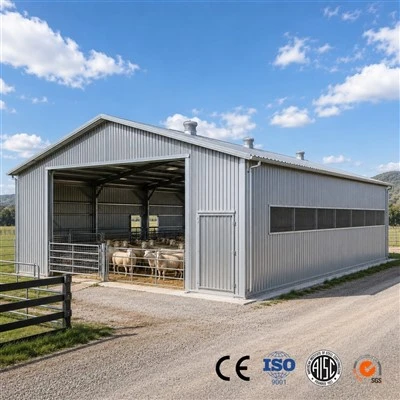
First off, let’s get real about what wind does to hangar structure—no stuffy engineering jargon, I promise. Wind isn’t just “air moving”; it’s a force that shifts based on shape, speed, and even the hangar’s location. Take that big, wide hangar door you see at every airport: on a gusty day, wind slams into that flat surface like a hammer. If the door isn’t reinforced right, it can bow so far it won’t slide, or worse, tear free from its tracks. I remember a client in Texas a few years back—they had a tiny old hangar for their corporate jet, built in the 90s with flimsy aluminum doors. One spring thunderstorm brought 70 mph gusts, and the wind pushed the door inward so hard it bent the track, and the door itself crumpled like a soda can. They ended up paying 10 grand in repairs, plus a few days of being stuck with their jet outside until we could fix it. That’s the kind of headache we prevent with smart design, not just expensive materials.
Then there’s the whole hangar building structure itself. If a hangar’s a big, open, boxy space (which most are, because you need room for planes), wind acts differently on the outside vs. the inside. When wind hits the front of the hangar, it pushes down on the roof and the walls, but on the back side, it creates a “suction” effect—like when you stick a straw in a soda and suck up the liquid. That suction can lift the roof right off if you don’t account for it. We had a client in Oklahoma, flat as a pancake, no trees or hills to block wind, who went with a cheap hangar from a no-name supplier. A straight-line wind (what locals call a “derecho”) hit at 85 mph, and the back section of their roof lifted right up, like someone had peeled a sticker off a notebook. The good stuff? All that stuff we test for, like calculating wind speed for your exact location—we check NOAA’s regional wind data, not just a generic number—and design the roof trusses to hold both the downward push and the upward suction. That’s why we use galvanized steel for the main frame, not wood, even though wood’s cheaper upfront. Wood might hold up for 10 years, but wind in the Great Plains? It’ll turn wood hangars into firewood in a bad storm.
Wait, let’s not forget the part no one talks about: wind and the planes inside the hangar. Most people think once a plane’s parked inside a hangar, it’s safe from wind. Not so fast. If the hangar’s doors aren’t sealed tight, wind can whistle through the gap, creating tiny air currents inside that make a small prop plane sway back and forth. I’ve seen a Cessna 172 with its wing tip scratch the hangar wall because the wind coming under a door gap was pushing the plane sideways. For bigger jets? Even a few miles an hour of wind inside a loosely sealed hangar can make the plane’s tail wag, which risks damaging the rudder or even hitting equipment stored nearby. We add door seals—rubber strips that compress when the door closes, like a fridge door—to stop that kind of air flow. It’s a small add-on, but it prevents so much damage. Also, for clients in super windy areas, we add anchor points inside the hangar so they can tie down small planes even when the doors are closed, which gives them extra peace of mind.
Now, let’s get into why generic hangars are such a bad idea for wind. A lot of smaller suppliers sell prefabricated hangars that are made to fit every location, but they don’t adjust for local wind conditions. For example, a hangar built for Florida, where hurricanes are common, is way different from one built in Arizona, where wind blows mostly from the west at low speeds. Florida hangars need thicker roof panels, reinforced wall panels, and door locks that can hold against 120 mph gusts. Arizona hangars? They still need reinforced frames, but not as thick panels, because their wind is consistent, not extreme storm wind. I had a client in Arizona a few years ago who ordered a generic hangar online, not realizing the “standard” wind load was for the Midwest, not the Southwest’s regular gusts. After a year, their door started sliding crooked every time the wind picked up—turns out the tracks were too thin to handle the constant side pressure from wind. We swapped out the tracks, but they could’ve avoided that whole mess if someone had asked them about their local wind first.
Another big one: wind and hangar doors. Sliding doors are the most common, but they’re the worst for wind if not designed right. When wind hits a sliding door, it pushes it sideways, right off its track, if the tracks don’t have stop blocks and extra support. That’s why we design our sliding doors with two tracks—one at the top, one at the bottom—instead of just the top, which is what cheap suppliers use. We also add wind locks that engage when the door’s closed, so even a 60 mph gust can’t push it open. For clients with smaller hangars, we also offer sectional doors, which split into panels like a garage door. They’re heavier, so they handle wind way better, and they don’t slide sideways as much. I know a lot of pilots hate sectional doors because they take a second longer to open, but when a wind storm hits, they’re way more reliable. We even had a client in Alaska, where wind can hit 90 mph in the winter, whose sectional door held up through a blizzard while the sliding door at the neighboring hangar was torn off. That’s the kind of difference we make.
Wait, let’s talk about maintenance too, because wind doesn’t just affect new hangars. Over time, wind wears hangars out, even good ones. The rubber door seals dry out from wind-driven dust and sun, so they stop sealing, which lets more wind in. The bolts holding the roof trusses together can loosen from constant vibration of wind, which weakens the structure. That’s why we offer post-install checks every other year—we come out, tighten bolts, replace seals, make sure the doors are still aligned. It’s not a scam, it’s because wind is an ongoing enemy, not a one-time thing. A client in Colorado realized that when they skipped their check for three years, a bolt had loosened, and a section of roof started sagging from wind pressure. They fixed it, but it cost them twice what the annual check would’ve been. So it’s not just about building a hangar that handles wind—it’s about maintaining it so it keeps handling wind for decades.
Let’s also touch on a less obvious angle: wind and hangar location, which is tied to how we design them. If you’re building a hangar on the edge of an airport, where wind can blow straight across the tarmac with no obstacles, you need a different design than if you’re building it near a tree line or another building that blocks wind. We do a site assessment for every single client before we even draw up plans—we check how wind flows around the proposed location, if there are any obstructions, what the historic wind data is for that zip code. For example, a client in Atlanta wanted to build their hangar in a spot that was right at the end of a runway, where wind gusts were 20% higher than the average for their area. We moved the hangar back 50 feet from the runway edge, and adjusted the frame design to handle that extra wind, instead of just saying “sure, we can build it there.” That’s the kind of customized stuff that makes a hangar last, not the off-the-shelf junk.
I know a lot of pilots and hangar managers are focused on cost, and I get it—aircraft stuff is expensive, and a hangar is a big investment. But here’s the thing: cutting corners on wind-related design isn’t a money saver. The average repair for wind damage to a hangar is around $15,000, and that’s just the structure—if a door comes off, you might have to move your plane temporarily, which costs extra, or deal with insurance headaches. When we design a hangar for wind, we price it transparently, no hidden fees, and our hangars come with a 10-year warranty against wind-related structural damage. That’s something you won’t get from a supplier that uses generic designs. I’ve had clients come to us after a wind storm, with a hangar that cost them $50k upfront, but $30k in repairs, and they end up paying us $70k for a better, wind-resistant hangar. It’s more expensive at first, but it’s worth it in the long run.
Let’s wrap this up with a real example that sticks with me. Last year, we finished a hangar for a client in North Carolina, right on the coast. Hurricanes are a big deal there, and their old hangar had been destroyed by Hurricane Matthew a few years back. We worked with them to design a hangar with 12-gauge steel walls, reinforced roof trusses rated for 130 mph winds, heavy-duty sliding doors with wind locks, and a concrete foundation that’s poured 4 feet deep (not the standard 2 feet, which is what cheap suppliers use). A few months ago, a tropical storm hit with 75 mph gusts, and their hangar didn’t have a single scratch. The neighboring hangar, from a big box supplier, lost half its roof and had its door bent so bad it wouldn’t close. The client called me that next day, excited, and said he saved his $200k jet from damage. That’s why we do this—we don’t just sell metal and bolts, we give clients peace of mind that their most valuable asset is protected.
At the end of the day, wind isn’t something you can ignore when it comes to aircraft hangars. It bends doors, lifts roofs, makes planes sway, and costs you thousands in repairs if you don’t plan for it. We’ve spent years testing designs, learning from storms, and tweaking our process to build hangars that handle every kind of wind, from mild gusts to hurricane-force winds. If you’re in the market for a new hangar, or you’re noticing wind-related issues with your current one, don’t just go with the cheapest option. We’d love to chat with you, go over your local wind conditions, walk through what we can design for you, and make sure your hangar stands up to whatever the sky throws at it. No pressure, no sales pitches—just real talk about protecting your plane and your investment.
If you have questions, just reach out anytime. We’re here to help.
Steel Livestock Buildings References
- Federal Aviation Administration. (2021). Aircraft Hangar Design and Safety Standards. U.S. Department of Transportation.
- American Society of Civil Engineers. (2022). Minimum Design Loads and Associated Criteria for Buildings and Other Structures (ASCE 7-22).
- National Oceanic and Atmospheric Administration. (2023). Regional Wind Speed Data for Aircraft Infrastructure.
- International Code Council. (2021). International Building Code: Chapter 16 – Wind Loads.
- Airport Council International – North America. (2022). Maintenance Best Practices for Hangar Structures.
Liaoning Zhongbei Steel Structure Engineering Co., Ltd.
Liaoning Zhongbei Steel Structure Engineering Co., Ltd. is one of the most professional aircraft hangar manufacturers and suppliers in China, also supports customized service. We warmly welcome you to buy advanced aircraft hangar made in China here from our factory. Also, quotation is available.
Address: No. 239 – 1, Shenbei West Road, Yuhong District, Shenyang, Liaoning.
E-mail: Info@cnssgroup.cn
WebSite: https://www.cnssprefabbuildings.com/
