If you’ve ever walked past a residential construction site, stared at the sleek gray pipes snaking beneath a sink or along a foundation, or wondered why plumbers consistently recommend CPVC over other piping materials for hot water systems, one question almost always comes up: just how flexible are CPVC pipes, really? As a CPVC pipes supplier who’s spent the last 12 years working with these materials—talking to plumbers, troubleshooting job site challenges, and walking homeowners through what makes CPVC a go-to choice—I’m here to cut through the marketing hype and break down the flexibility of CPVC pipes, what it means for your projects, and why that flexibility is one of its most underrated superpowers. CPVC Pipes
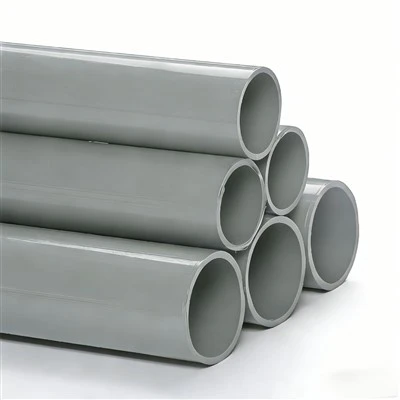
First, let’s get a quick primer on what CPVC even is, for anyone who’s new to the world of plastic piping. CPVC stands for Chlorinated Polyvinyl Chloride. Unlike the standard PVC you might see for drain-waste-vent (DWV) systems, CPVC is chemically modified by adding chlorine during manufacturing, which lets it handle higher temperatures and pressures without warping or breaking down. That modification is also the root of its flexibility.
To measure CPVC’s flexibility, we rely on two key industry metrics that plumbers and engineers use every day: modulus of elasticity (often called Young’s Modulus) and elongation at break. Young’s Modulus tells you how stiff a material is—higher numbers mean stiffer, less bendable stuff, while lower numbers mean more flexible. CPVC’s Young’s Modulus hovers around 360,000 psi at room temperature, which is pretty flexible compared to, say, standard steel, which clocks in at around 29 million psi (that’s 80 times stiffer). But CPVC’s flexibility isn’t just about room temperature; it changes with temperature, which is where most people get confused.
At cold temperatures—think 40°F or below, a typical winter job site—CPVC is a bit stiffer. If you try to bend a straight length of ½-inch CPVC on a freezing morning without warming it up first, it might snap if you apply too much force. That’s not a flaw, that’s physics. Every plastic material becomes more brittle when it’s cold, just like a glass bottle is more likely to break if you drop it on ice versus a warm patio. But here’s the thing most new CPVC installers miss: that cold stiffness is temporary. Once you get CPVC to its ideal working temperature—between 60°F and 90°F, the temperature range it sees most often in residential and commercial plumbing—its flexibility ramps up significantly. At 73°F (standard room temperature), CPVC’s elongation at break (how much it can stretch or bend before breaking) is around 50% to 100%. That means a length of CPVC can bend to roughly half its original diameter before it cracks. Compare that to rigid PVC, which has an elongation at break of only 20% to 40%, and suddenly CPVC’s flexibility starts to stand out.
Now, let’s talk about why this flexibility matters for real job sites, not just textbook formulas. As a supplier, I’ve heard every possible story about CPVC use from my customers, and the flexibility angle comes up more often than you’d think. Last year, I worked with a small plumbing crew out of Austin who was installing a hot water loop in a 1920s bungalow. The house had original cast iron floor joists with notches cut for old pipes, and there was zero extra space to route new lines. The crew tried copper first, but copper kinked so badly when they tried to snake it around a joist that they had to cut multiple sections and solder new joints—costing them half a day and a few hundred dollars in materials. Then they switched to CPVC. Because it’s flexible when worked with warm hands and a bit of warming (plumbers use a heat gun or even the warm metal from a recently melted solder joint to gently warm CPVC as they bend it), they were able to shape a straight length of pipe into a smooth 90-degree arc that fit the exact space. No kinks, no extra joints, and the job got done on time. That’s CPVC’s flexibility in action, not a lab test.
Another big advantage of CPVC’s flexibility is its ability to handle minor ground movement, which is a huge plus for underground or slab-on-grade installations. A lot of homeowners don’t realize that the ground beneath their home moves a tiny bit every year—freeze-thaw cycles, settling soil, even heavy rain can shift a few inches. For rigid piping materials like steel or even standard PVC, that movement can cause cracks, leaks, or even full pipe breaks over time. CPVC, with its ability to flex slightly instead of snapping, absorbs that minor movement like a shock absorber. I had a customer in Detroit a few years ago who had a CPVC main water line installed under a new patio. A year later, the soil settled a half-inch in one corner, and the steel line he’d used for his neighbor’s patio cracked. His CPVC line had a tiny, almost unnoticeable bend at the settlement point, and worked perfectly. That’s the long-term payoff of CPVC’s flexibility.
But here’s where I have to be honest: CPVC isn’t infinitely flexible, and there are limits you need to know about. The biggest mistake people make is trying to bend CPVC beyond its rated temperature or bend radius. Every size of CPVC pipe has a minimum bend radius—for ½-inch and ¾-inch pipe, that’s usually 5 times the pipe’s outer diameter, so 2.5 inches for ½-inch, 3.75 inches for ¾-inch. If you try to bend it sharper than that, even if it’s warm, you’ll cause micro-cracks on the inside of the pipe that can turn into leaks later. I’ve seen too many cheap installations where installers tried to force a sharp bend in CPVC to save a few extra joints, only to get a call six months later about a hidden leak behind a wall. It’s not that CPVC is bad—it’s that its flexibility needs to be used correctly.
Temperature also plays a big role here. CPVC is designed for hot water systems, up to 200°F at 100 psi, but its flexibility drops as temperatures go above that. If you’re using CPVC for a high-temperature industrial application, it’s still flexible, just not as much as it is at room temp. And at temperatures below 40°F, I always recommend warming CPVC gently before bending, not just because it’s stiffer, but because forcing a cold bend can cause it to crack. We provide free tech sheets to all our customers that outline these limits, and I can’t tell you how many times that has saved a plumber from a costly mistake on a job.
Another thing that sets CPVC’s flexibility apart from other plastic pipes like PEX? CPVC is rigid enough to hold its shape once it’s installed, even after bending. PEX, by comparison, will try to snap back to its original straight shape if you don’t use specialty clamps to hold it in place, especially for longer runs. CPVC, once it’s heated and bent to a shape, cools and sets into that shape, so it stays where you put it. That’s a huge benefit for projects where neat, secure routing is important, like inside walls or under concrete, where you don’t want a pipe shifting around after it’s installed.
Now, let’s talk about common myths I hear about CPVC’s flexibility. A lot of old-school plumbers who cut their teeth on copper and PVC will tell you CPVC is too flimsy for heavy-duty work, or that it’s not flexible enough for long runs. But that’s just outdated information. Modern CPVC formulations—we work with top manufacturers that use reinforced CPVC for high-pressure applications—have the same or better flexibility than older grades, and they meet all ASTM standards for plumbing use. I’ve also seen 2-inch CPVC pipe bent into smooth arcs for commercial sprinkler systems, something that would be nearly impossible with rigid PVC or steel without multiple joints.
Another myth: CPVC’s flexibility means it’s easy to damage during installation. That’s the opposite of what I see every day. Because it’s flexible when handled correctly, it’s less likely to crack if you drop it on a job site, compared to rigid steel or PVC. I once had a customer drop a 10-foot length of 1-inch CPVC from a ladder onto concrete—scuffed the end, but didn’t crack it. If he’d dropped a steel pipe from that height, it would have either dented or broken, and rigid PVC would have shattered. That’s the durability that comes with CPVC’s balanced flexibility.
So, when is CPVC’s flexibility not the right choice? Well, if you’re looking for a pipe that can bend into tight, complex shapes without any tools, PEX is probably a better fit for applications like under-sink reverse osmosis lines or radiant heating tubing that needs to snake through small spaces. But for most standard plumbing applications—hot and cold water lines, supply lines, even some drain lines in commercial settings—CPVC’s flexibility hits the perfect sweet spot: flexible enough to work with job site challenges, rigid enough to hold its shape, and durable enough to handle years of temperature changes and minor ground movement.
As a CPVC pipes supplier, my job isn’t just to sell pipe—it’s to make sure my customers understand exactly what they’re working with, including its strengths and limits. I’ve seen too many projects go wrong because someone didn’t realize how CPVC’s flexibility works, or tried to push it beyond what it’s designed for. The key takeaway here is that CPVC’s flexibility isn’t a random trait—it’s a carefully engineered property that makes it one of the most versatile piping materials on the market today.
If you’re working on a plumbing project, big or small, and you want to talk through whether CPVC is the right fit, or get details on minimum bend radii, temperature limits, or product specifications, I’m here to help. We offer competitive pricing, fast delivery, and personalized support for plumbers, contractors, and homeowners alike. Don’t let outdated myths or misinformation hold your project back—reach out to discuss your needs and find the right CPVC solution for you.
Industrial Plastic Pipes References
ASTM D1784 – Standard Specification for Compounded Unplasticized Polyvinyl Chloride (PVC) and Chlorinated Polyvinyl Chloride (CPVC) Rigid Plastic Pipe and Fittings
Plumbing-Heating-Cooling Contractors Association (PHCC) – CPVC Installation Best Practices 2022
National Standard Plumbing Code (NSPC) – Chapter 7: Plastic Piping Systems
Anhui Weidong Pipeline Technology Co., Ltd.
As one of the most professional CPVC pipes manufacturers and suppliers in China, we have world-leading production equipment and strong manufacturing capabilities. Please feel free to buy high quality CPVC pipes at competitive price from our factory. Welcome to contact us for quotation.
Address: No. 35 Hongyuan Avenue, Economic Development Zone, Huoshan County, Lu’an City, Anhui Province
E-mail: 18056040225@163.com
WebSite: https://www.wdpipe.com/
